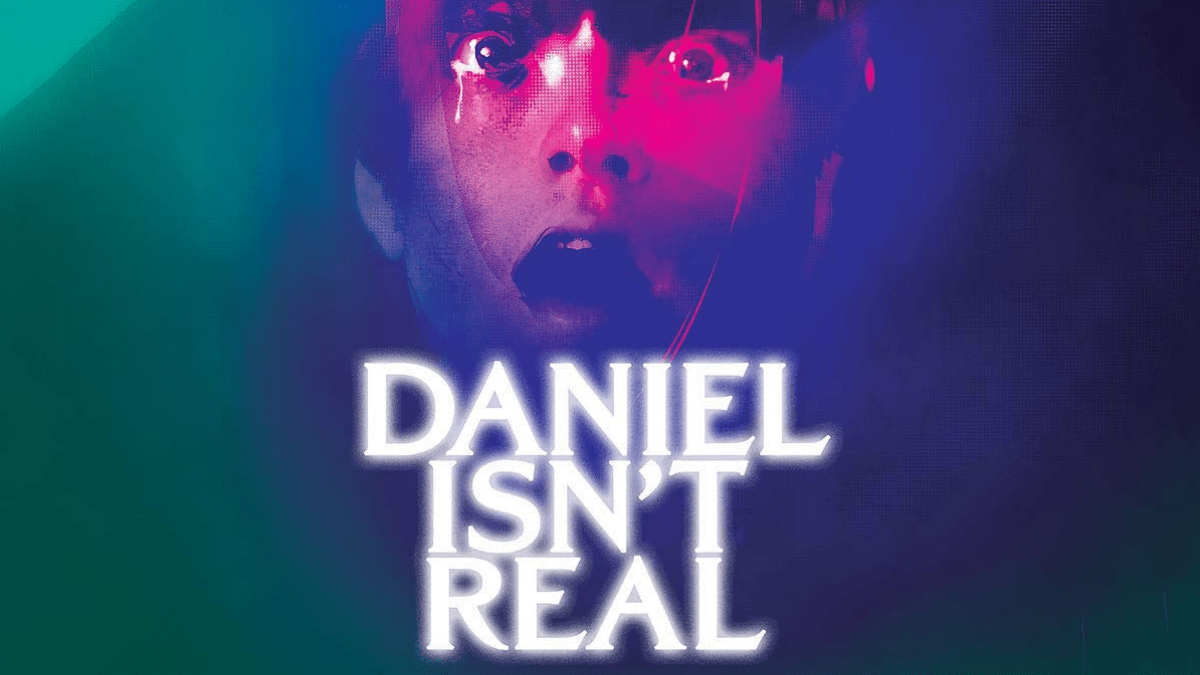
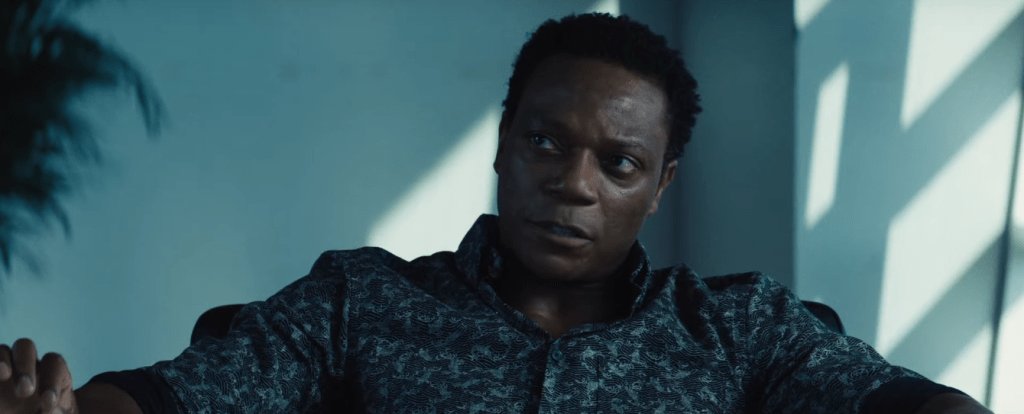
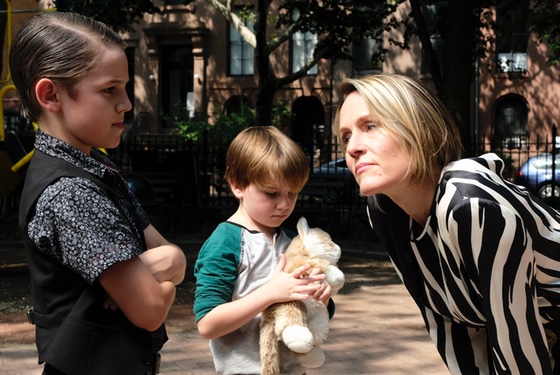
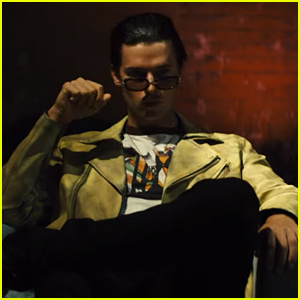
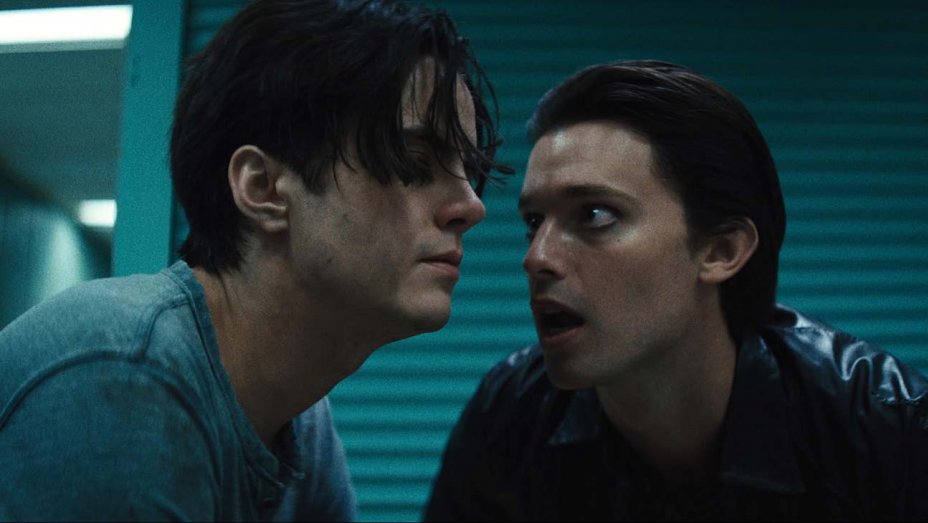
Luke (Griffin Robert Faulkner) is a young boy whose parents are in the midst of divorce, which is exacerbated by his mother Claire’s (Mary Stuart Masterson) mental illness. During a particularly vicious fight, he flees the house and comes across the corpse of an armed gunman who was shot down by the police. That moment of absolute horror is when his invisible friend Daniel (Nathan Chandler Reid) appears and invites him to play. All is well until Daniel convinces him to try to poison his mother, and Claire forces Luke to lock Daniel away. Cut to present day, when Luke (Miles Robbins) is a college freshman, and the stress he’s experiencing from his studies and his mother’s increasingly erratic, paranoid behavior causes his psychiatrist Dr. Braun (Chukwudi Iwuji) to suggest he reconnect with Daniel. Which isn’t the best idea, because grown-up Daniel (Patrick Schwarzenegger) is exponentially more deadly–and even harder to control.
Dr. Braun, you’re a psychiatrist, you’re Black, and you’re in a horror movie! Run!!!
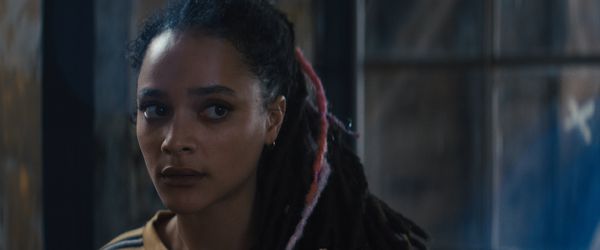
It’s possible to read the movie as an allegory for modern-day angst and the self-destructive ways people cope with their inner demons. Daniel is attracted to Luke’s trauma, fear, and loneliness. Luke’s lover Cassie (Sasha Lane) describes seeing a shadow in his psyche, and wants to help him get rid of it. The central conflict in the movie is the battle between Daniel’s appealing but harmful methods of getting through life and Cassie’s unconditional love and acceptance. You could even argue that the title symbolizes the plight of people with depression, who are often told that the disorder is all in their head.
“You can lock me away, but I’ll be back.”
The characters are exquisitely written and performed. Miles Robbins is the son of Susan Sarandon and Tim Robbins, so he’s got major acting chops in his blood. Indeed, his performance as the fragile but determined Luke is heartwrenching. Patrick Schwarzenegger is the son of, you guessed it, Arnold Schwarzenegger and Maria Shriver. I read he was keen on the role because he’s a fan of Nicolas Cage and wanted to utilize his acting style. Don’t worry, he’s great. To me, he comes across a lot more like Christian Bale in American Psycho: gleefully insane and cocky to no end.
“I have to return some videotapes.”
Sasha Lane (no relation to Diane Lane) is admirable as Cassie; she starts out as a bit of a cliche manic pixie dream girl, but she’s smart and tough and refuses to let Daniel victimize her. Claire is hard to like, I imagine especially for viewers who don’t get how being self-destructive works; I wrote extensively on the subject of lack of psychological well-being and motherhood here, so I won’t bore you with my experience now. I will say that without being in Claire’s situation (I’m happily married and taking my meds), I can still empathize: being a mom is hard and being a single mom is harder and being a single mom with untreated mental health issues is hard as shit.
Cassie knows what’s up.
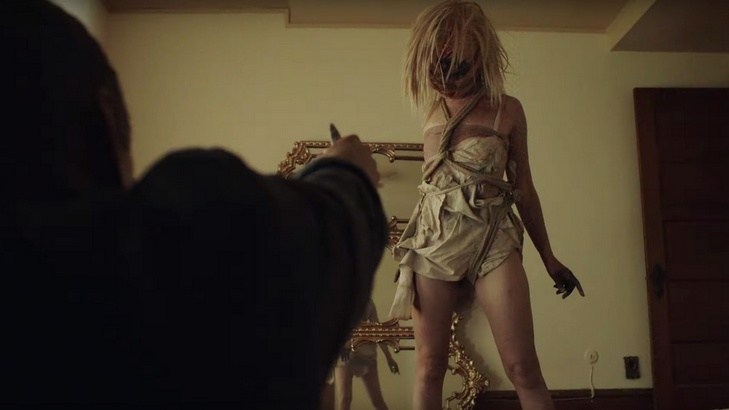
There is a fair amount of comic relief, but the movie surprised me by getting really creepy. Between the eerie score, the shocking visual effects, and the take-no-prisoners gloom of its tone, it’s definitely the scariest film I’ve seen in a while. Give it a look if you’re in the mood for something beautiful but disturbing.
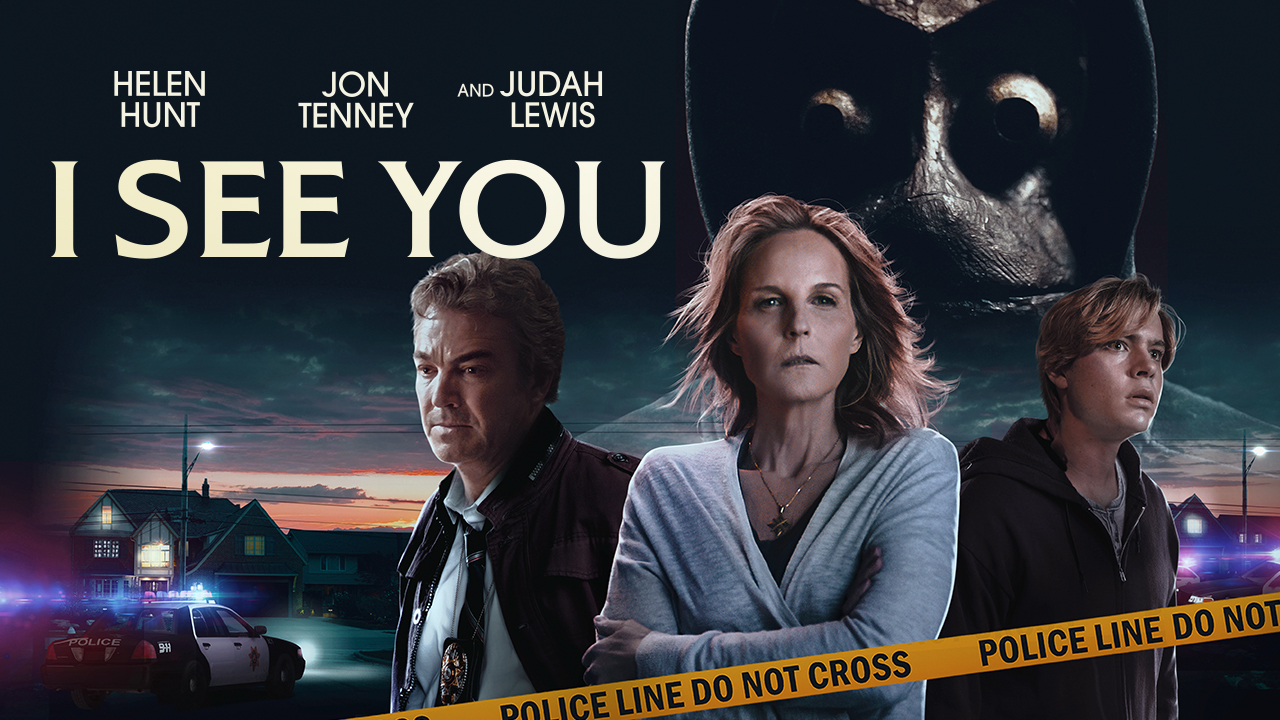
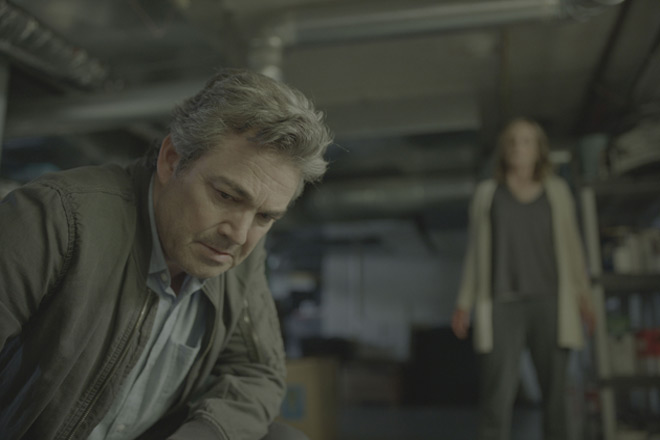
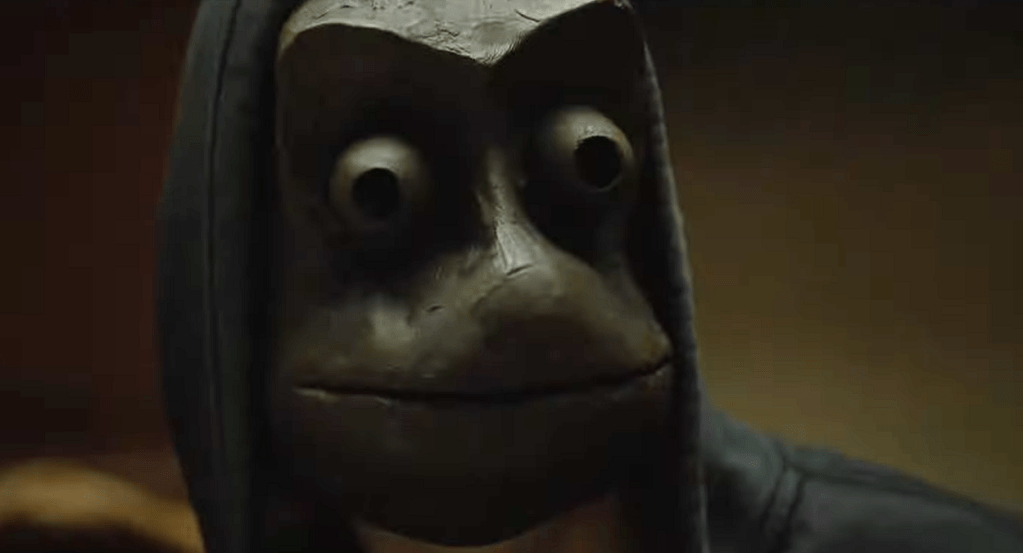
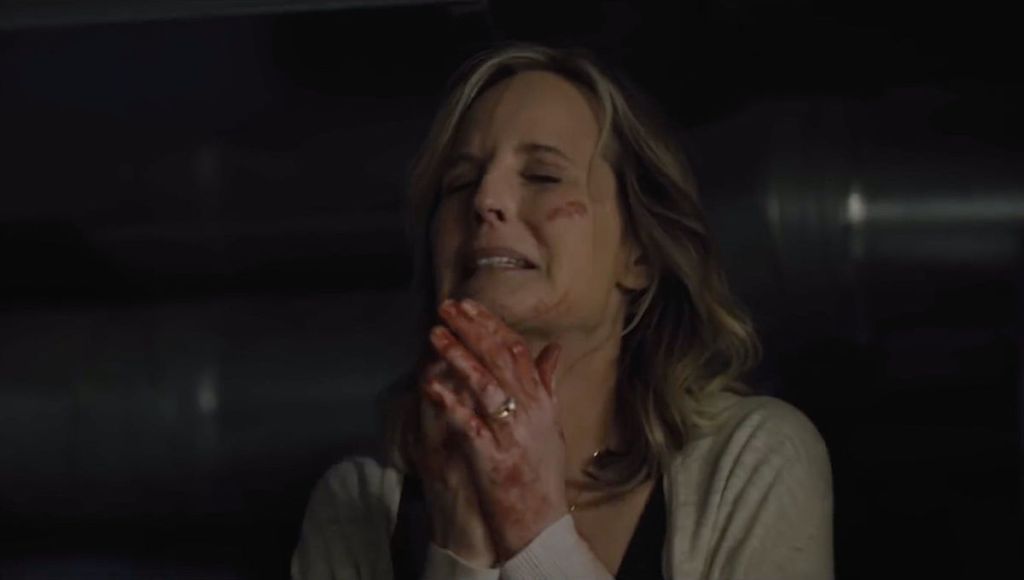
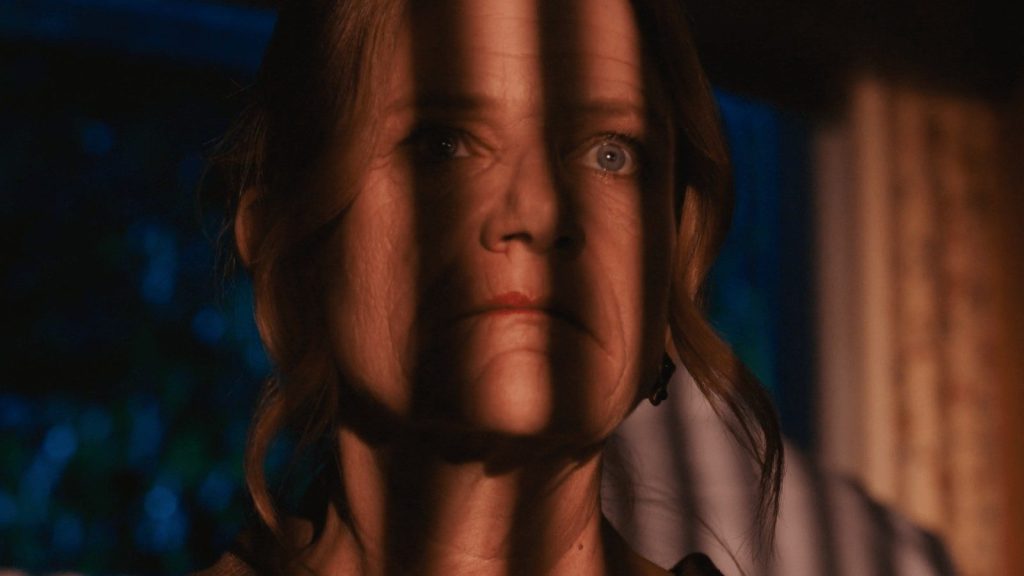
A small town in Ohio is rocked by the kidnapping of two young boys. On the case is Detective Spitsky (Gregory Alan Williams) and Detective Greg Harper (Jon Tenney). The main focus of the film is Greg, his wife Jackie (Helen Hunt), and their teenage son Connor (Judah Lewis). The house is filled with tension since Jackie has, to quote Connor, “ruined the family.” Adding to the pressure is a series of unexplainable occurrences that are harmless at first, but soon turn deadly.
I came across I See You while browsing recent horror movies on Redbox. All I knew about it before watching was Helen Hunt, murder mystery, and creepy frog mask. I recommend going into it similarly unaware if possible, for the full effect of the film. It’s brilliantly written, intense, and completely unpredictable, and as I especially don’t want to spoil anything, this review is a bit shorter than they generally are.
Bleh!
A tiny gripe: I was a little disappointed by Hunt’s performance; I know her as a great actor, but here she’s stonefaced and barely emotes. Buuuut I haven’t seen her in forever, so I’ll take her how I can get her. Good for her for continuing to get lead roles despite being a woman over fifty in Hollywood. I could also have used a little more Erika Alexander; she’s great as big boss Lieutenant Davis. So here’s a clip of her from Get Out:
Oh, white girls. They get you every time.
Owen Teague and Libe Barer are amazing as well. The movie isn’t out and out scary, but it does have lots of spooky moments, accentuated by the lovely, eerie soundtrack. Okay, I will spoil one thing: THE HAMSTER LIVES!
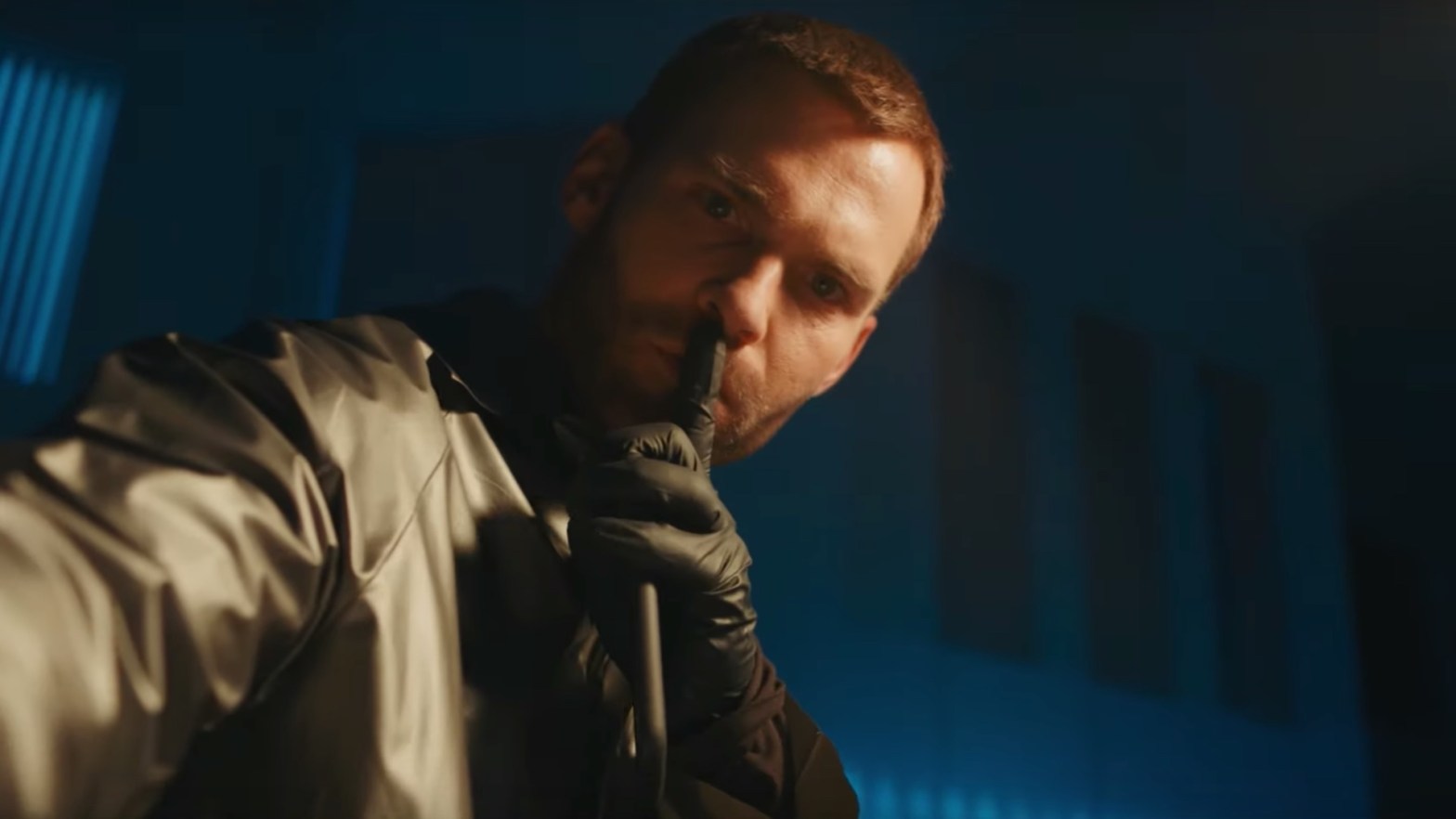
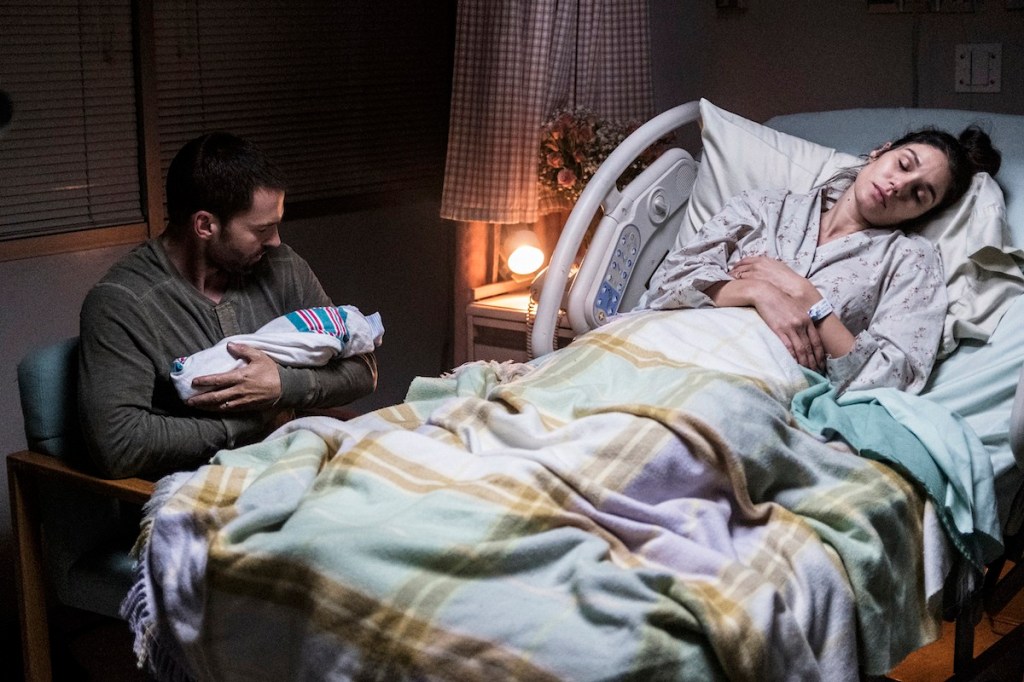
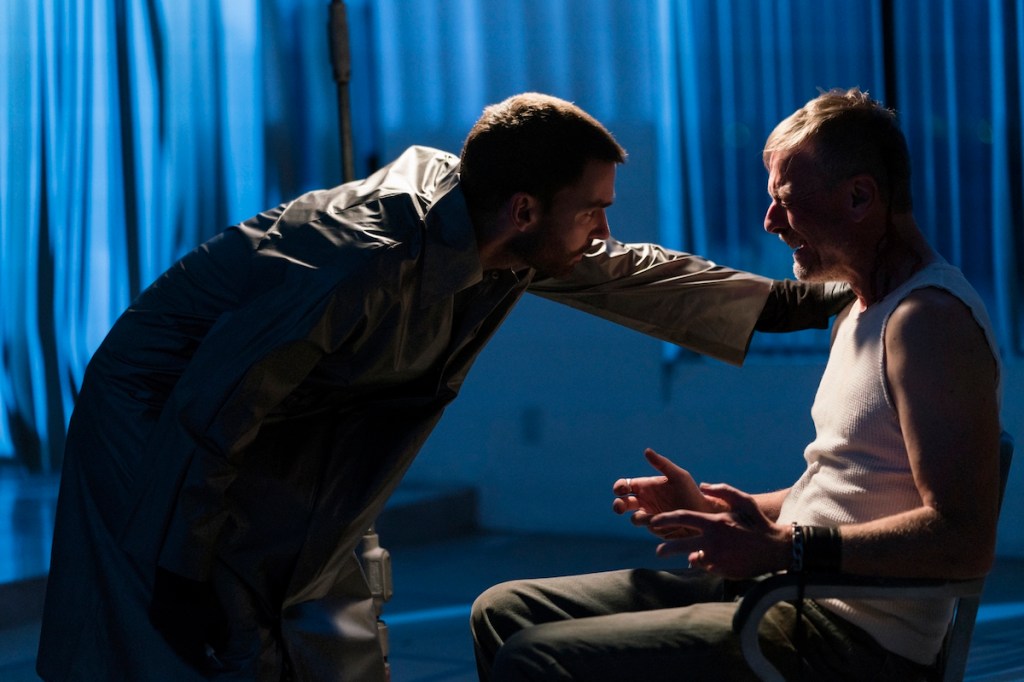
Evan (Seann William Scott) is a social worker at a high school. He’s also a family man with a wife, Lauren (Mariela Garriga), and a young baby, Andrew, whom his mother Marie (Dale Dickey) moves in to help with. But Evan has a dark side: a la Dexter, he kidnaps less-than-moral dudes (in this case, the abusive relatives of his teenage clients) and tortures them before killing them. His compulsion begins to get the better of him, and Evan’s stable facade begins to slip.
And then Lauren makes faces like this
I had heard about this movie months ago, and wrote a little news story on how it needed more hype. After the opening, which features full-frontal nudity and throat-slashing in a shower, I was regretting my decision. There’s enough of that kind of violent misogyny in movies already. But then it cuts to Evan in bed with Lauren; when Andrew starts crying, Evan reassures her that she can go back to sleep. Now that’s a hardcore dad–he’s exhausted from a killing spree but will still tackle middle-of-the-night feedings. As he coos to Andrew, “I will never judge you. And I will never leave you.”
He’s a keeper!
Evan proves himself to be a kind and compassionate counselor (when he’s actually talking to the students, not just the murder part). Scott is actually a great dramatic actor (I don’t know why I’m surprised, because I never thought he was very funny). The filmmakers do a good job of making him sympathetic. We meet Evan’s client Ray (Sean H. Scully), who gets beaten to a pulp saving his little brother from their father’s wrath. When Evan drives off with the man for his comeuppance, he goes on a racist diatribe against immigrants, slurs and all.
“It’s not my fault I hit my kids! It was them immigants, I tells ya!”
Okay, I was even a little satisfied by the dispatching of the nurse (Christie Herring) from the beginning, since later in the movie she’s established as consistently rude and condescending. Her scenes reminded me of when I had my first baby. Newborns eat on average every three hours, around the clock. When my daughter took an unprecedented five-hour nap, I let her sleep. A nurse berated me for not waking her up to feed her. I was a brand new mom, insecure and drained, and before long I was bawling and feeling like a horrible person. (Another two kids later, I am secure in the knowledge that when a baby is hungry, he or she will damn well let you know.) In the movie, Andrew has trouble with nursing, and Lauren is upset and feeling ineffective as a mother. The nurse snaps, “You’re not doing it right!” and twists Andrew’s head roughly to Lauren’s breast, admonishing her that if Andrew doesn’t start eating more, he’ll be malnourished and the hospital will have to step in. Seriously, no one will be sorry–or surprised–when Mean Nurse gets it.
Marie. She’s a lotta awesome.
It’s more of a thriller than horror, but there are a couple of unexpectedly gory moments, like multiple closeups (director Henry Jacobson is big on closeups in general) of Andrew coming out of Lauren’s woofie. Or the scene when one of Evan’s stressed-out students tears a piece of loose skin from her finger. So it’s surprising that the torture/murder scenes are repetitive and kinda boring in contrast. Overall, it’s not scary and not particularly suspenseful; a passing examination of the principal players’ characteristics will tell you what actions they’re gonna take. However, the characters are still fascinating and the actors are magnificent–go ahead and give it a look.
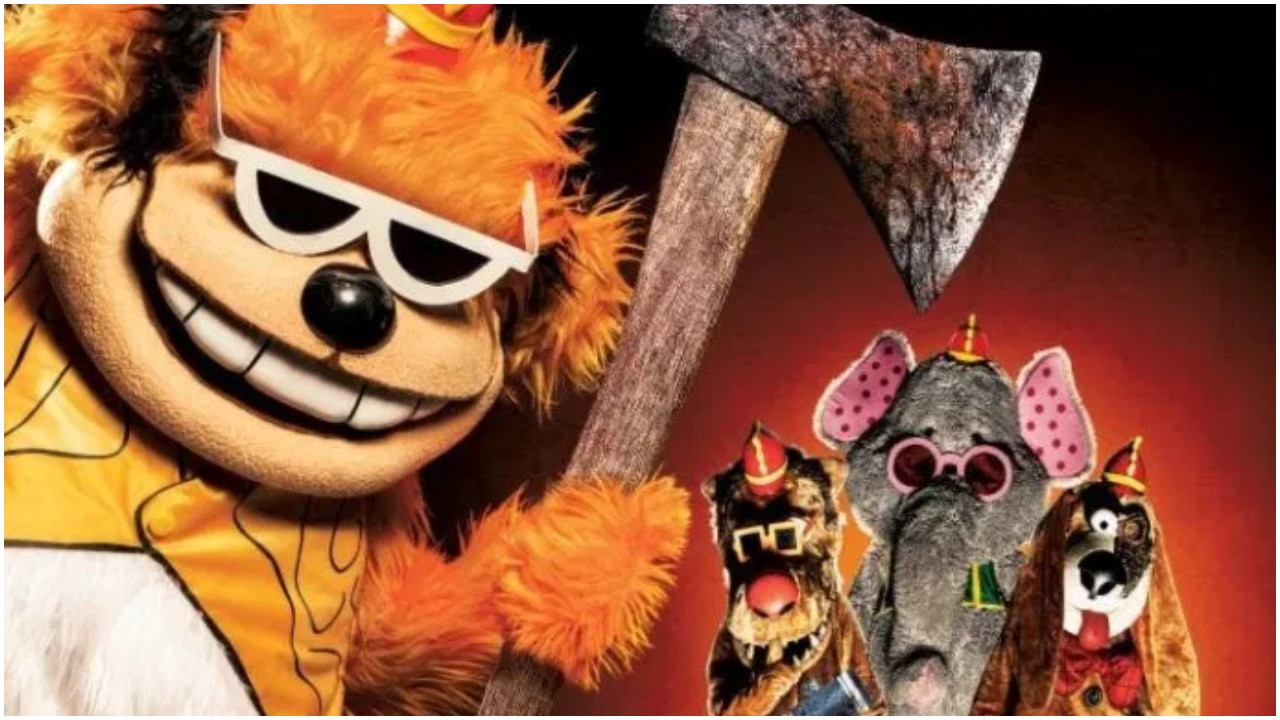
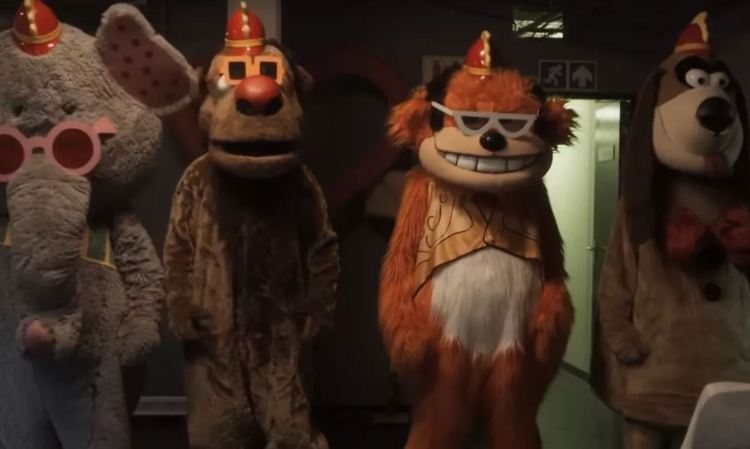
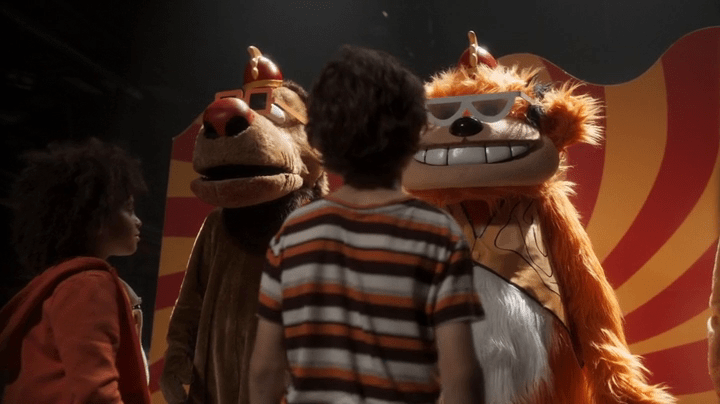
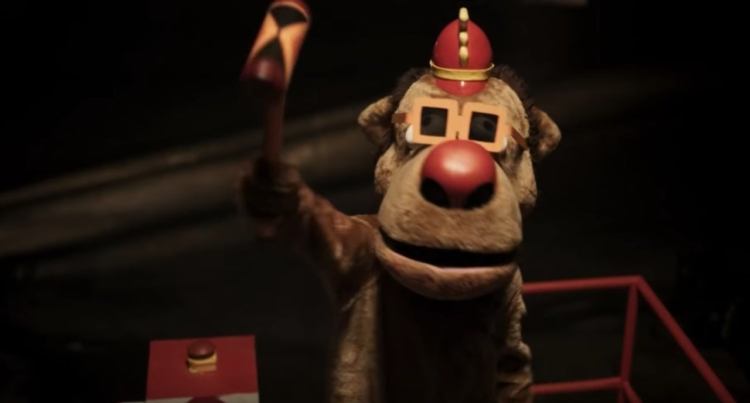
In real life, The Banana Splits Adventure Hour was a variety show from the late ’60s to early ’70s starring four dudes in animal costumes: Fleegle the dog, Bingo the monkey, Drooper the lion, and Snorkie the elephant. They performed comedy sketches interspersed with well-meaning but racist segments like the cartoon “The Arabian Knights” and the live-action serial “Danger Island.” In the reality of the movie, the show has continued going strong to the present day and the characters are animatronic.
And extra terrifying!
In place of vignettes involving outside characters, the Splits pull audience members for a Double Dare-style challenge. They also have a human counterpart, Stevie (Richard White). Our main protagonist, Harley (Finlay Wojtak-Hissong) is a nine-year-old boy who’s very keen on the Splits. His mother Beth (Dani Kind) has arranged to see a live taping with the family: Harley’s stepfather Mitch (Steve Lund), older brother Austin (Romeo Carere), and acquaintance Zoe (Maria Nash). Unfortunately, this is also the day that the show is being canceled. Further unfortunately, the Splits have just gotten an upgrade that embeds the idea that “The show must go on” permanently. So they decide to give the audience a show they’ll never forget–provided they live to see it.
“Come on, you fuzzy son of a bitch!”–actual quote
I had never seen The Banana Splits Adventure Hour, so I read up on it and watched an episode on YouTube to get a feel for it. I probably would have dug it as a kid. The jokes on the comedy sketches are corny but not condescending, like when Fleegle gets exasperated at Bingo and Drooper for trying to take attendance at their club meeting by counting the raised hands of the attendees who didn’t show up. I actually laughed a little at poor Drooper trying to take out the garbage; it keeps flying out of the can at him. Here’s a random clip from the show if you’re interested.
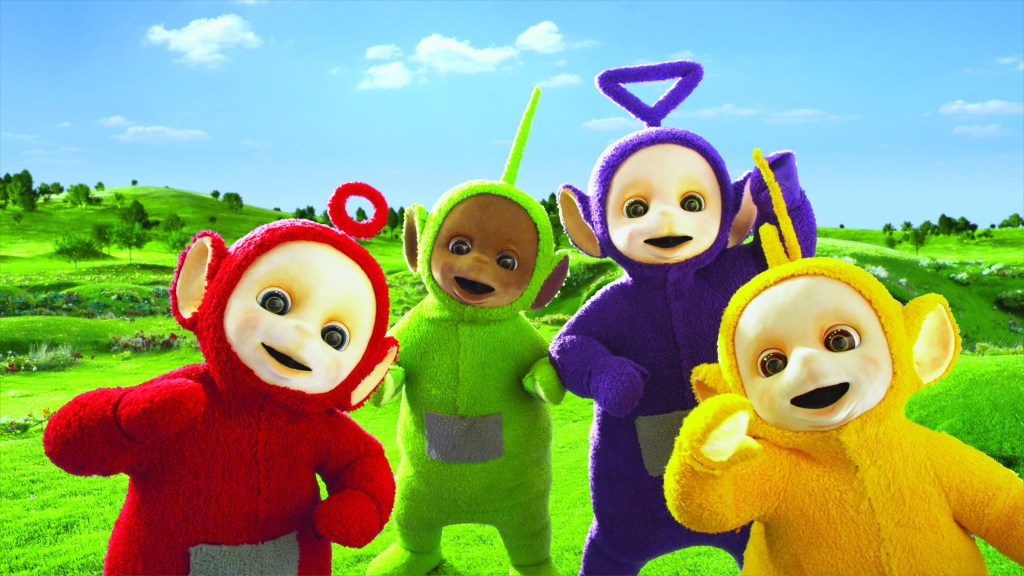
I find this particular TV program a bit of an odd choice for a horror film treatment. Yes, we have the “beloved childhood institutions are secretly evil” subgenre, but who even remembers this show anymore? It’s not applying the nostalgia factor for standard horror movie audiences, which is around ages 15-30; it was made for Generation X, which is 1965-1979. I did read that the movie was rumored to be adapted from a rejected Five Nights at Freddy’s script, so that could explain the jump from costumes to robotics, but not much else. (Don’t even think about asking me why this American production was filmed in South Africa.) Teletubbies would have been a much more logical choice.
What even are they? At least the Splits are a clearly defined species.
The movie is fairly predictable. In standard slasher fashion, characters wander away and are picked off one by one. The victims practically wear t-shirts that say “I’m going to die.”
Abusive stepdad Mitch being murdered? Whaaaaa?!
On the surface, the characters seem pretty one-dimensional: Beth is worried about her kids because her first husband died, Mitch is a philandering douchebag, Jonathan (Keeno Lee Hector) really wants his unwilling daughter Parker (Lia Sachs) to be famous, internet influencers Poppy (Celina Martin) and Thadd (Kiroshan Naidoo) are really annoying, Paige (Naledi Majola) is defined by her job as a studio page (her job is her damn name!), spending much of her screentime herding people around. But the gender dynamics are really interesting in that the traditionally masculine and feminine roles are often reversed. When confronted by Snorkie, Zoe puts up her fists and says, “I’ll take him out. You guys run.” But Harley is a gentle boy who likes to wear fairy wings; he’s able to reason with Snorkie by appealing to his better side–and although Beth toughens up considerably to become a kickass action hero, his character arc doesn’t involve changing his personality. In addition, Jonathan is a stage parent, a role typically assigned to women. Poppy, a girly girl, gets some punches in. Paige is smart and resourceful and refuses to cower. Austin is sweet and kind to his brother.
Get ’em, Zoe!
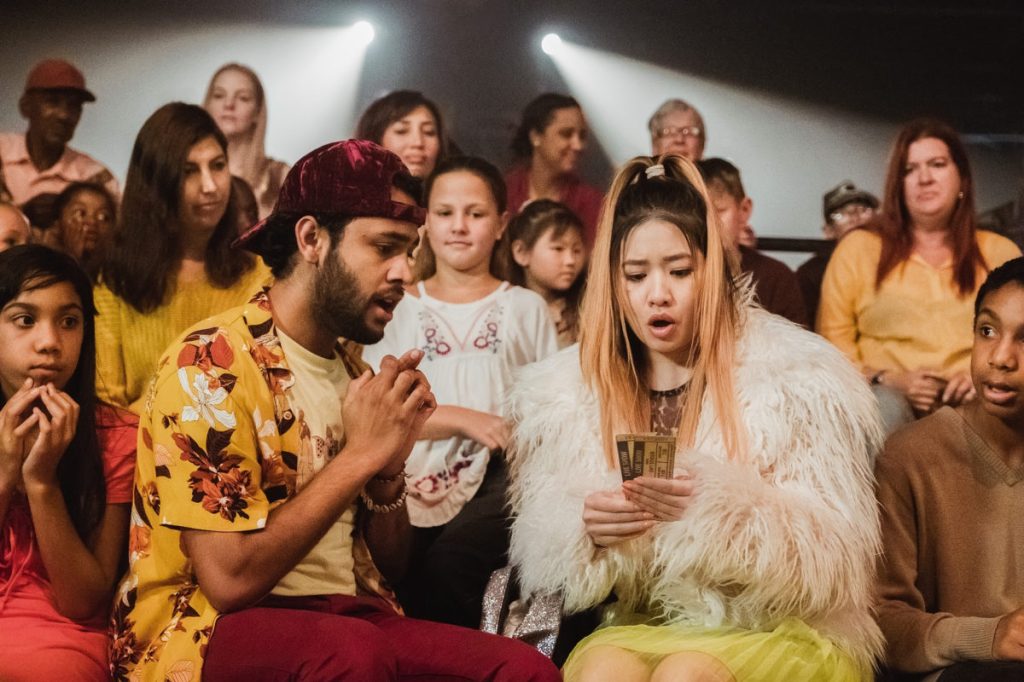
Also on my list of kudos is that the cast is fairly diverse. This is Thadd and Poppy, in the front. A handful of other principal characters are people of color as well.
And bask in this rainbow of extras!
It’s not overly scary, but the Splits are pretty creepy–those dead eyes and lack of human compassion. The gore is certainly creative. Overall, it’s entertaining, with nice practical effects and great performances. Director Danishka Esterhazy gives it some style; my favorite is the scene when Stevie is drunk onstage and the camera twirls around frantically to match his point of view. Give it a look if you’re in the mood for some R-rated robot mayhem.
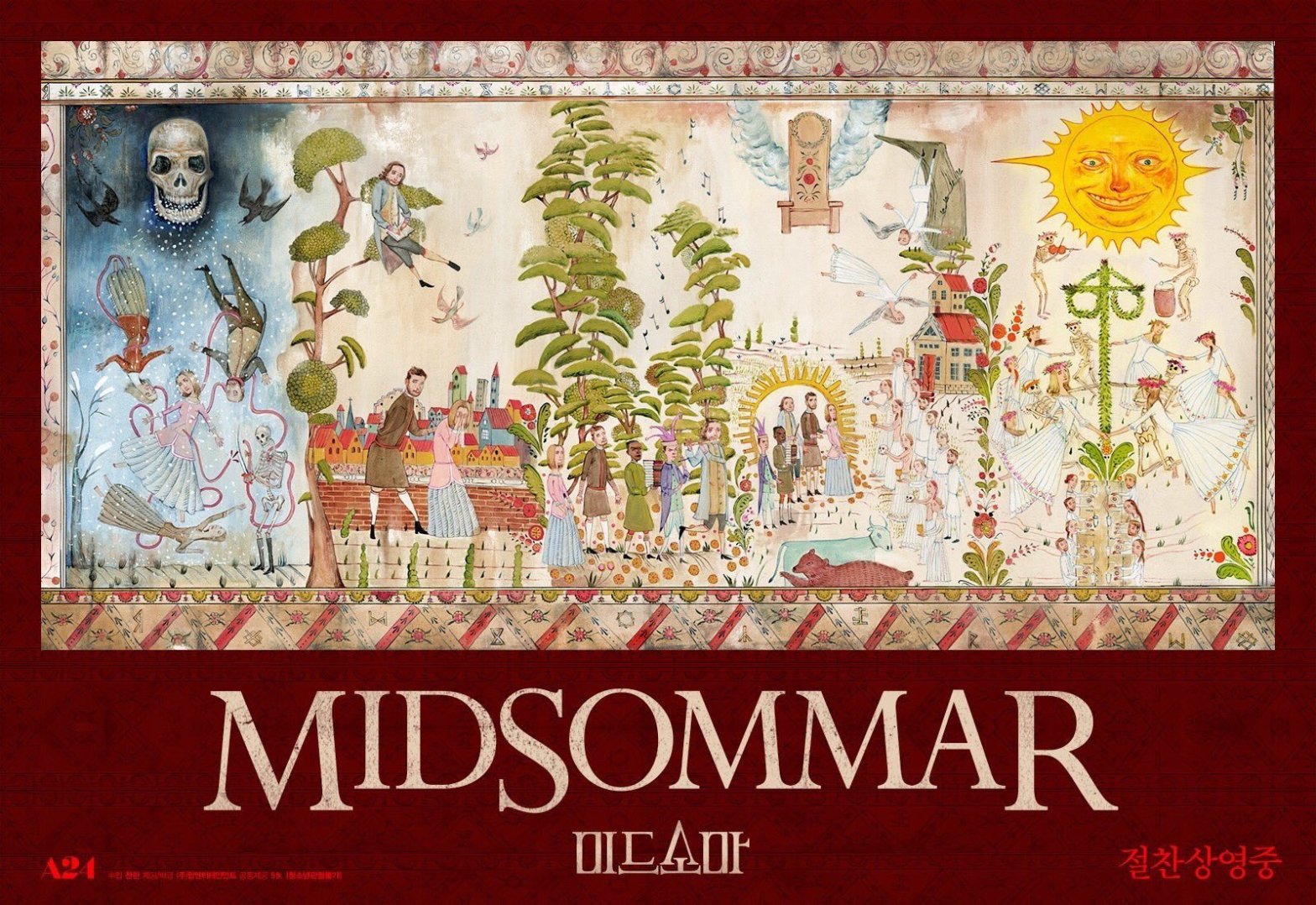
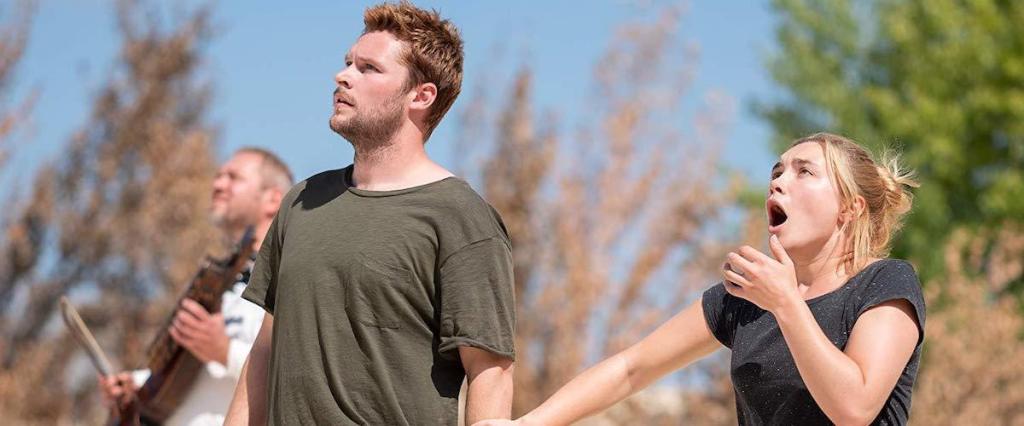
Dani (Florence Pugh) is a young lady who’s in mourning from the loss of her entire immediate family: her sister, while committing suicide by car exhaust, killed their parents as well. Meanwhile, her less-than-committed boyfriend Christian (Jack Reynor) has been planning a trip to Sweden with his buddies Josh (William Jackson Harper), Pelle (Vilhelm Blomgren), and Mark (Will Poulter) to study their mid-summer festival. Dani decides it’s just the thing she needs and comes along, not knowing she’s in a horror movie. The rituals, it turns out, are definitely not for outsiders to enjoy.
“Oh, why did I ask how lutefisk is made?”
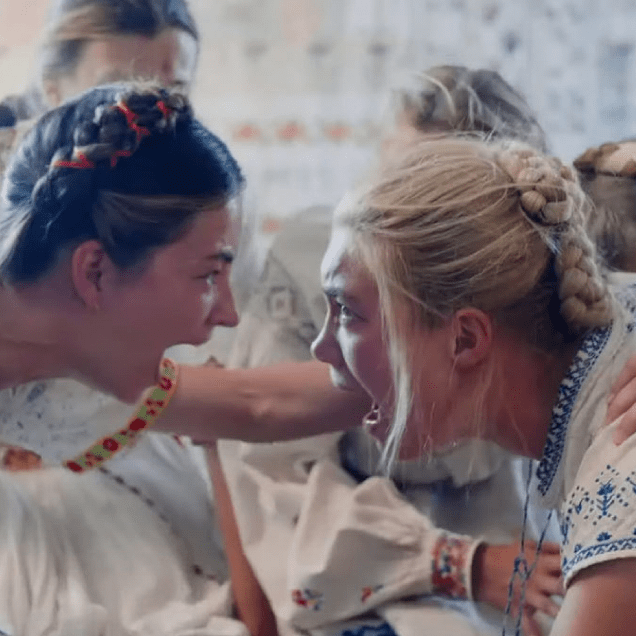
It’s written and directed by Ari Aster, who did Hereditary. That film left a lot of people angry and confused. I remember loving it, but I needed an explanation of it on YouTube to fully grasp the intricacies of the storyline. Similarly, Midsommar is not for everybody. For me the scene that crosses the line to unnecessarily bizarre is when Dani is wailing in emotional agony, and her new acquaintances join her, so they’re all screaming and crying. Aster is big on depicting grief, like destroyed by loss, on all fours and howling like a banshee kinda stuff.
There’s plenty to like, though. The cinematography is stunning (though the movie was mostly filmed in Hungary and not Sweden).
Maybe there is something to these rituals after all…
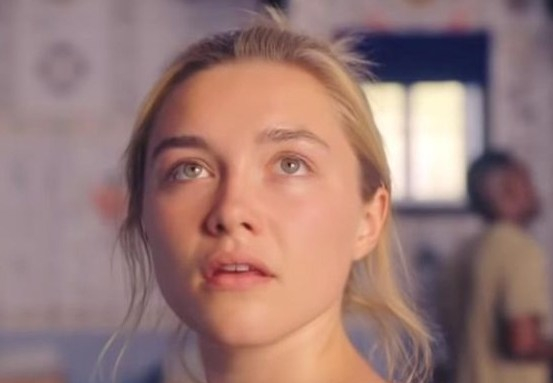
There are some truly eerie moments, like this one, when you can see the face of Dani’s sister in the trees:
It’s pretty gory, if you’re into that. It is about two and a half hours long, but I didn’t feel a lag or that there was anything irrelevant to the plot. Tension is built up right from the start, and sustained admirably throughout.
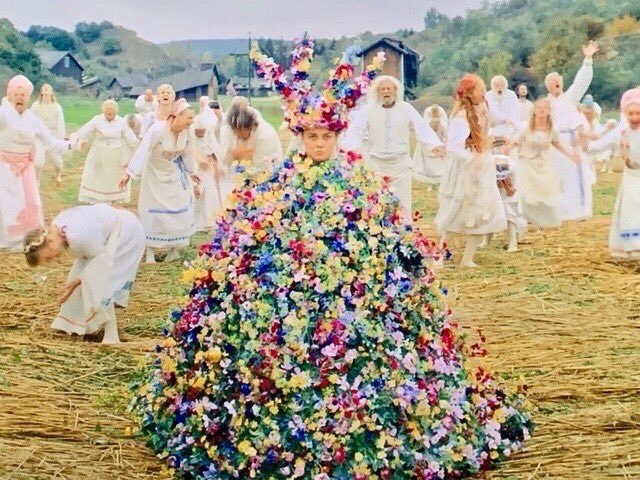
Okay, except for this scene–that costume is hard to take seriously.
One of my biggest gripes–and an admittedly shallow one–is Dani’s hair. Maybe her obvious dark roots are meant to further convey grief, but seriously, that’s exactly what films have stylists for.
Naturally I’m going to complain that there’s soooooo much white. Just a sea of white folks in the white-hot sun. Wearing white. Which is to be expected for a Scandinavian country, but if you think that critically acclaimed directors don’t follow that tired tradition of People of Color Die First, in this case you’d be wrong.
Each whiter than the last…
But overall I enjoyed it, as did my sister and brother-in-law, though none of my friends did. I feel bad especially for Hope, who turned it off after an hour but finished the last hour and a half after I encouraged her. She hated it. Give it a look if you’re in the mood for something artsy and gore-geous.
If you’re curious, here is the trailer with Aster’s commentary:
Loosely following the plot of the first movie (if you need a refresher you can read an exhaustive synopsis here, or if you’ve never seen it and want a quick spoiler-free plot outline, here are some), it opens with a rainbow of doomed teenagers (’cause it’s okay to bother casting a racially diverse group of actors as long as they’re throwaways for the first scene) who attempt the “Charlie Challenge”, in which someone calls the spirit of Charlie Grimille from the first movie.
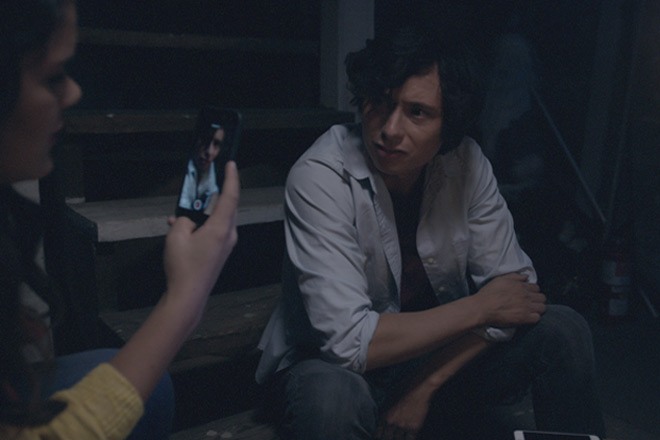
Oh shit, he’s Latino! Run!
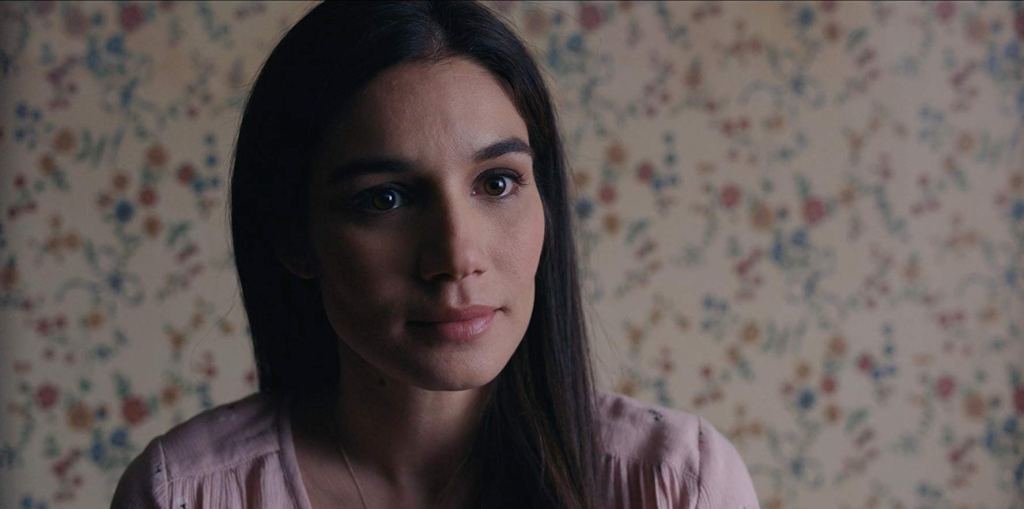
After the silly kids get their comeuppance, we move to our protagonist, Auna (Ema Horvath), an insecure aspiring actress who has only *gasp* two hundred followers on her YouTube page. (I know that’s small potatoes relatively speaking, but I have a grand total of thirteen subscribers myself.) Seeking more attention, she tries the Charlie Challenge. Her views rise exponentially, but Charlie’s ghost isn’t content with just making her an influencer.
The movie was made by Blumhouse (some scenes were filmed about two hours away from where I live) and released without much fanfare. It’s written and directed by the same team who brought us the first one, Travis Cluff and Chris Lofing. Unlike the original, it’s not shot found-footage style, nor is it a slasher in which a cadre of naughty teens are picked off one by one.
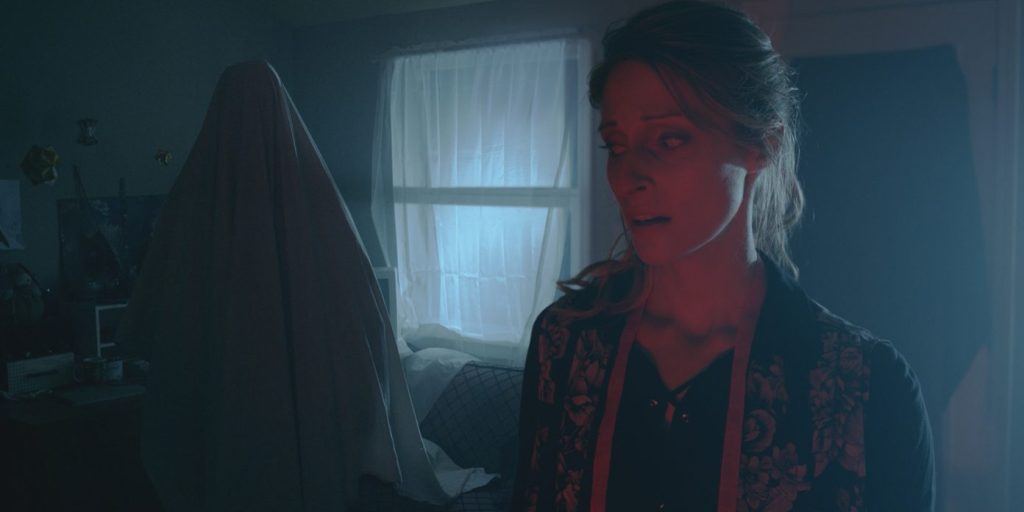
Auna’s sister Lisa (Brittany Falardeau) who’s a clothing designer; how she sews in this dim-ass lighting, I have no idea
Auna is sweet as fucking pie. She’s perky and humble and is reminiscent of a teenage Jennifer Love Hewitt. She’s almost unbearable at times, like how she’s obsessed with a character in a kids’ movie. She lives to prove her indifferent sister and parents wrong about her acting talent: “I have to show them I’m something.”
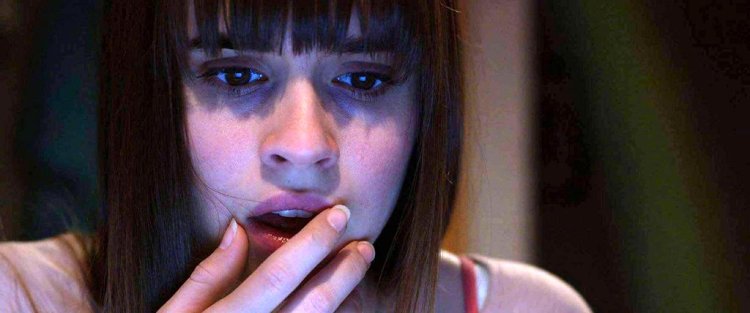
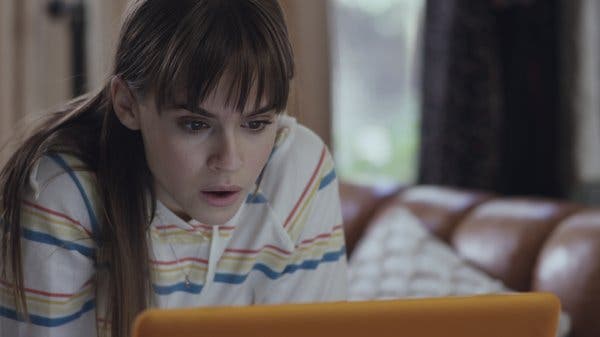
She’s too cute! Make her stop!
The movie has a real PG-13 feel. There’s a low body count and not much gore. As far as sexuality, in one scene Auna and her love interest Cade (Chris Milligan) sneak away from a party up to a treehouse–to run lines. There’s no cursing beyond the one PG-13-allowable “fuck”. Auna, I shit you not, actually says, “Oh shoot!” and “Oh, frick!” when she’s upset. Despite all that, it’s rated R for “disturbing violent content”.
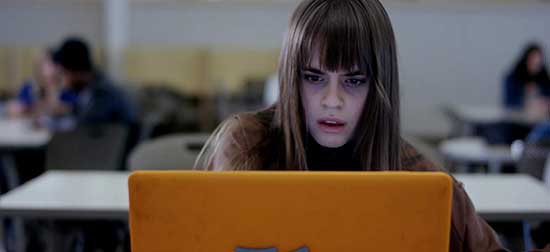
‘I have truly looked into the eternal abyss. “Baby shark doo doo doo doo doo doo.”‘
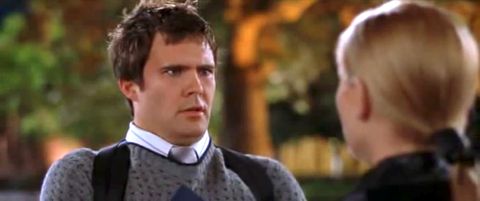
One scene that rubs me the wrong way and also accomplishes nothing as far as moving the plot forward is when Don (Jonathan Worstein), a stereotypical nerd character, is being harassed by bullies for not having a girlfriend or something. Auna strolls up and pretends to be dating him, which causes the mean kids to slink away. How noble–the very thought of Auna dating someone like Don and not Cade the traditionally attractive jock? Fuck you, Don, you skinny asshole! I liked that scene slightly better the first time I saw it, in Legally Blonde, when it had Oz Perkins in it.
He actually does useful things in the movie, aside from super resembling his dad
I also want to gripe about (but not spoil!) the ending as well, which once you get there, if you think about the scene with the teens in the opening, makes no kinda sense.
Overall, I didn’t find the film insanely creepy, but there is occasionally an effective jump scare, no mean feat nowadays. It has some interesting things to say about contemporary online culture and the longing for instant internet fame. Check it out if you’re a young whippersnapper (or have one) who is just starting out in the world of horror movies and wants to test the waters.
“Wait, you’ve been in a DC and a Marvel movie? I love you!”
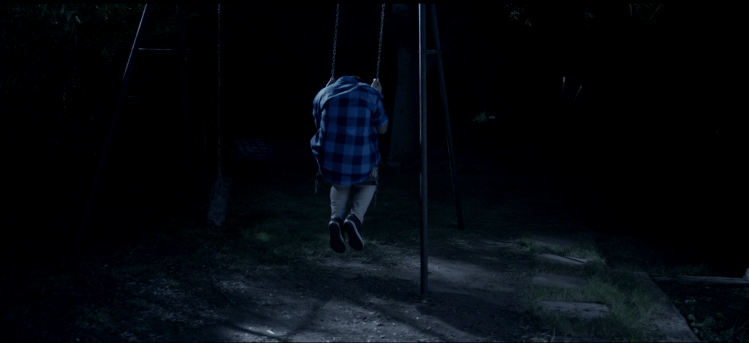
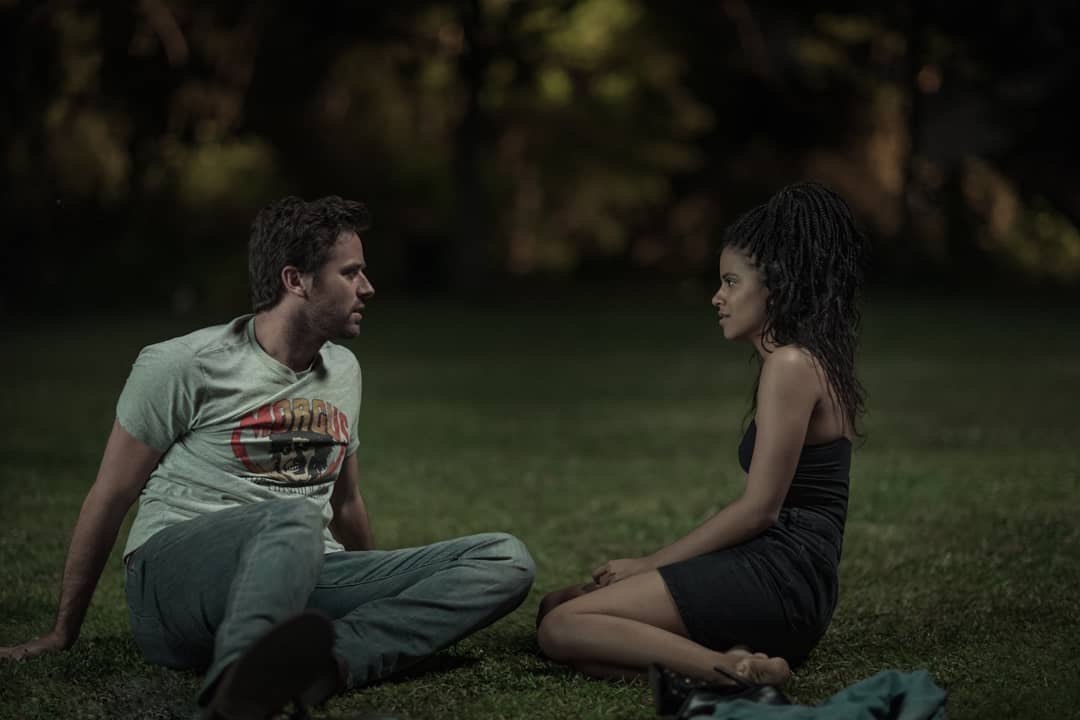
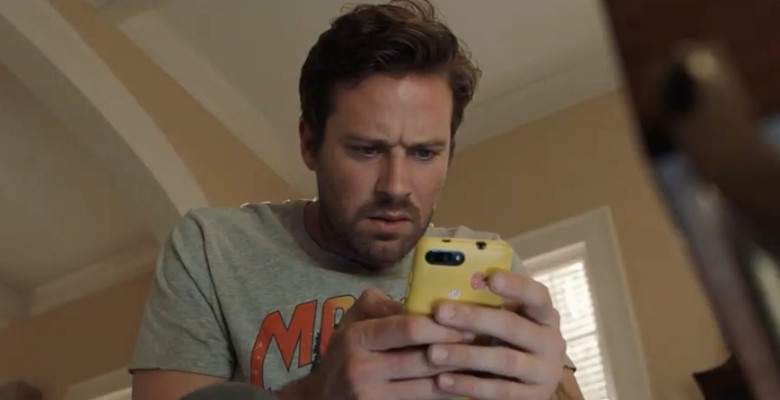
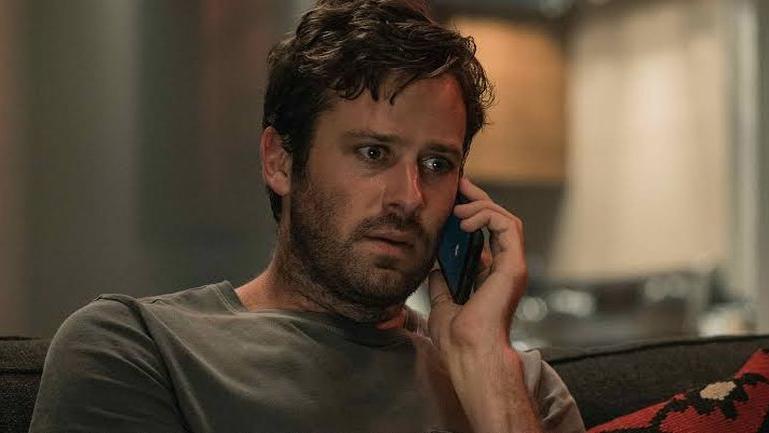
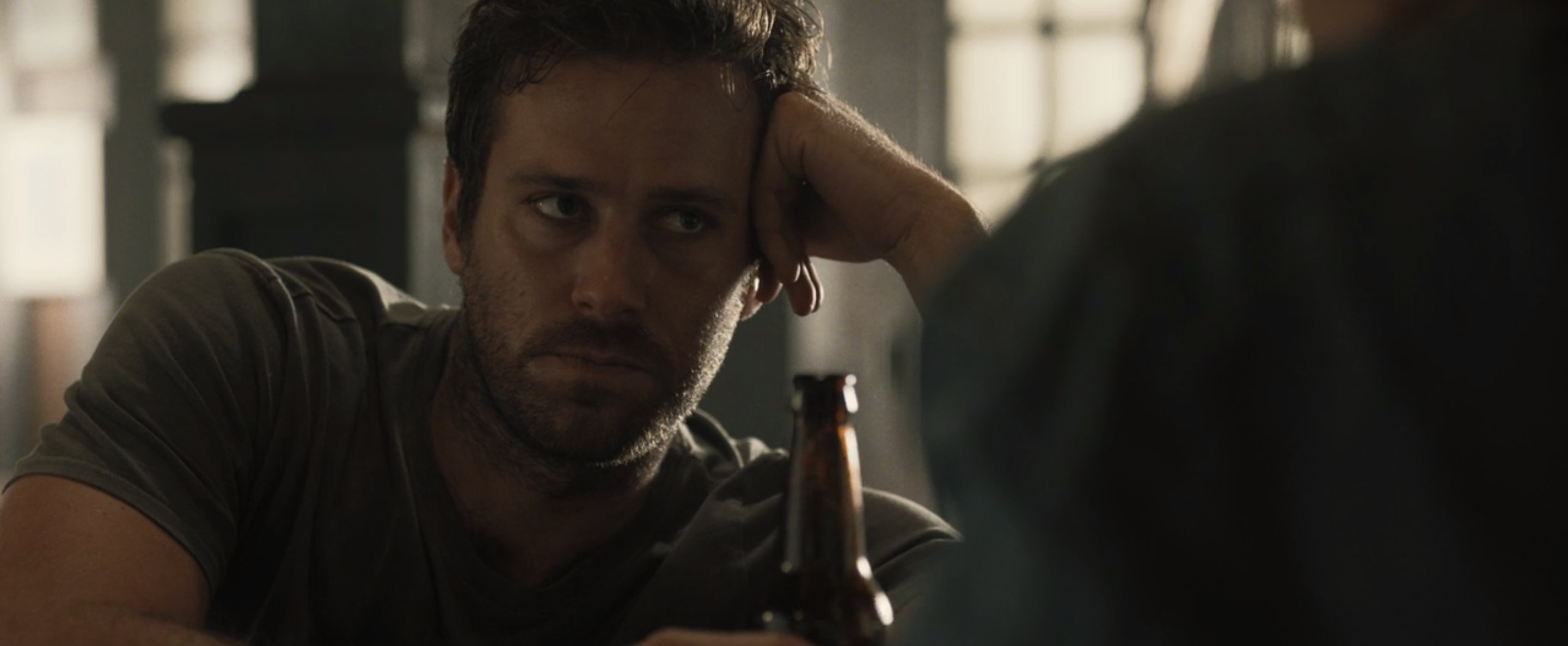
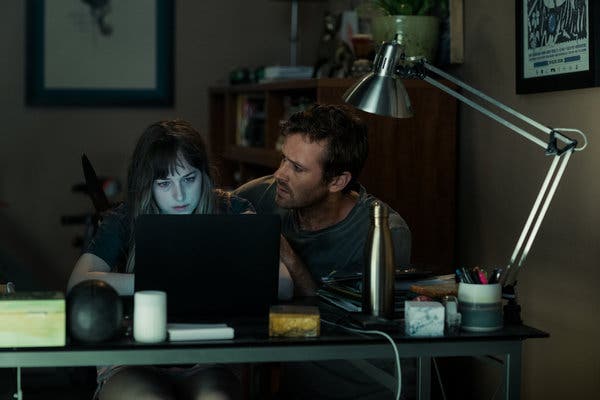
Will (Armie Hammer) is an apathetic bartender who finds a phone left by four college kids. He ends up bringing it home and becoming obsessed with it. His girlfriend Carrie (Dakota Johnson) pleads with him to turn it in to the police, as it contains gruesome pictures of murders as well as texts pleading for help. After Will calls the person texting, he’s informed that he’s been “chosen.” During a series of bizarre events, Will gradually loses his hold on reality.
‘Two girls…one cup…alright, this is gonna be awesome!’
The film opens with a quote from Joseph Conrad’s “Heart of Darkness”: “It had whispered to him things about himself which he did not know […] It echoed loudly within him because he was hollow at the core…” One of the first shots is of a long, dark tunnel. The film’s image systems are comprised mainly of emptiness–and emptiness being filled with horrible things. The background story is that the four kids from the bar opened a portal to another world by messing with old books and awakening a “thing from the tunnel”. We find this out slowly, as the pacing regarding what’s going on with the phone is a delightfully agonizing slow burn. Even after the obligatory internet search, Will doesn’t come up with much beyond that they’re old Gnostic rites that involve human sacrifice. The filmmakers choose to downplay the supernatural elements to focus on Will’s corruption.
“Willie Mays? “WHO’S gay?!”
Will is–as Carrie calls him–a mock person. He’s empty inside. He’s pining away for his ex Alicia (Zazie Beetz), despite her having moved on with Jeffrey (Karl Glusman). He’s blasé about most things, caring mainly to maintain his buzz (you could make a drinking game of how often he’s seen taking a drink). He gives underage kids liquor without a second thought. He throws beer bottle caps on the floor, both at work at the bug-infested bar (you can guess how much he adheres to health codes), and at his surprisingly well-appointed home (which is all Carrie, we find out later). He wears ragged clothes and spends most of his screentime looking dirty, sweaty, and needing a shave. At one point, Carrie flat-out tells him he smells. I guess that’s why they went with an actor as ungodly handsome as Armie Hammer.
There are some truly grotesque and creepy visuals. I don’t want to spoil any, so here are some transcriptions from the closed captioning: “scurrying of cockroaches”, “skin squelches”, “distorted screams and yells over phone.” Okay, okay, I have to share one. Will gets out of bed in the dark to find one of the teens from the bar sitting at the kitchen table, with his back to the camera. He spits out a bloody mouthful of teeth and states emotionlessly, “We opened a portal. Something came and possessed us.” Then his head starts pulsating. It’s. Fucking. Brilliant. So scary.
“Carrie, maybe you should get some sun.” “No! Not until I’ve seen all the baby panda videos!”
There’s no comic relief. The tension is built carefully and maintained throughout. Three times during the movie I actually covered my mouth in horror–which is not typical behavior for me, it goes without saying. The ending is a climax of perversion, and when it ended, I felt myself physically relaxing. While the credits rolled I felt like I was catching my breath. Give it a look if you’re in the mood for something psychological, unpredictable, and totally original.
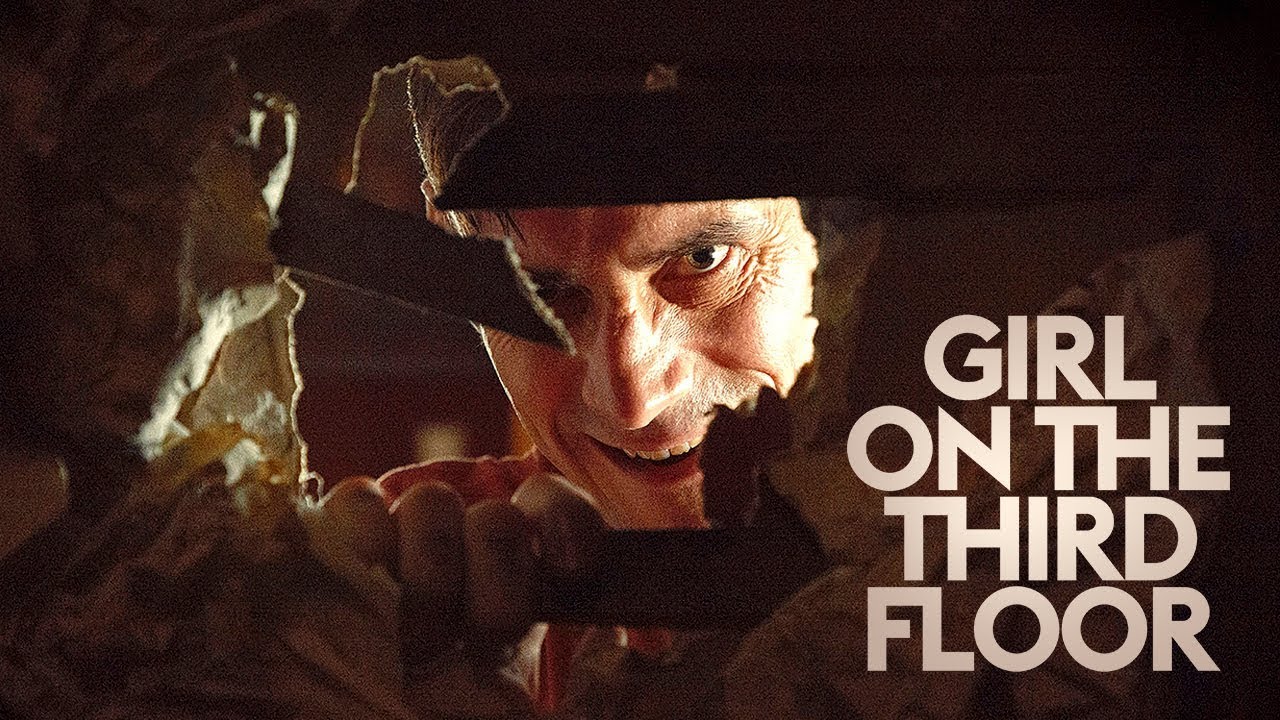
Don (C.M. Punk AKA Phil Brooks) is a disgraced former lawyer who defrauded his clients. He attempts to appease his pregnant and long-suffering wife Liz (Trieste Kelly Dunn) by buying a cheap murder house, with plans to renovate it entirely by himself. While Sarah works from their current home, he stays in the new one. Despite the house’s sordid past as a brothel, and despite odd phenomena like various fluids (black goo that looks like oil, red goo that looks like blood, and opalescent goo that looks…questionable) leaking from every socket, wall, and faucet, Don is determined to make up for his past mistakes.
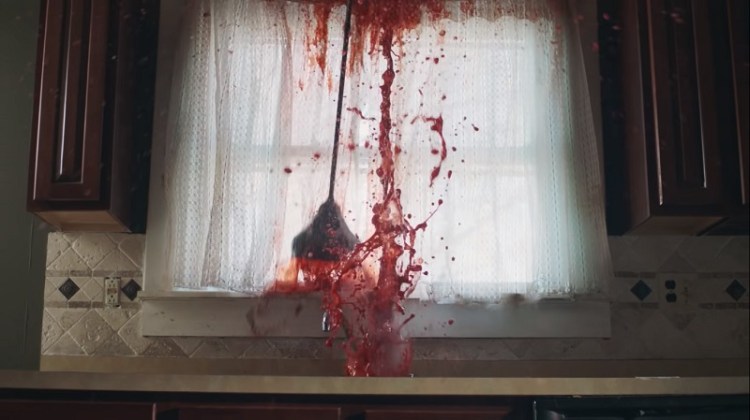
Probably ought to start with a sturdy drain stopper–and a new set of curtains
Okay, I need to say it up front. Don is a shitty protagonist. Don is the manifestation of toxic masculinity: “adherence to traditional male gender roles that restrict the kinds of emotions allowable for boys and men to express, including social expectations that men seek to be dominant (the ‘alpha male’) and limit their emotional range primarily to expressions of anger. Some traditionally prescribed masculine behaviors can produce such harmful effects as violence (including sexual assault and domestic violence), promiscuity, risky and/or socially irresponsible behaviors including substance abuse, and dysfunction in relationships.”
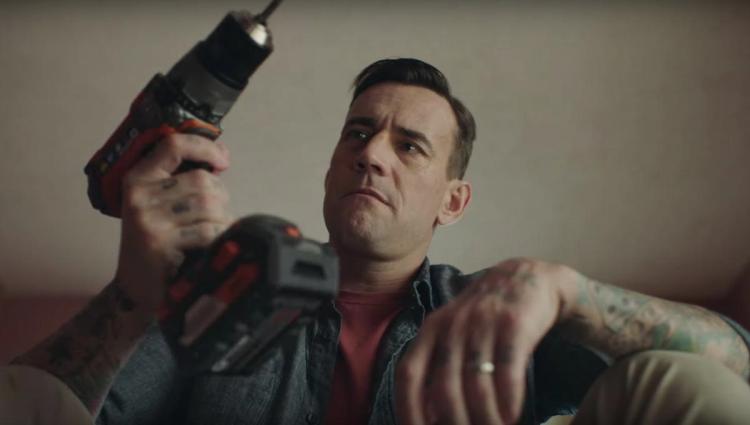
Yep, this is the movie in a nutshell
Don is a pissed-off guy. He’s so determined to win Liz back with the house that he takes on the massive project despite not appearing to know anything at all about carpentry or plumbing. His main methodology is punching holes in things. He bulls around, losing his temper at the least provocation. My friend Bailey, whom I watched this with, guffawed with me at his ironic impotence at making basic repairs. In one scene he gets so frustrated that he throws something (I think it was a hunk of wood), and it bounces back and hits him in the head. I was constantly yelling, “Why is he surprised?” In addition, he cheats on Liz, not just in the present of the movie but in the past as well. He justifies the current event by saying, “I earned that.” Just how he earned it is unclear to the audience. Or at least I hope it is. (Right after he says it, the ceiling caves in, and Bailey quipped “You earned that, too.”) When his paramour Sarah (Sarah Brooks) is sullen about his sudden lack of attention, he threatens to hurt her.
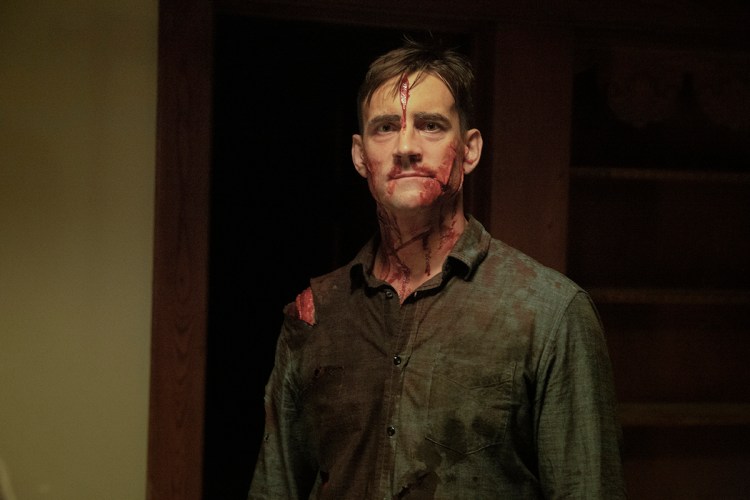
He’s every inch the ladies’ man
HOWEVER, the movie was directed by a dude and written by three dudes, so don’t get all huffy at me about the filmmakers male-bashing. The second-most prominent gentleman in the movie, Don’s best friend Milo (Travis Delgado) is healthily manly–he actually shows up with tools and knows much more about fixing a bloody house than Don does. He gets angry when he finds out Don is unfaithful to Liz, stating that she’s his friend and he won’t be able to look her in the eye. In one otherwise out-of-place scene, Don and Milo go to a bar, and the bartender mentions that “Gwen Martin,” who teaches erotic pottery, is stopping by later. Milo is interested in this tidbit, and after being warned that she’s a feminist, he replies confidently that he is, too. Nothing else comes of it; Gwen never even shows up. I can only guess that either Milo is again being used as a counterpoint for Don and the less-than-woke bartender, or someone named Gwen Martin really wanted a shout-out.
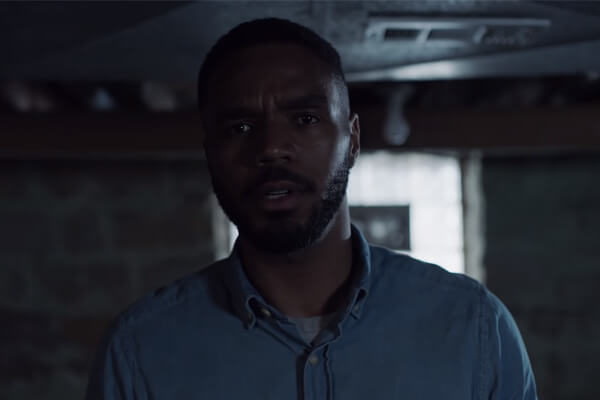
No, Milo, not the basement!
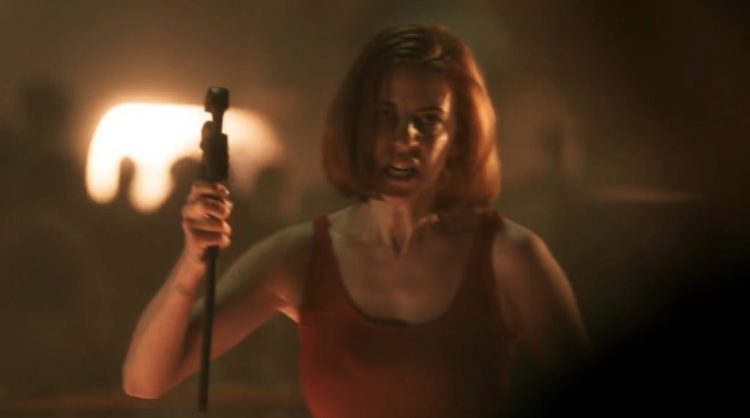
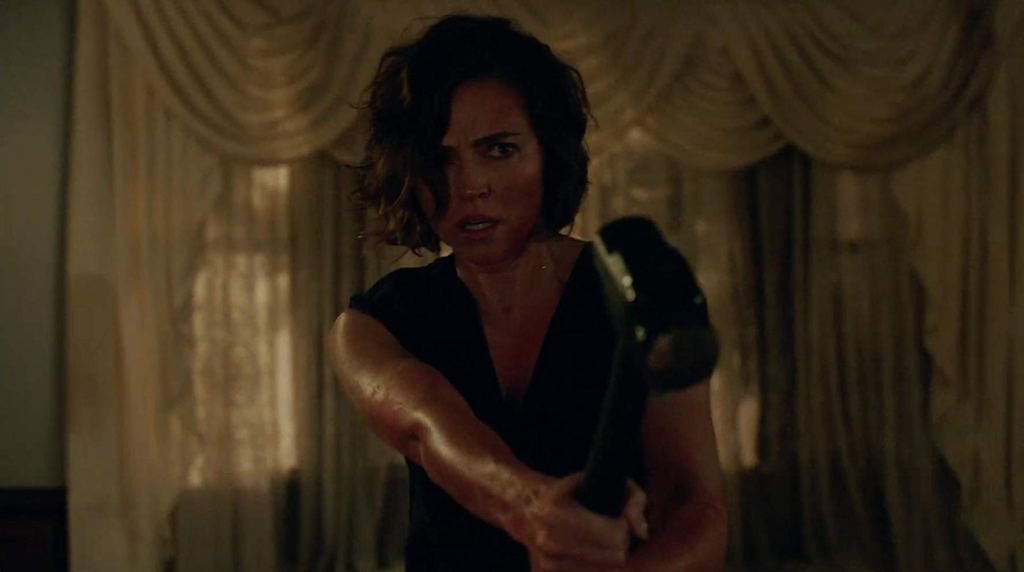
It takes a while, but when Liz finally gets tired of Don and his delusions and goes to the house to check on him, the movie shifts to her perspective–and gets sooo much better. Not just because she’s a much more likable character but also because the house ups its creepiness factor by a lot when she gets there. ‘Where was all this earlier?’ I wondered. Like Don, Liz makes dumb decisions (like taking the obligatory slow wander through the house full of sinister ghosts instead of just getting the fuck away) but out of shock rather than pigheadedness. We find out the brothel had nasty secrets regarding its employees and clientele, causing one ghost to state, “All men really love is the power you give them.” Eventually though, Liz decides she’s had enough of everyone’s shenanigans. “Nope,” she says, swinging a hammer at an attacker. That’s using the tools of the patriarchy! Since the ghosts are mainly associated with the basement and Liz’s moment of truth occurs on the third floor, you could even speculate that the title refers to her instead of the angry spirit.
Stop! Hammer time!
There are several aspects of the movie that aren’t resolved or explained satisfactorily for me, but I came away pretty content. I don’t claim to get everything the filmmakers are going for. Even without analysis of its themes, it still has cool practical effects and is a pretty fresh take on the haunted house genre. Also, the house is mysterious, but exposition is handled smoothly–the history isn’t shoved at us in a big clump from an internet search. The score is delightful. I love me some “haunting cello” and “sinister rock”, as the closed captioning puts it. The use of ambient sounds is clever: “eerie whirring”, “eerie echoes”, “slime oozing”, “haunting woman giggling”, “woman moans echo”. Overall, I was impressed by it, especially once it hit me that Don isn’t supposed to be an admirable character. Give it a look if you’re in the mood for something entertaining and different.
For instance, what the hell is that? This isn’t from the movie, but it was too precious not to include
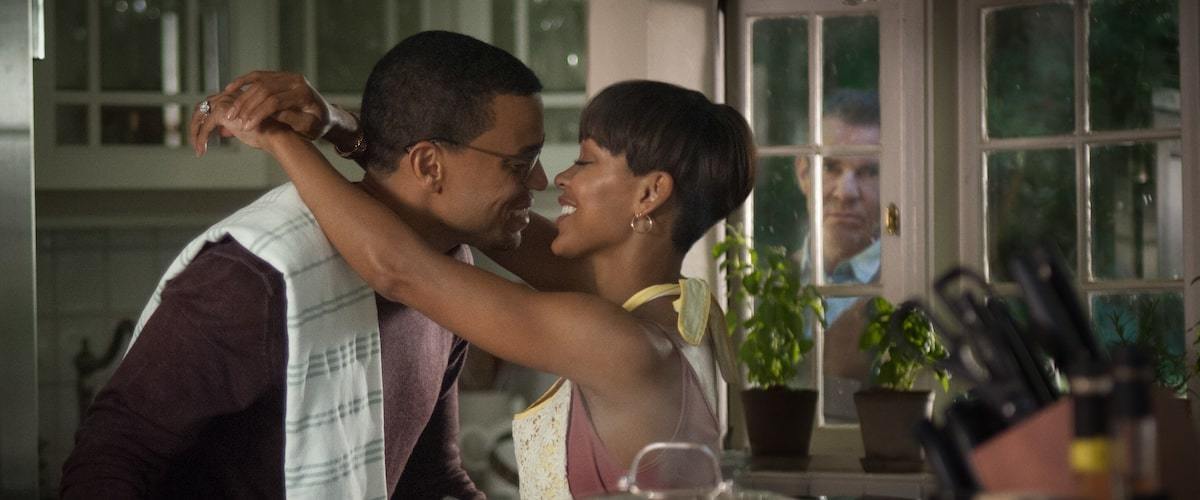
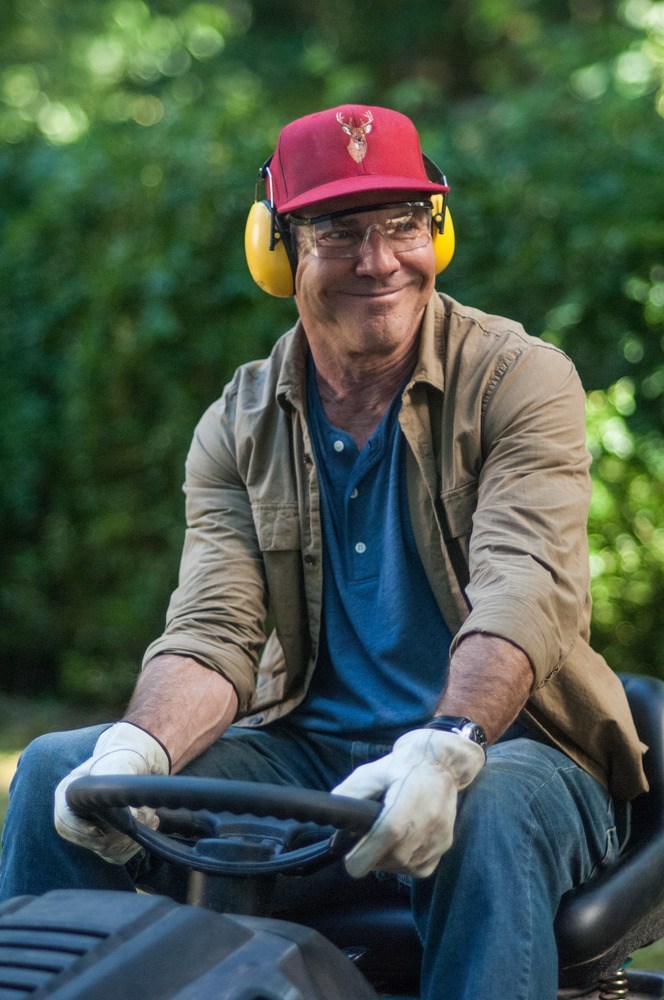
Annie (Meagan Good) and Scott (Michael Ealy) are a happy well-to-do couple buying a fancy house in fancy Napa Valley. The owner of the home they’re buying, Charlie (Dennis Quaid) is sorry to let his house go, as he lived so happily with his deceased wife there, but his daughter really wants him to move in with her. As Annie and Scott get settled, Charlie is there every step of the way, hanging Christmas lights, mowing the lawn, committing murder. Turns out Charlie is quite unstable and not ready to let the house go.
Who let early-’90s Anthony Perkins in here?
I can’t watch a stalking/home invasion movie without thinking back to the early ’90s, when this genre was particularly prominent: Pacific Heights, The Guardian, The Hand that Rocks the Cradle, Single White Female. The plots varied slightly, but the emphasis was on the danger to identity and material possessions and wealth: the white picket fence, the perfect couple/family. (And inevitably someone would be tossed off a second story landing.) More current examples that involve the same themes but are a little more diverse include Obsessed (white woman stalks her wealthy Black boss and pisses off his wife, Queen Bey) and Lakeview Terrace (Black cop stalks his neighbors, an interracial couple). Both of those and The Intruder are written by the same dude, David Loughery. The latteris the first of them to be directed by a Black filmmaker, Deon Taylor.
“Despite the constant negative press covfefe. That means get the fuck out of my house!”
As a guilty white person who genuinely gets tired of the sea of caucasians and widespread racism in movies, I needed The Intruder in my life right now. I loved Meagan Good in Eve’s Bayou, and she brightens up anything she’s in, from The Unborn to Anchorman 2: The Legend Continues. I enjoyed Michael Ealy in For Colored Girls and The Perfect Guy, and I look forward to his performance in the remake of Jacob’s Ladder. I needed a trigger-happy white guy with a red hat, who’s unwilling to yield what he sees as his property. I needed Mike (Joseph Sikora) the sassy white best friend (and his Black girlfriend Rachel, played by Alvina August) who puts himself in harm’s way just by being hostile to the villain. I needed a movie full of white service people.
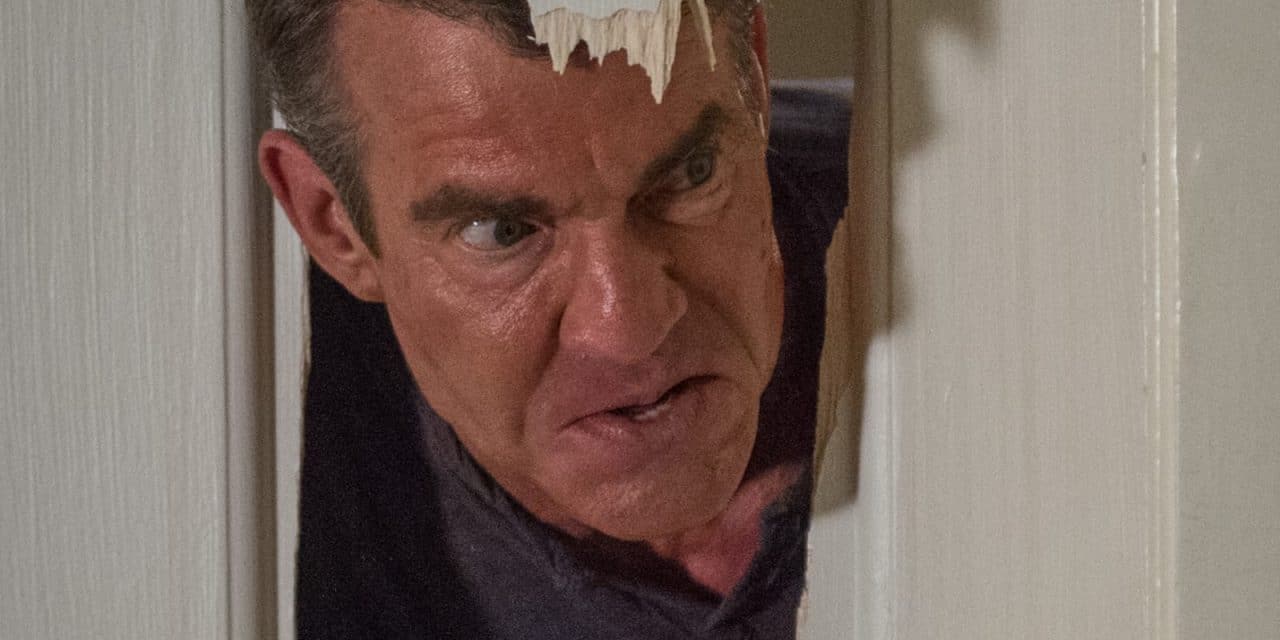
I did not need a random homage to The Shining, but that’s okay
Issues of race aside, it is a paint-by-the-numbers style of thriller. The best one can hope for with one of these is little twists that make it stand out. This one does that for me; I don’t want to give anything away, but the depth of Charlie’s madness increases continuously and builds tension successfully. I’ve seen Dennis Quaid in lots of things but never associated him with being threatening. It took some time, but he won me over in the scene when Scott is showing him around the house. Charlie balks at their removal of an old tapestry, and Scott explains that Annie wanted a painting in that spot instead. The camera is close-up on their two faces side by side facing the painting; Scott looks on, oblivious, while Charlie’s face twists in rage for a moment–and then he gets himself under control again.
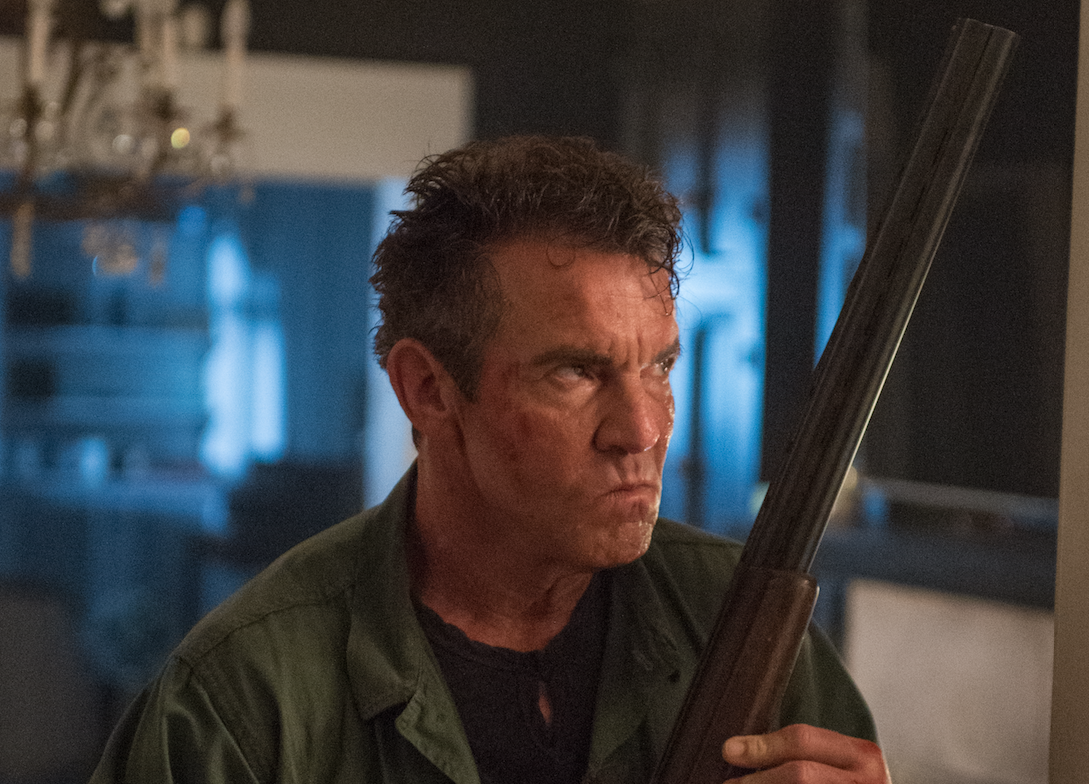
“Gonna shoot somebody…I’ll probably do it, maybe definitely…”
It’s not movie of the year, but it’s worth watching. Give it a look if you’re in the mood for something homey and inviting. Aaaaaand you don’t have to be a bleeding-heart liberal, but it helps.
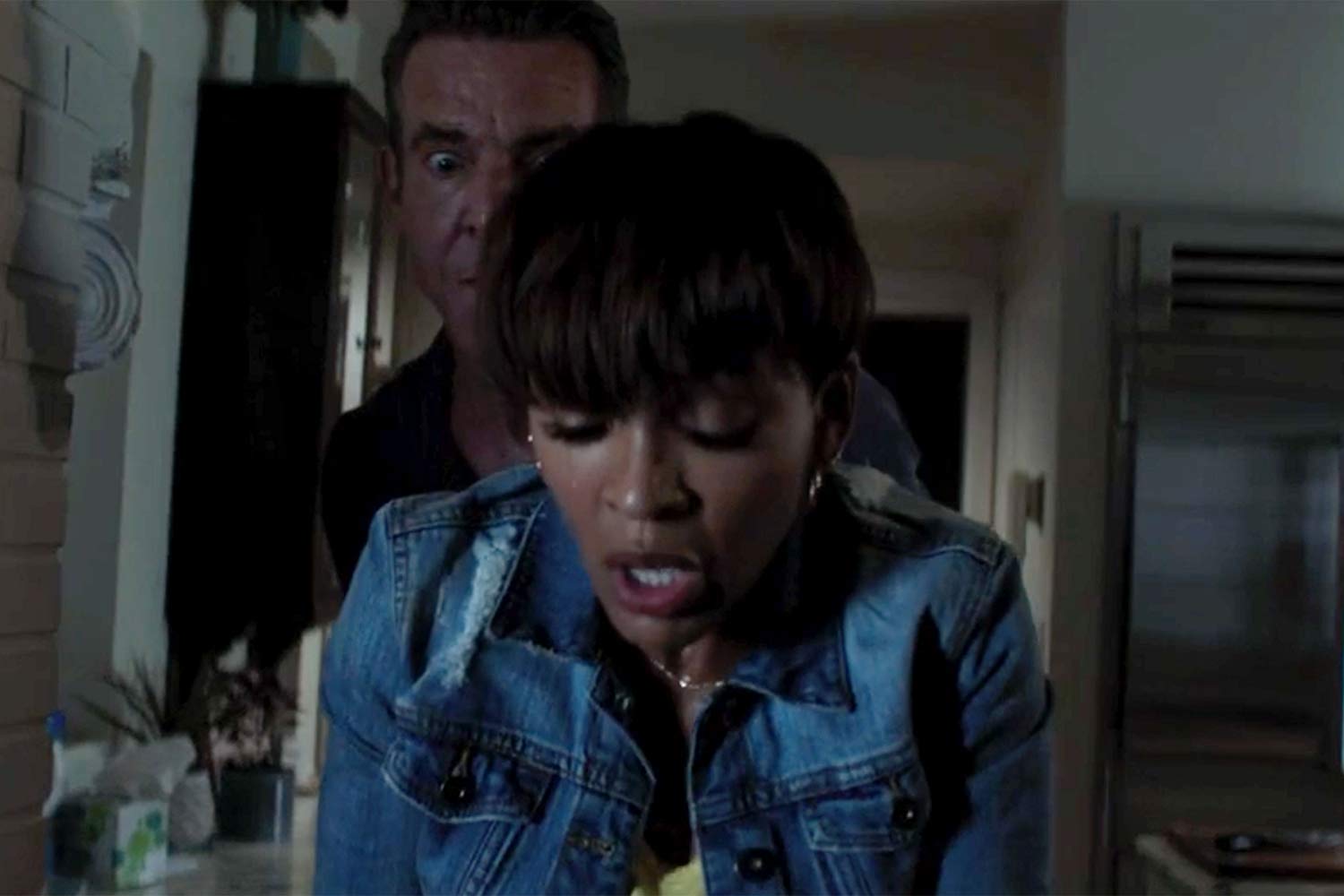
“Annie, are you okay? Annie, are you okay? Are you okay, Annie?”
I work at the public library, and occasionally my duties involve culling books that have either been circulated too often or not recently enough to keep them around anymore. While pulling fairy tale books, I noticed a few of these were quite disturbing, which launched this listicle in my mind.
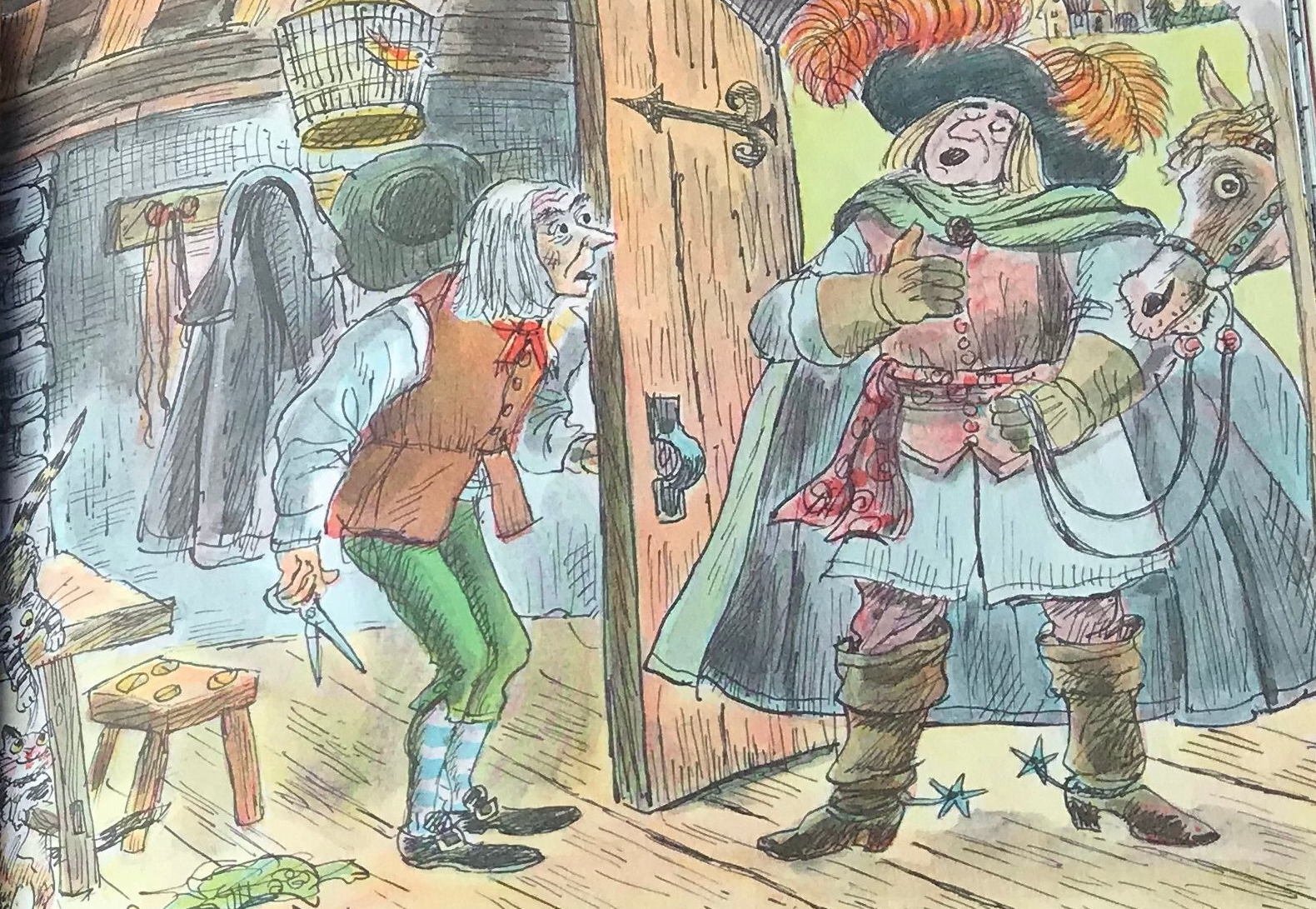
5. The Monster and the Tailor: A Ghost Story, retold and illustrated by Paul Galdone
Yeesh, these illustrations! Why does that horse have a thousand-yard stare?
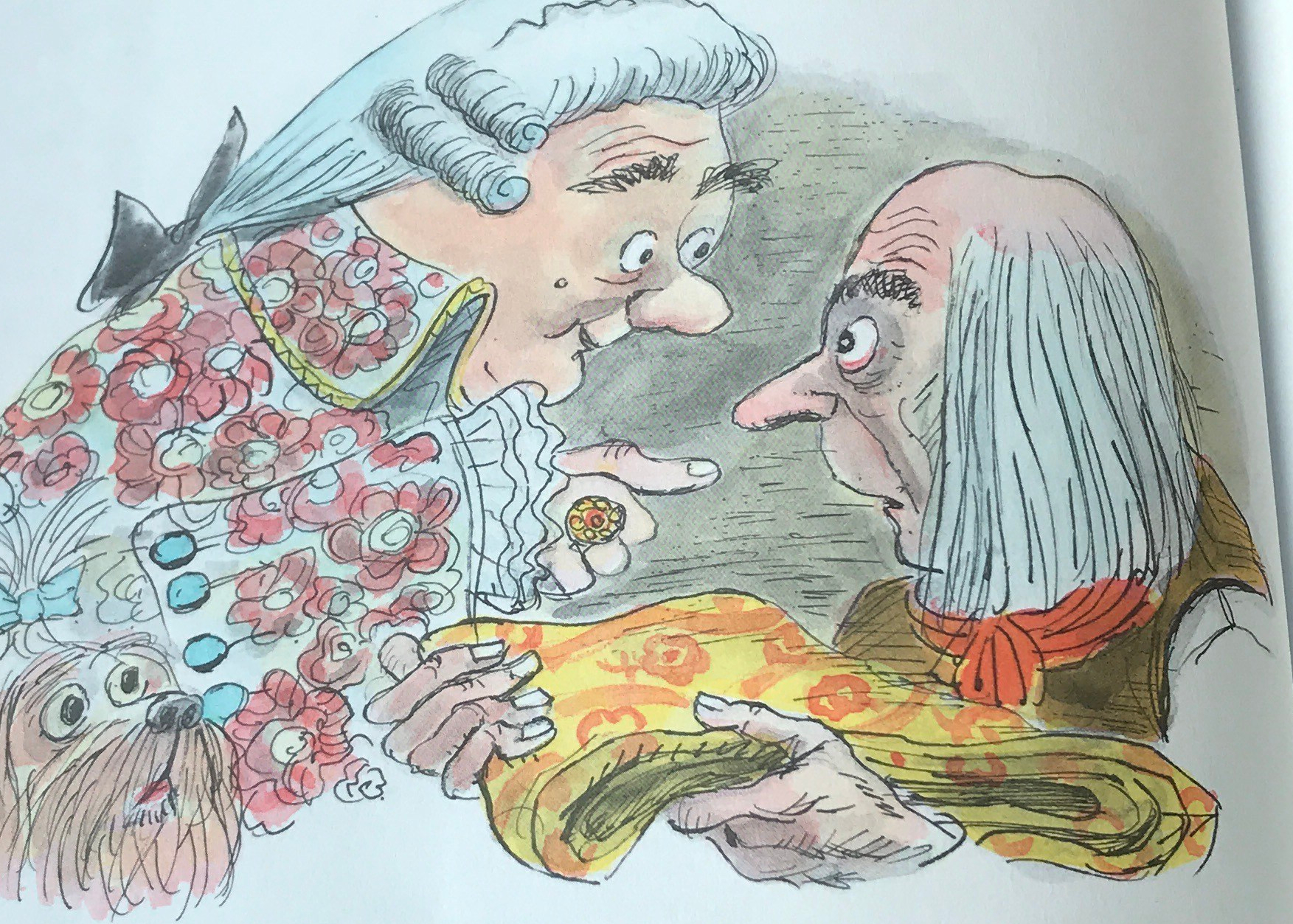
A poor tailor is summoned to the Grand Duke’s castle for a commission. Seems the Duke wants a new pair of trousers; however, he has some wonky demands to go with the job: “You must stitch the trousers in the old graveyard at night. Only then will I have good luck when I wear them—that is what my soothsayer told me” (6). Because I guess he wants crappy-looking pants that were sewn in the dark.
“I want the ugliest trousers anyone’s ever seen, it’ll totally be good luck!”
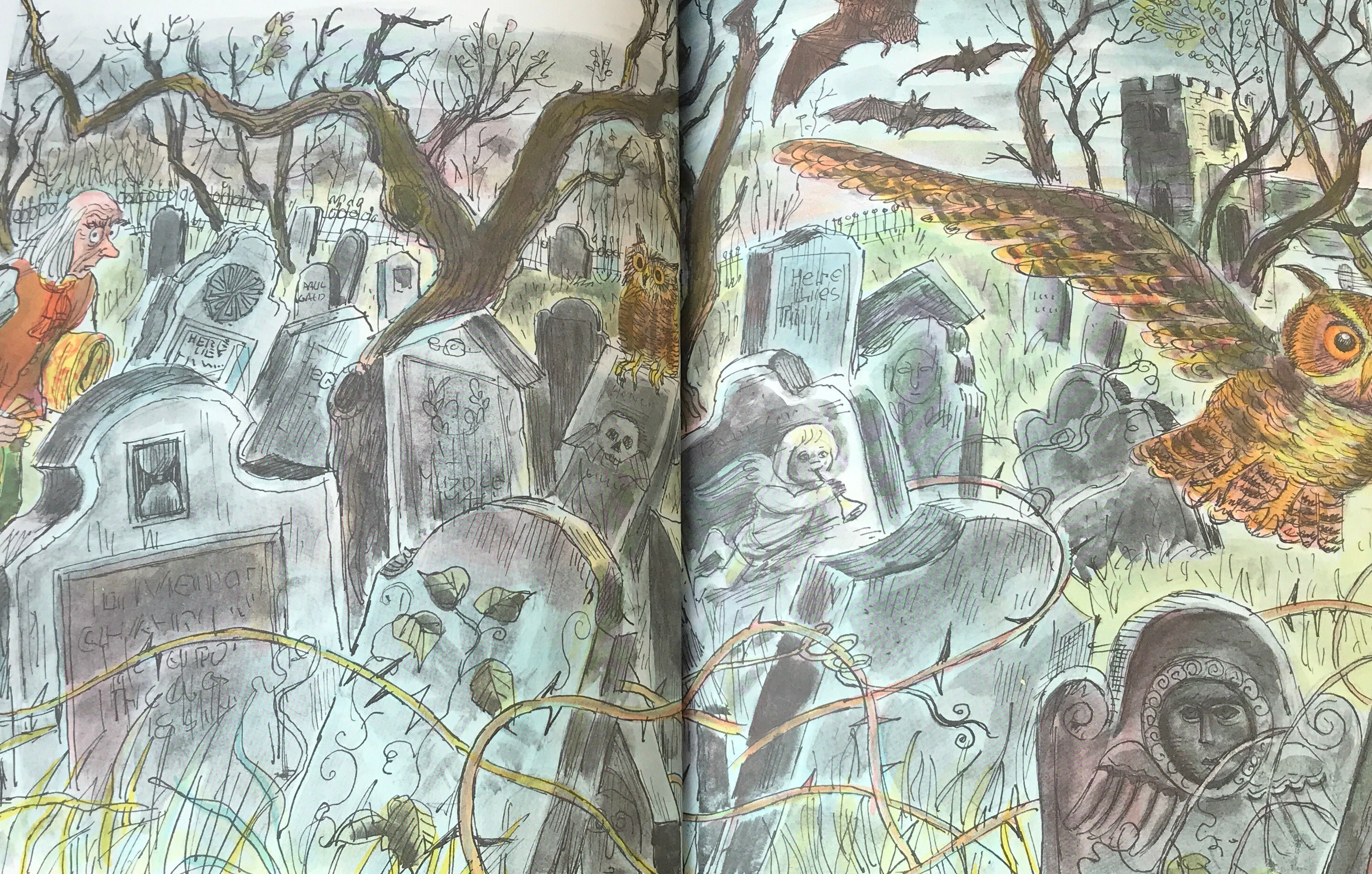
In exchange, the tailor is offered a purse of gold. Unfortunately, the cemetery is haunted by a monster that comes out only after dark, because purses of gold don’t earn themselves. The tailor heads down there and picks a “nice gravestone for a seat” (9). Although according to the illustration, these gravestones are anything but nice. I worry for the people of this town that they’re just throwing their dead bodies higgledy piggledy in the ground like that.
Dude, don’t look at me, you agreed to come here. It’s creepy, really, knock it off.
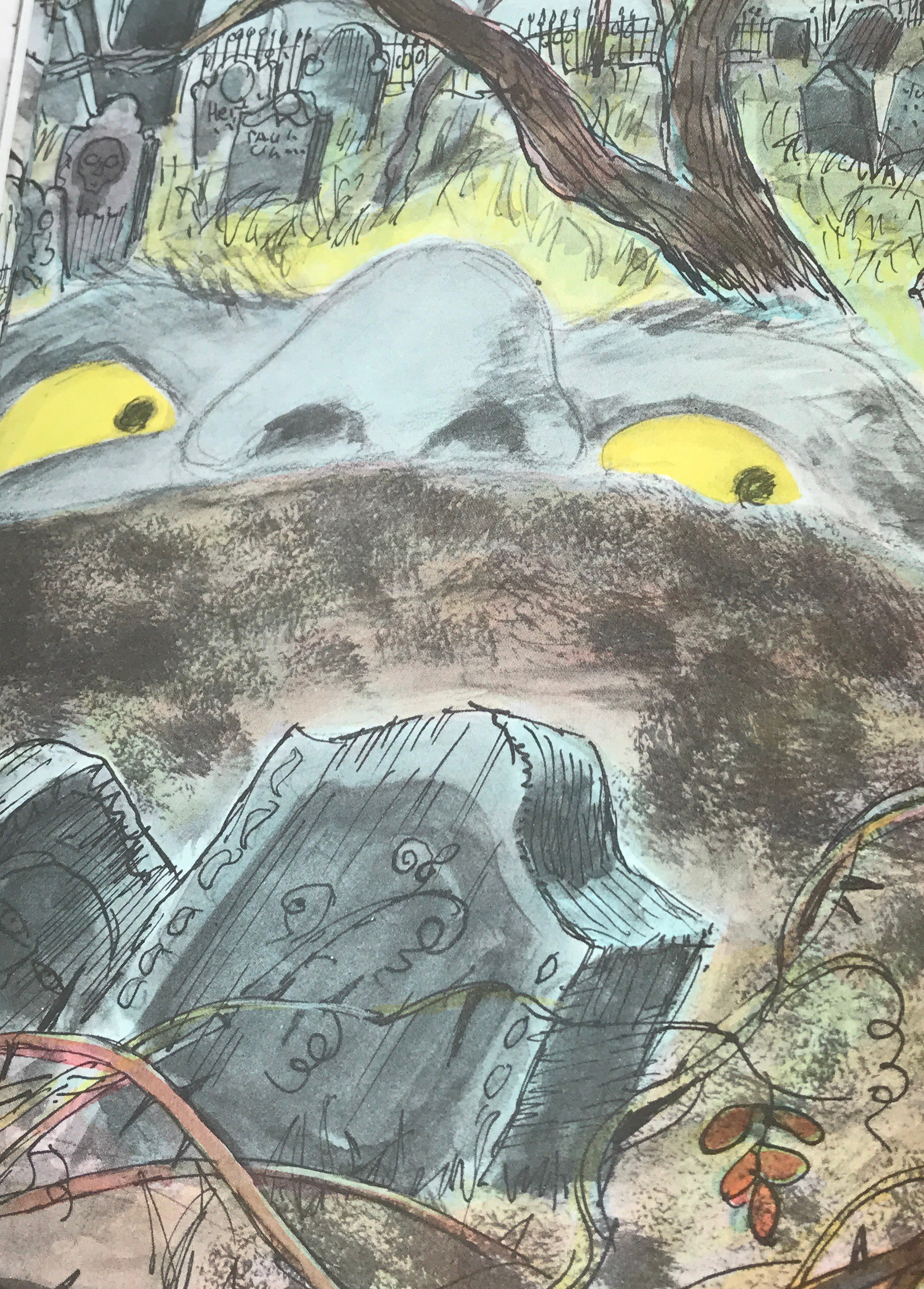
Naturally once the tailor assumes he’s safe, the monster rears its giant head and starts asking repetitive questions, starting with, “Do you see this great head of mine?” (14-15). In what sounds increasingly more like come-ons than threats, the giant brags about his neck, chest, and arms.
“Can you see up this great nose of mine?”
Luckily he takes so long to get all the way out of the ground that the tailor has time to sew a full set of slacks and get a head start. He escapes successfully, gets his gold, and the monster disappears forever for no particular reason.
4. The People Could Fly: American Black Folktales, retold by Virginia Hamilton, illustrated by Leo and Diane Dillon
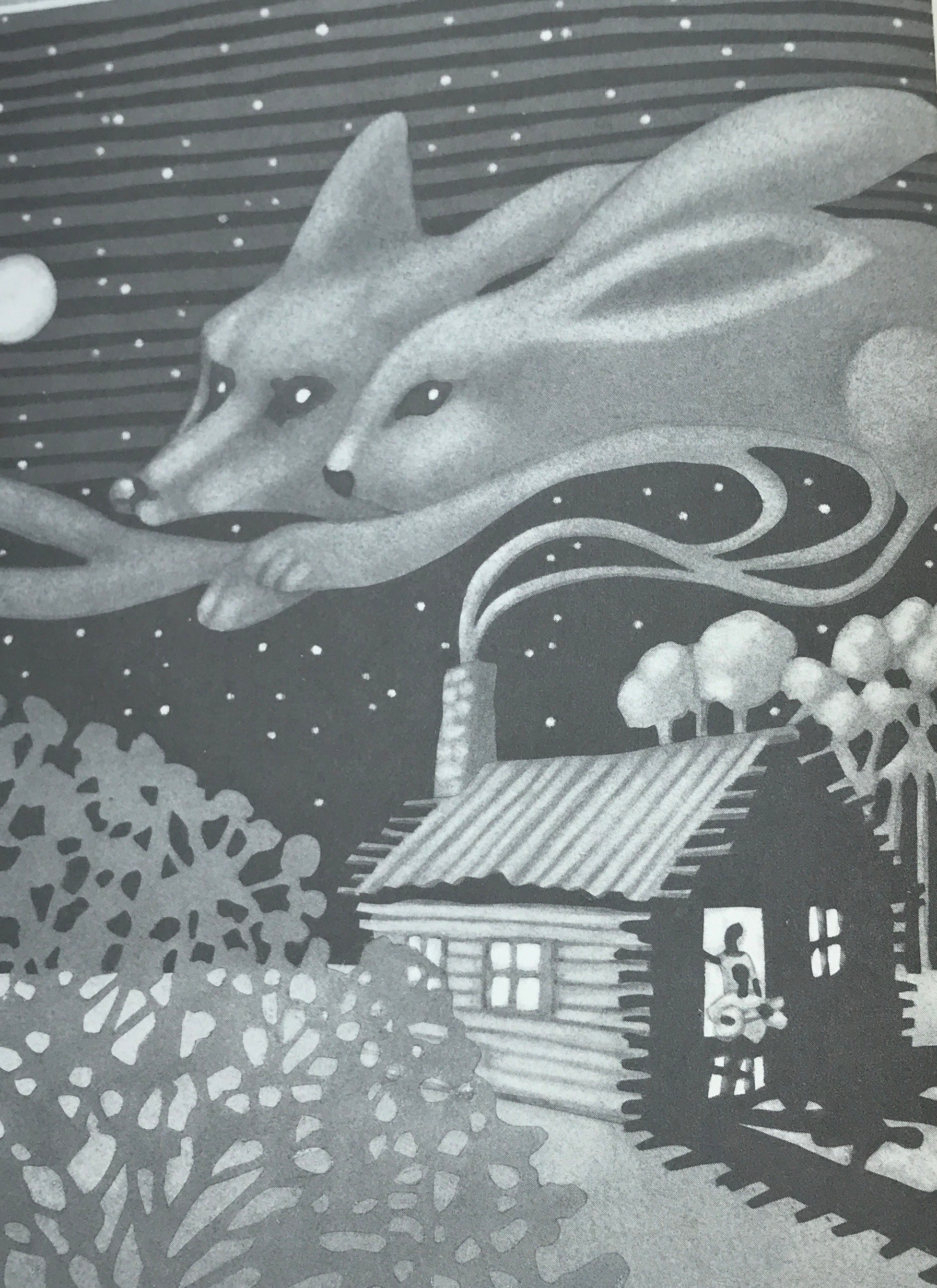
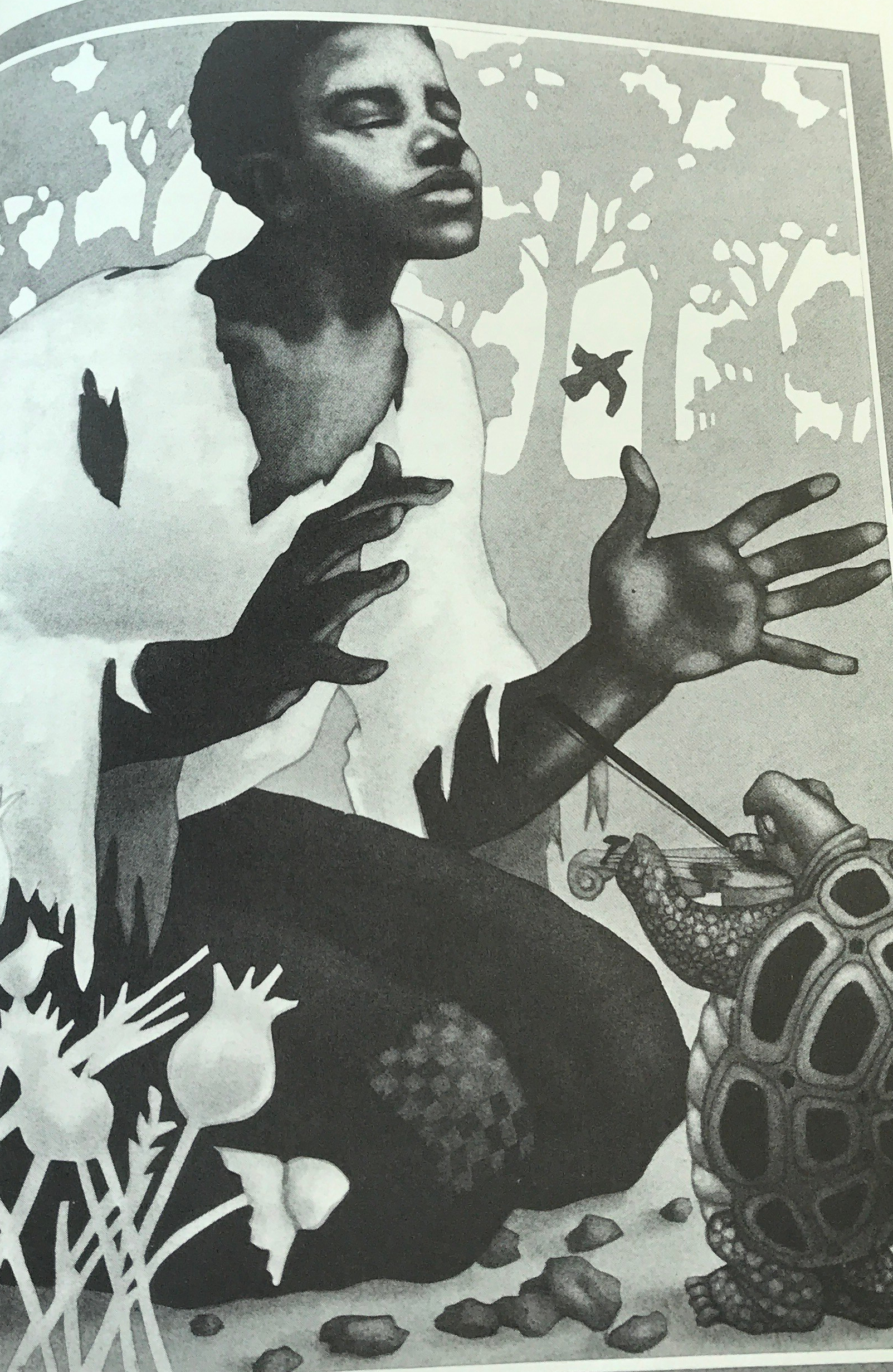
This, unlike the other four books, was a great favorite of mine as a child. It’s comprised of old-timey stories from African American culture, often involving slavery, recounted in a folksy, informal way that probably wouldn’t fly today. (I swear it’s not as cringe-worthy as it sounds. Hamilton was a Black woman preserving her heritage and emphasizing the beauty of simple freedom. As a white ten-year-old, it gave me a lot to think about.) The tales, along with the artwork, are gorgeous and heartbreaking.
Though I can’t help but giggle at this story, “The Talking Cooter,” given that the word cooter is also southern slang for lady parts
And some of them are creepy as fuck.
“Bwah, you’re supposed to be pickles!”
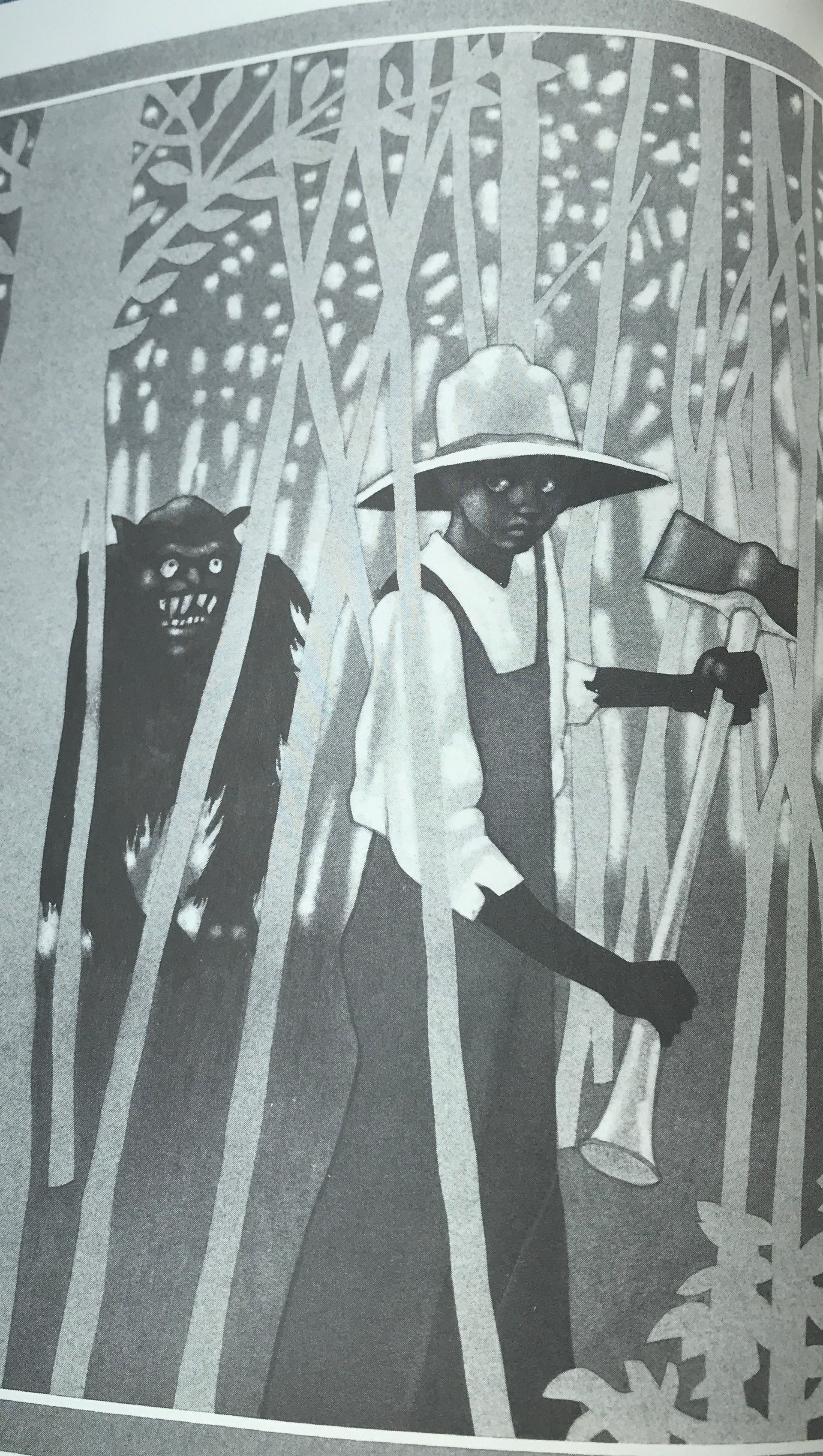
But the most eerie, in my humble opinion, is “Wiley and the Hairy Man.”
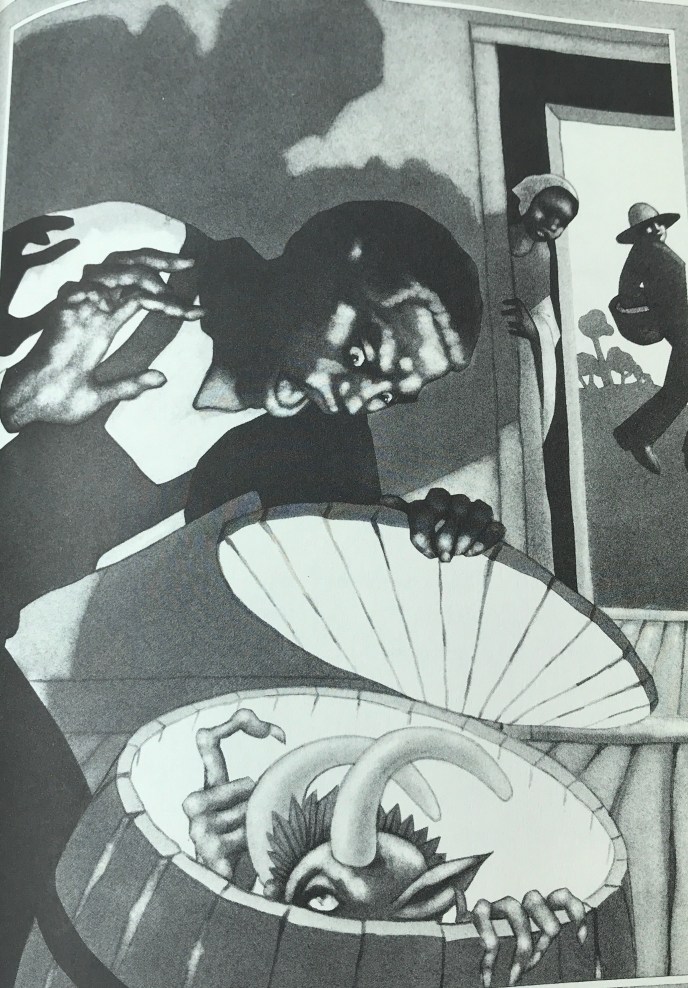
Kill it! Kill it with fiiiiiire!
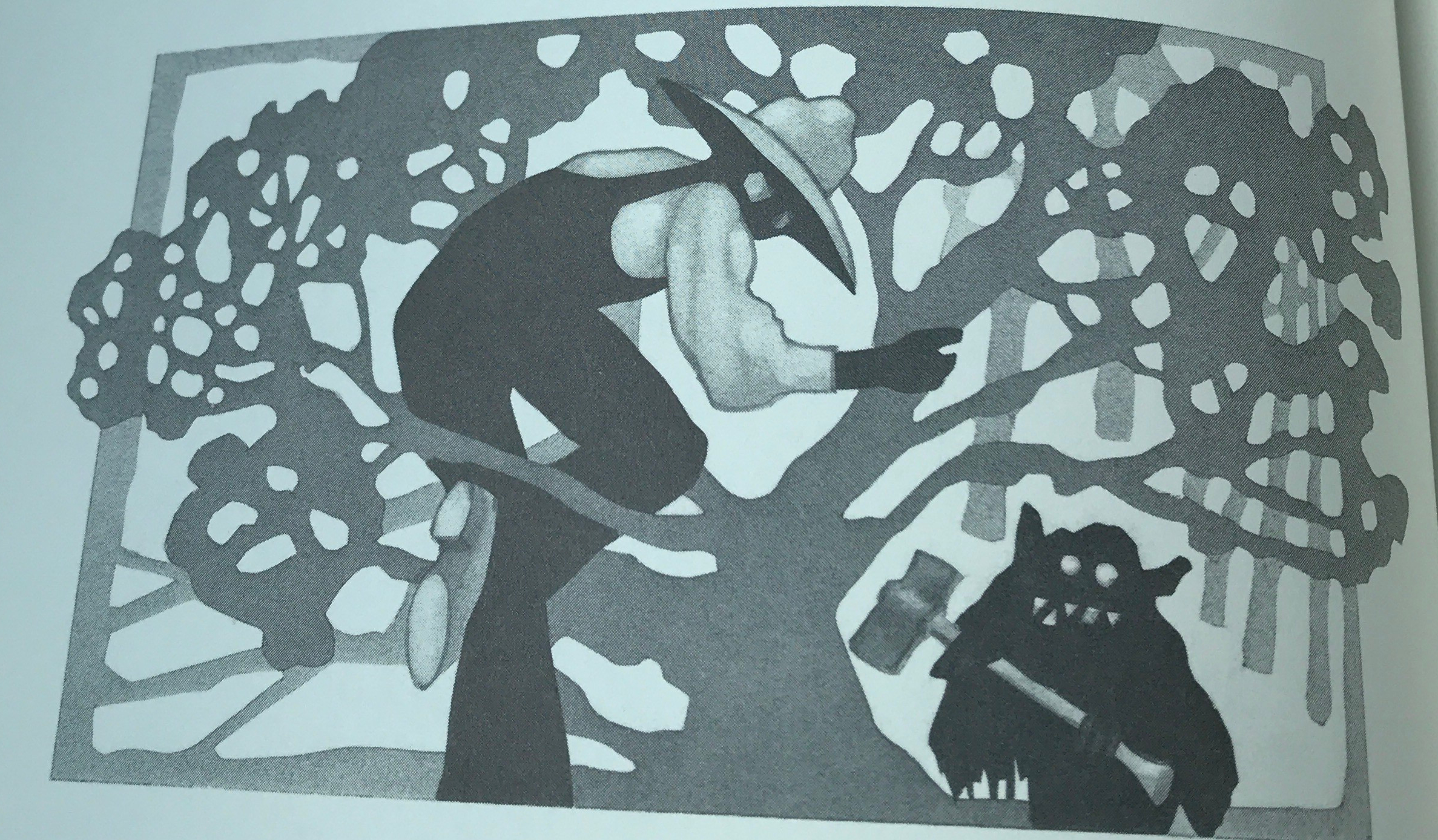
We find out in the first paragraph that our child protagonist Wiley has lost his father to the titular creature after falling in the river: “And say they never found him. But they heard a great bad laughin way off across the river. And everybody sayin it, ‘That’s the Hairy Man.’ Sayin Wiley’s papa never got across Jordan because the Hairy Man block his way. ‘Wiley,’ his mama tell him, ‘the Hairy Man’s got your papa and he’s gone get you if you don’t look out” (90). Fortunately, ol’ HM is afeared of dogs, so all Wiley has to do is keep his dogs with him at all times. Which is swell until the monster distracts them and they run away. “Hairy Man just grinnin at him. Hairy Man was ugly, even when he grinned. He was coarse—hairy all over. His eyes burned red as fire. He had great big teeth, with spit all in his mouth and runnin down his chin. He was a terrible-lookin hairy man” (95).
Oh shit Wiley, he’s got your axe now! Game over, man!
Happily, Wiley is able to trick the Hairy Man by calling his dogs. His mama then reveals that he can again trick him (which would have been good to know earlier), and if he tricks him three times, HM will have to leave him alone forever. After the second time being fooled, the Hairy Man comes straight to Wiley’s house, demanding, “‘Give him over. If you don’t I’ll sure bite you and poison you.’ ‘I’ll bite you right back,’ Wiley’s mama said” (101). He’s fooled again ’cause Wiley’s mama is awesome, and Hairy Man goes storming away. However, “They say that Hairy Man is still deep in the swamps somewhere. Say he is waitin on the right time” (103).
3. Rumpelstiltskin, retold and illustrated by Paul O. Zelinsky
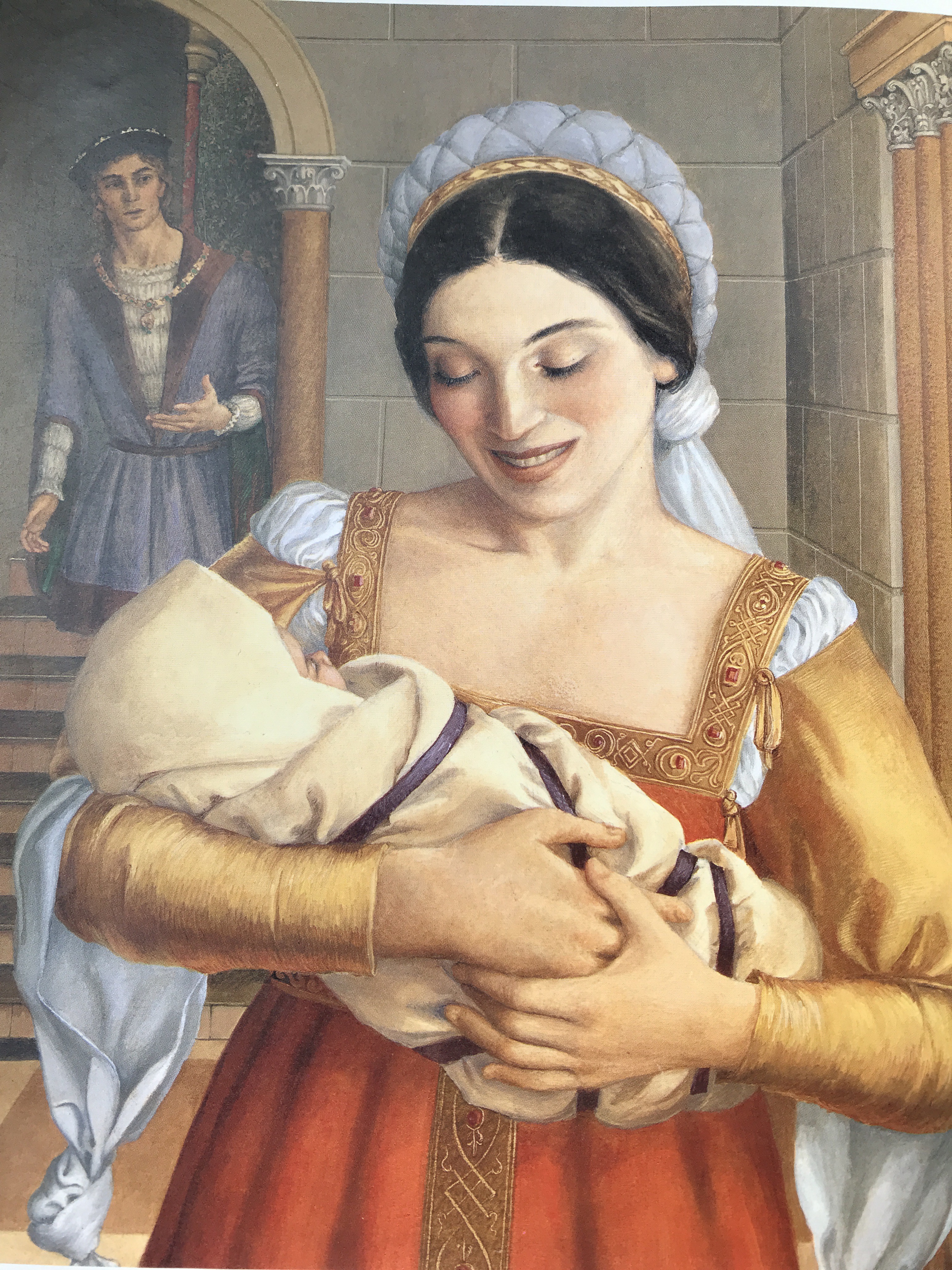
The illustrations of people are perfectly lovely
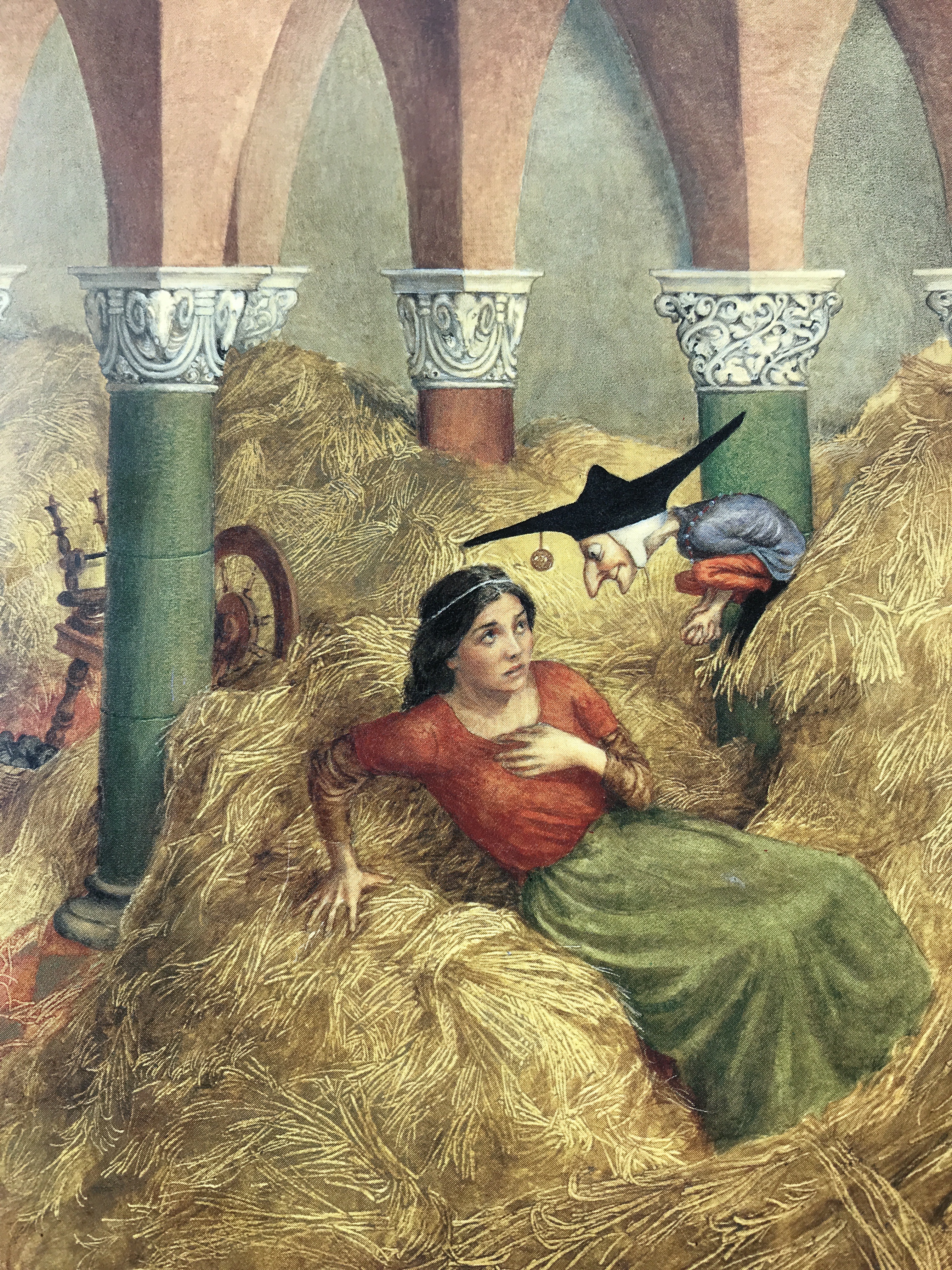
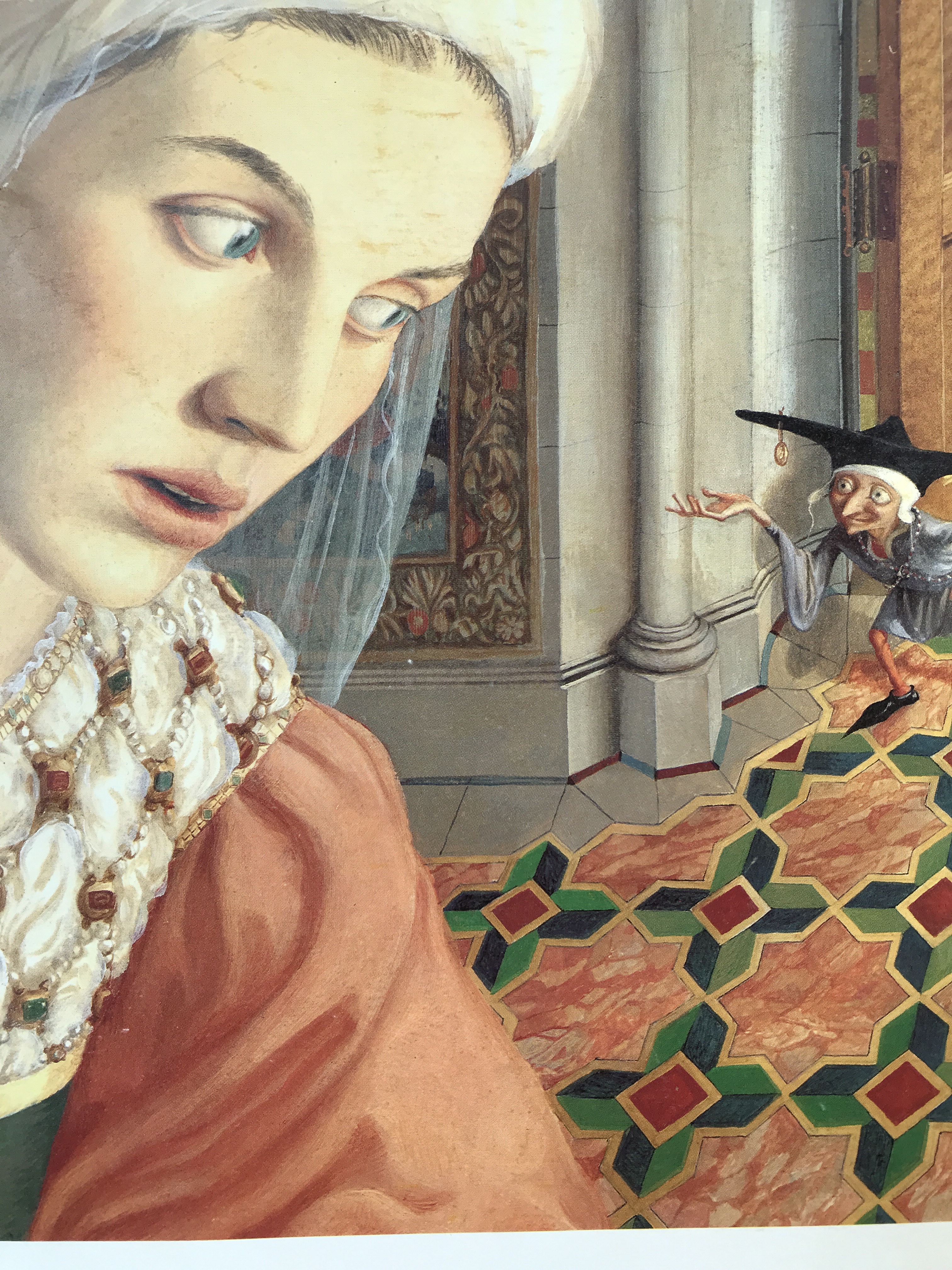
A miller’s daughter (who has no name, natch) is possessed of a shit-talking father, who tells the king that she can spin straw into gold. The king decides that sounds nifty and throws her ass in a large room full of straw, reassuring her that, “ ‘You may spin all night, but if you have not spun this straw into gold by morning, you will have to die,’” (10). Luckily a funny little man shows up and does it for her, in exchange for her necklace. Unluckily, the king isn’t happy with one room full of gold and dumps her in an even bigger room with the same instructions. The man again shows up and saves her in exchange for her ring.
Yecccchhhhh kill it with fiiiiiire!
“The king rejoiced at the sight of so much gold, but still he was not satisfied. He led the miller’s daughter to a third, even bigger room that was piled high with straw. ‘Tonight, you must spin this straw too,’ ordered the king. ‘And if you succeed, you shall become my wife.’ Because, he thought, I could not find a richer wife in all the world” (20). Score! What an amazing husband this guy will be! Rumpy shows up a third time and demands her firstborn son. MD decides that it’s possible she won’t even have kids, so she agrees since she’s out of options. And then she actually marries that asshole king. Once their son is born, back comes Rumpelstiltskin for his prize.
What’s going on with the architecture here? The king should have had her weave a floor that doesn’t have random hills.
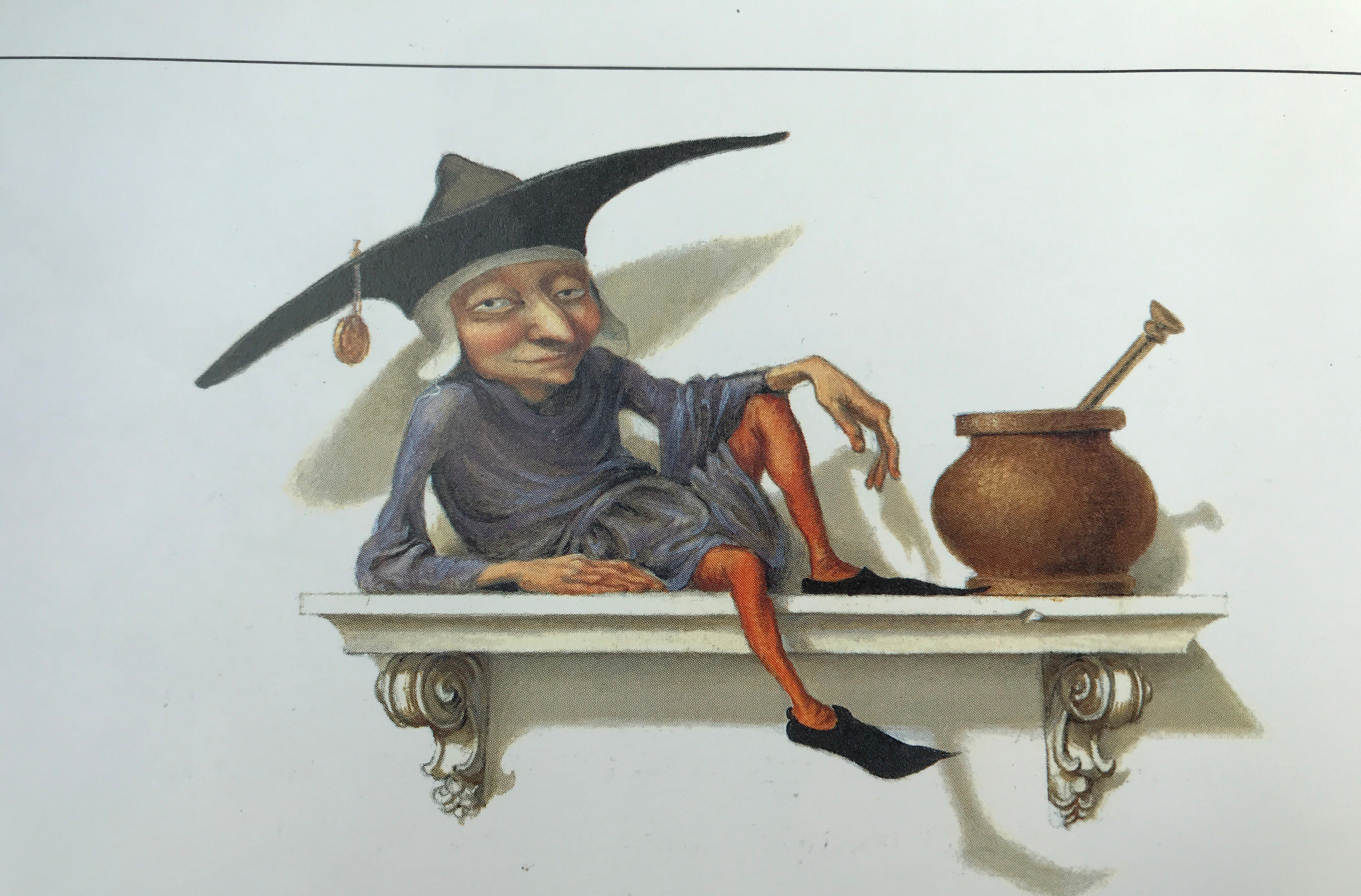
She begs and pleads and he feels sorry for her, so he gives her three days to guess his name. She tries every name she can think of, even some doozies like “Beastyribs,” “Leg O’Ram,” and “Stringbones” (30). Good thing the queen has servants out spying for her, because a maid finds him dancing around yelling his own name. When the queen guesses his name, he loses his shit, yelling “ ‘The Devil told you that! The Devil told you that!’” Then “in a fury he jumped on his cooking spoon and flew out the window” (37). Don’t ask me what he was cooking with that spoon. And, I’m sensing a pattern here, he was never heard from again. As gross as this story is, it beats the original Grimm version from 1808, Rumpenstinzchen: “In this story a young girl, given flax to spin into linen, is distressed to find that only gold thread comes out of her spinning wheel. A little man appears and offers to help her by causing a prince to carry her off and marry her” (40).
Ew, his come-hither stare is worse than his threatening glare
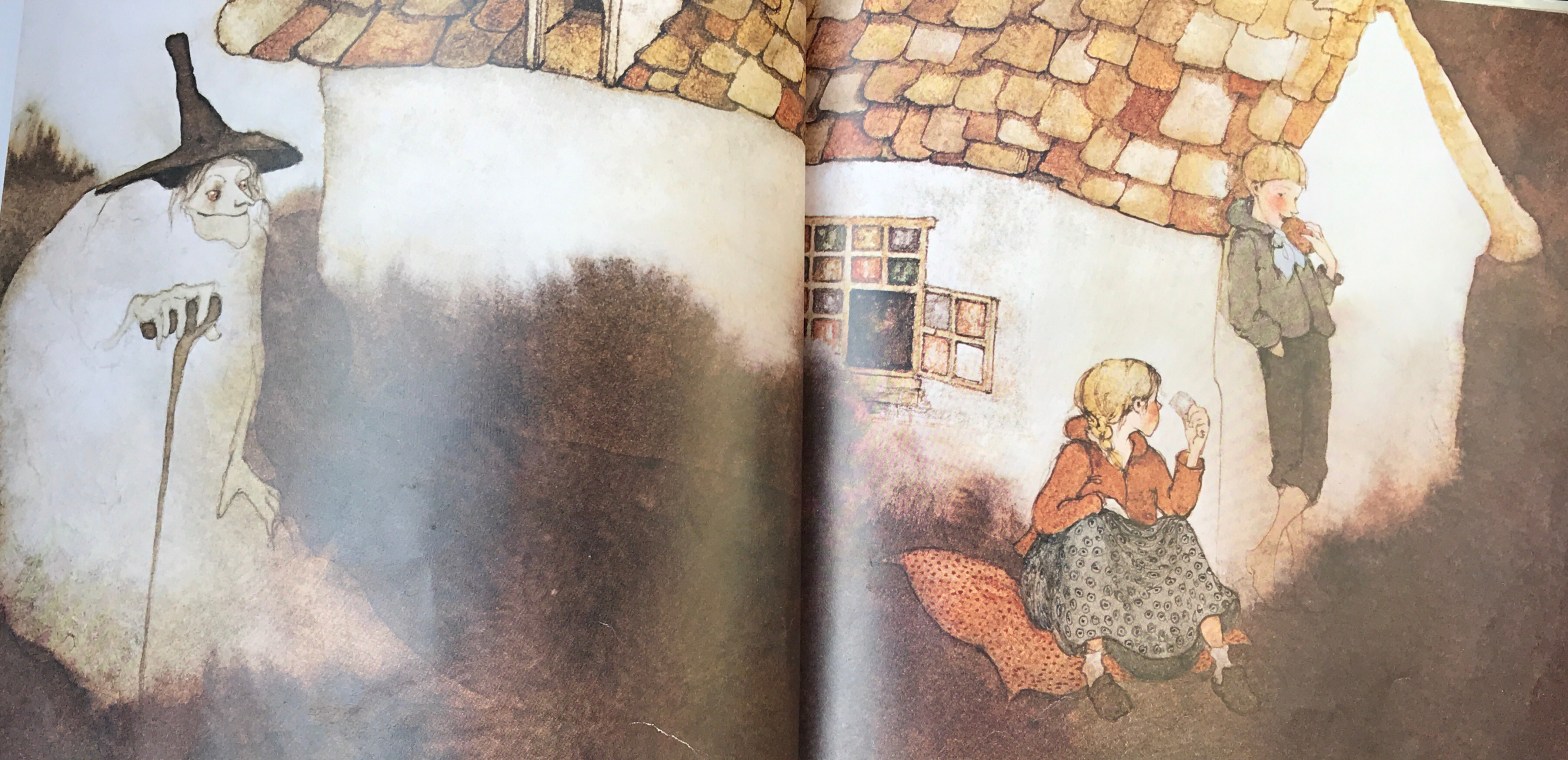
2. The Brothers Grimm: Hansel and Gretel, retold by Elizabeth D. Crawford, illustrated by Lisbeth Zwerger
We begin with a poor family in famine times: father, stepmother, son, and daughter. The wicked stepmother comes up with a plan to improve their lot: “ ‘You know what, husband, replied his wife, ‘tomorrow morning early we will take the children into the forest and give them each a morsel of bread. Then we will go to our work and leave them alone. They will never find the way home again, and we will be rid of them.’” (3) To which he replies, “I was thinking of just cutting our unlimited data plan, where did that come from?” Just kidding, he reluctantly agrees.
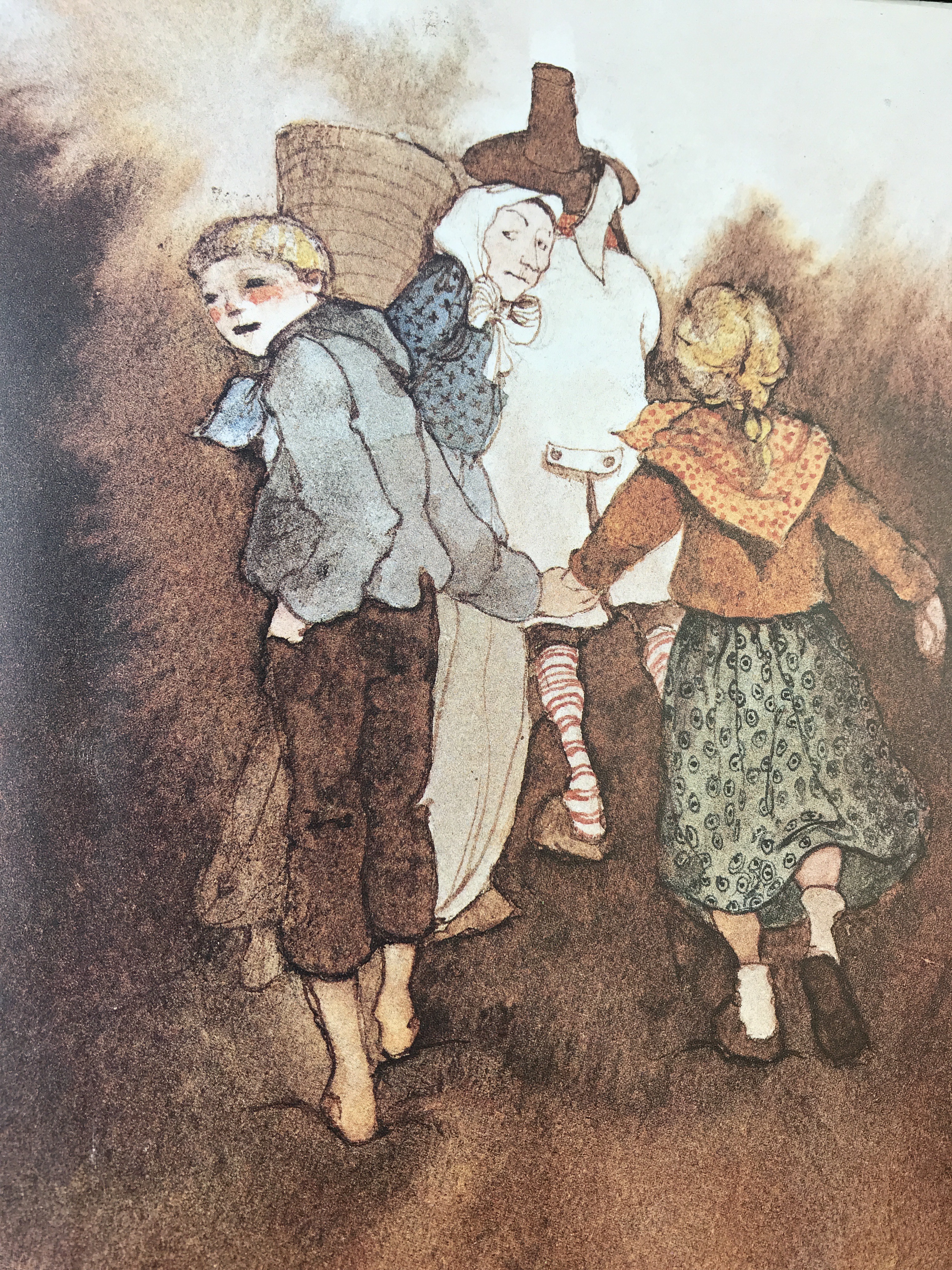
Hansel…Hansel…Why do you have no eyes?
Hansel leaves a trail of stones, and they come home. Of course Stepmummy is delighted. The narrator kinda tries to explain the husband’s motivation to try to lose them again: “But the woman paid no heed to what he said and nagged him and reproached him. Once you’ve said yes, it’s hard to say no, and because he had given in the first time, he gave in the second time too” (8). This time Hansel uses bread crumbs, which get eaten, so they’re super lost for days. Then they see the gingerbread house, and can’t resist pawing at it with their little germ-laden hands.
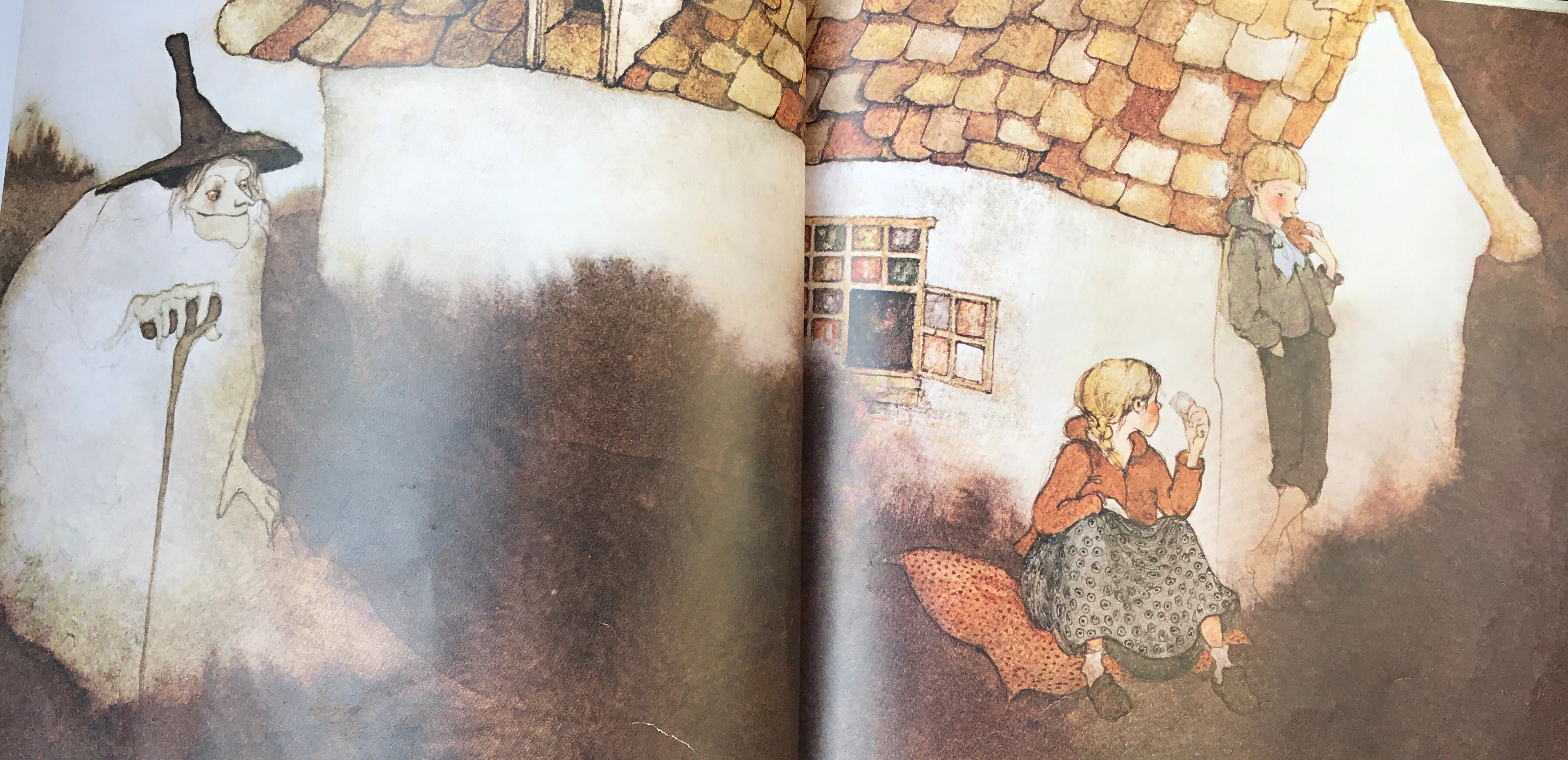
Look at these assholes, struttin around like they own the place
The witch pretends to be nice, but “Whenever a child came into her power, she killed it, [not sure if it’s disturbing to have the child deperson-alized with the pronoun “it” or neat that a book from the ‘80s didn’t automatically revert to “he”] cooked it, and ate it, making a feast out of it” (19).
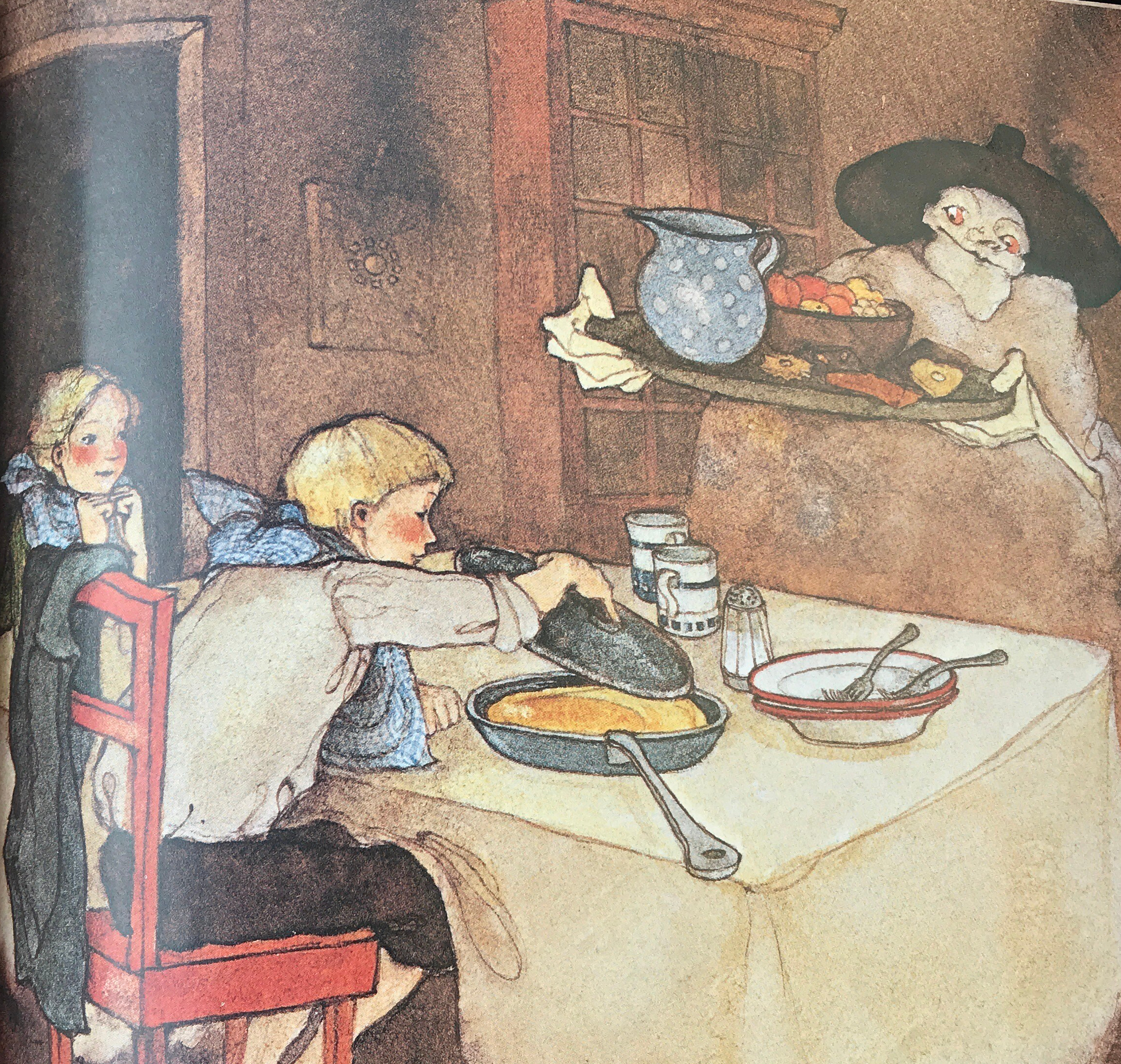
Jeez, Hansel, isn’t that lid hot? Slow down and save some for Gretel!
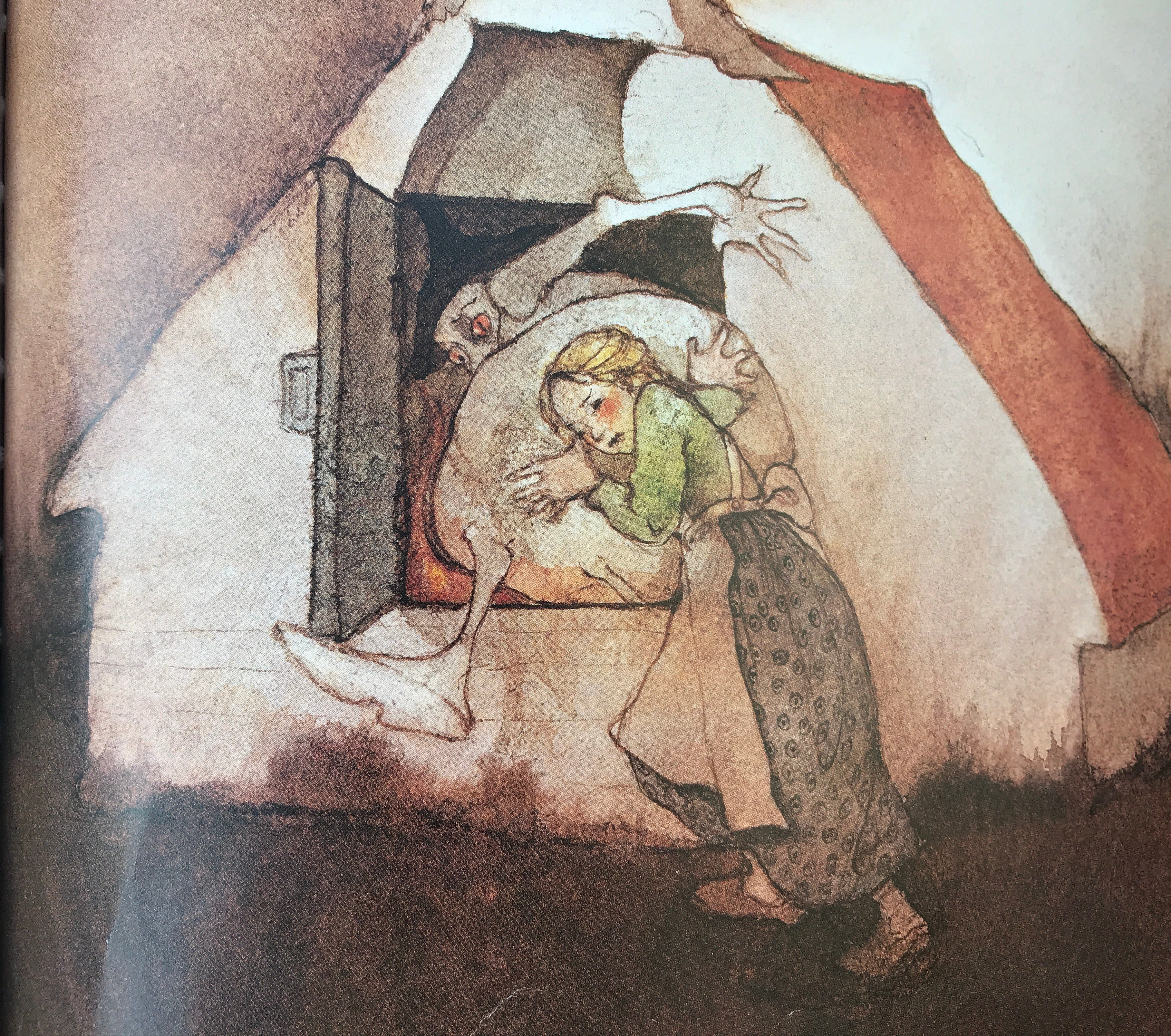
She proceeds to put Hansel in a kennel and make Gretel cook food for him that she is fully conscious is meant to fatten him up for being eaten. Meanwhile, she gets scraps. Hans tricks the witch for a month by letting her think he’s not gaining weight, but she decides she’ll eat him anyway. This is when Gretel shoves her in the oven. (And kills her with fiiiiiire!)
“I say, I don’t care for this a-tall!”
Ever blasé, they realize they have the run of the place, now full of treasure for some reason, which they don’t hesitate to pocket. Suddenly they know the way home after riding a duck across a lake, and they go back to their dad, who’s totally sad about murdering them. Also, “The woman had died” (25). Happy ending: “Then all their troubles were at an end, and they lived together in complete happiness. My tale is done, and there a mouse does run. Whoever catches it can make a big fur cap of it.” Whatever the bloody holy hell that means.
1. The Pancake Boy: An Old Norwegian Folk Tale, retold and illustrated by Lorinda Bryan Cauley.
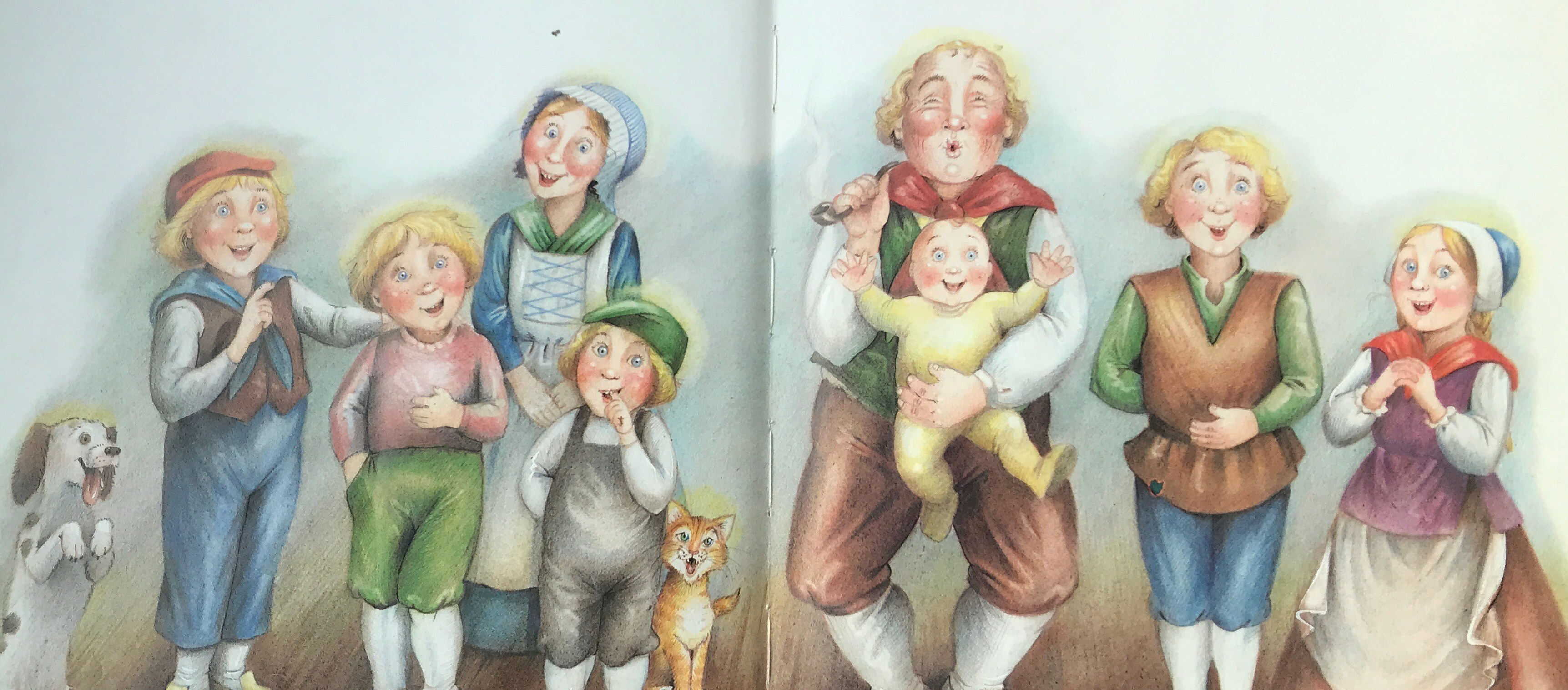
Kill them with fiiiiiiire!
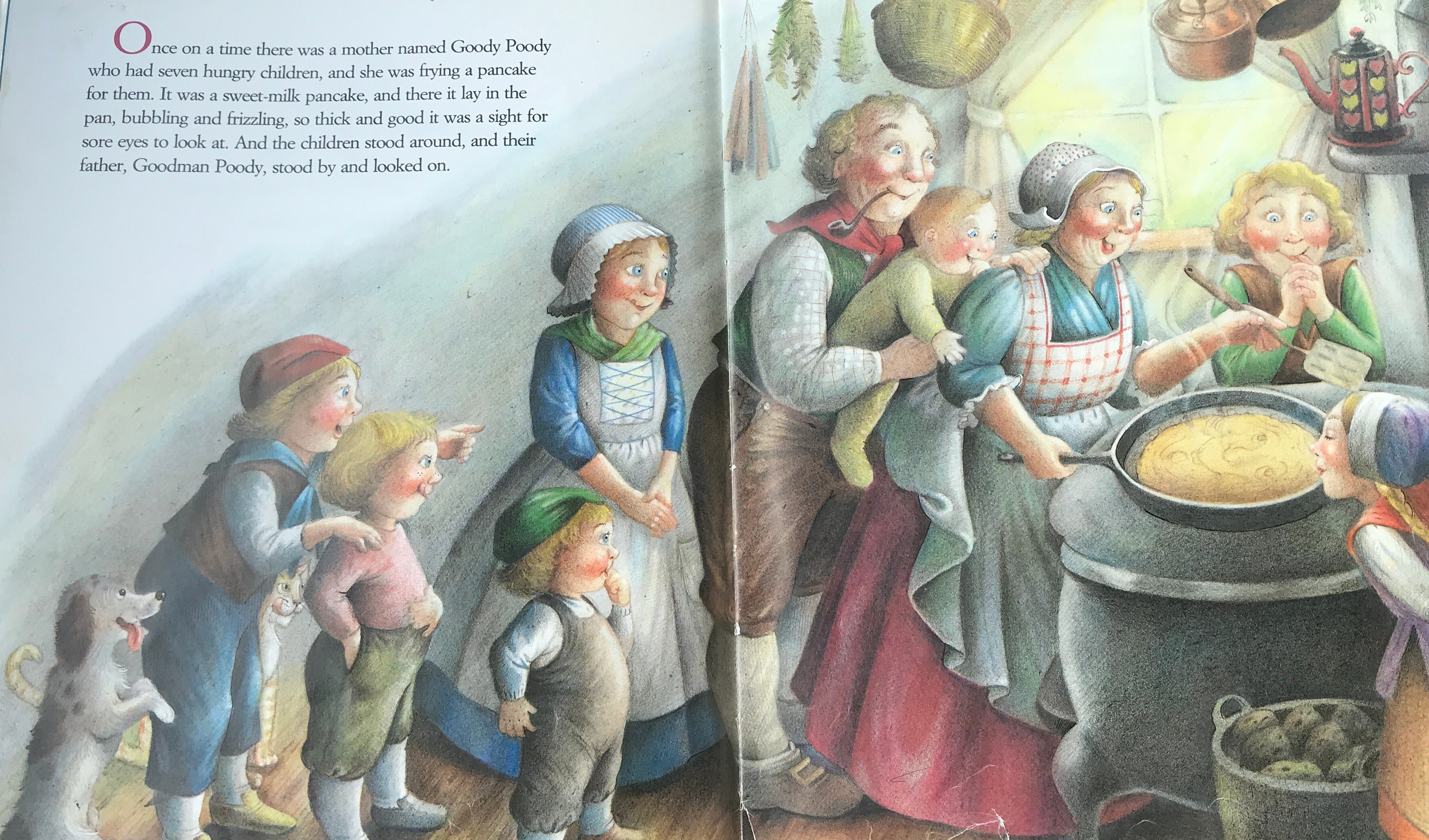
The book opens with a recipe for pancakes, in case its readers are eager to create their own anthropomorphic monstrosity. Goody Poody, Goodman Poody, and their seven hungry children are waiting for one pancake to feed all nine of them. No one notices it has a face. How about some potatoes, maybe?
Potatoes only have eyes, waka waka!
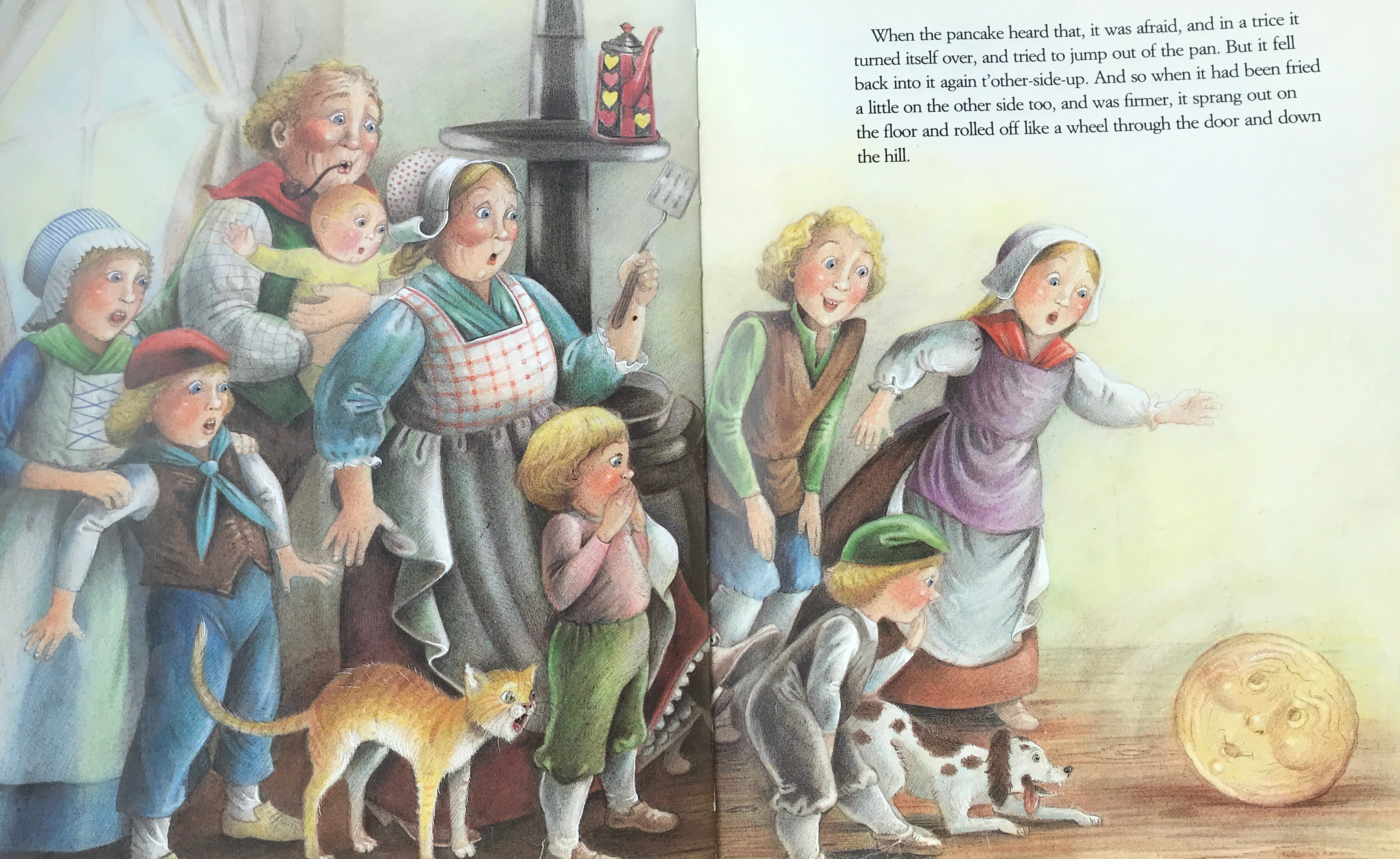
Clearly they’re insane with hunger. “Look how fat and happy it lies there,” they muse (12). “When the pancake heard that [despite its lack of ears], it was afraid, and in a trice it turned itself over, and tried to jump out of the pan” (14-15). It succeeds in escaping, even though the family is yelling for it to stop; it’s faster than they are.
If I had a nickel for every time my meal got up and rolled away by itself…
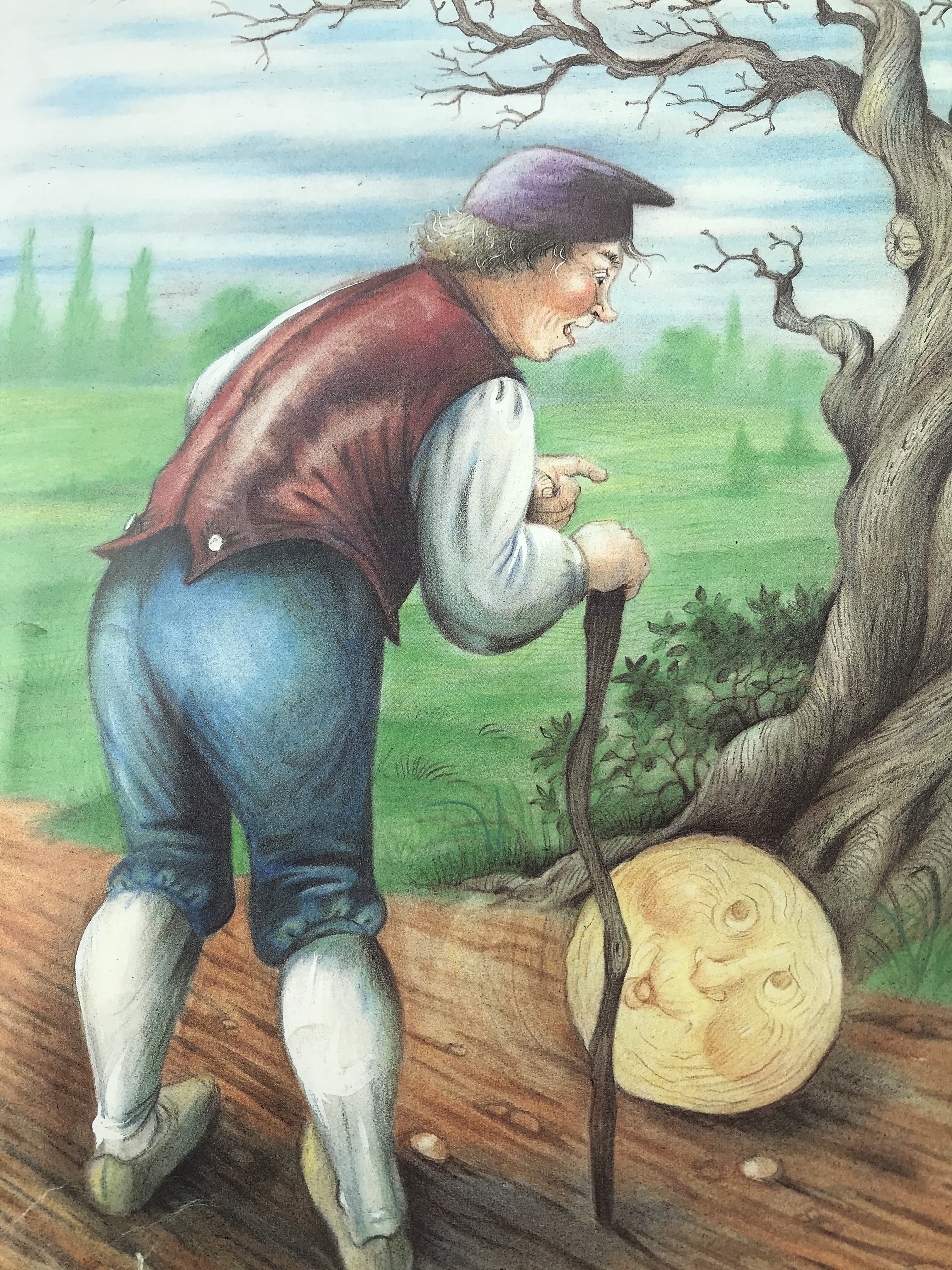
It continues traveling, and comes upon a random guy. “ ‘Good day, pancake,’ said the man. ‘God bless you, Manny Panny,’ said the pancake [so now it knows names? And let’s not get started with what kind of theology humanoid breakfast foods follow.] ‘Dear pancake,’ said the man, ‘don’t roll so fast. Stop a little and let me eat you up’” (18). Surprisingly, Pancake does not go for this, and rolls away taunting the man.
“Seriously, Manny, I’m all gross and dirty from rolling on the ground, what is wrong with you?”
It next comes across a number of creatures that want to eat it: a hen, rooster, duck, goose, and gander. Then a pig pretends to be friendly in a scheme to eat it. “ ‘Nay, nay,’ said the pig, ‘you needn’t be in such a hurry; we two can then go side by side and see one another through the wood; they say it is not too safe in there.’ [Why, there could be ten farm animals that want to eat it. Or a wild animal. Or two wild animals!] The pancake thought there might be something in that, and so they kept company” (29). Then the pig eats it (33).
“Ouf ouf.”–actual quote
My tale is done, so go catch a rodent and make a hat out of it or something.
Works Cited
Cauley, Lorinda Bryan. The Pancake Boy: An Old Norwegian Folk Tale. New York:
Putnam Juvenile, 1988.
Crawford, Elizabeth D. The Brothers Grimm: Hansel and Gretel. Saxonville:
Picture Book Studio, 1988.
Galdone, Paul. The Monster and the Tailor: A Ghost Story. New York: Clarion
Books, 1982.
Hamilton, Patricia. The People Could Fly: American Black Folktales. New York:
Alfred A. Knopf, 1985.
Zelinsky, Paul O. Rumpelstiltskin. New York: E.P. Dutton, 1986.




 GhoulieJoe