‘Hell Fest’ is Pretty Decent

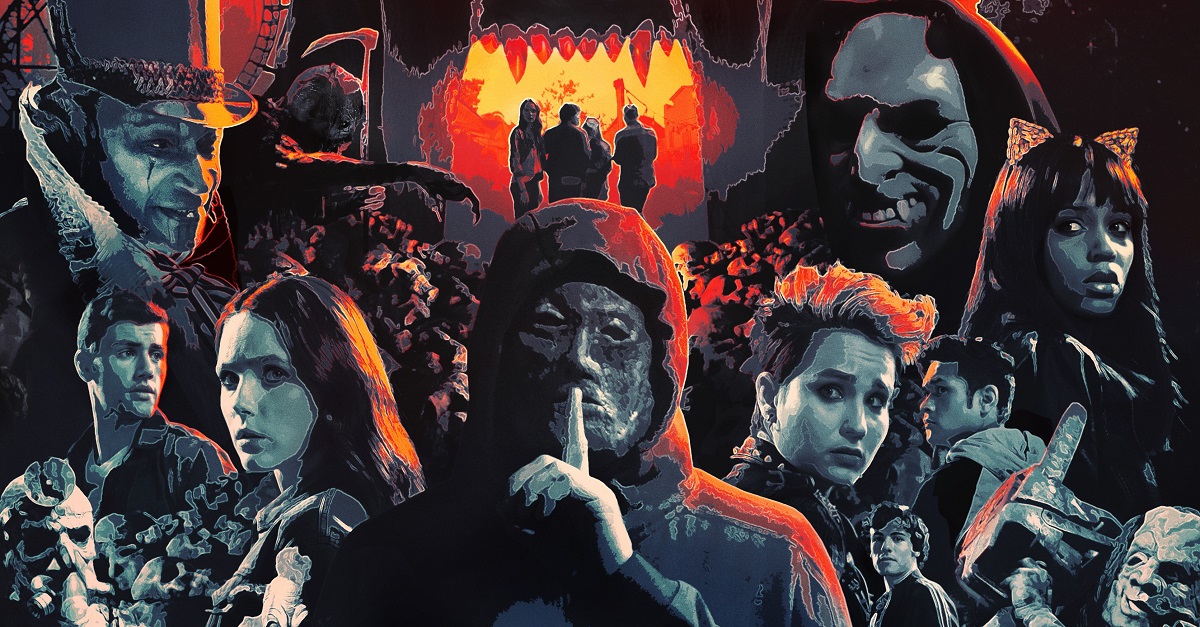
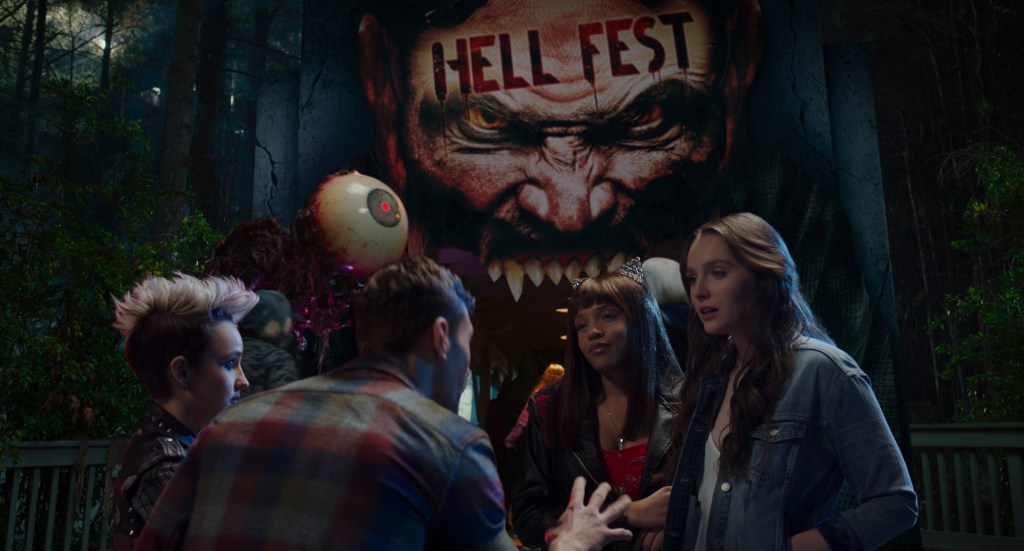
Natalie (Amy Forsyth) is visiting her best friend Brooke (Reign Edwards), who along with Brooke’s pal Taylor (Bex Taylor-Klaus) coax Natalie into going to Hell Fest with them. Seems Natalie’s crush Gavin (Roby Attal) has VIP passes for the lot of them to experience the joys of the Halloween theme park without all the lines. Also along for the ride are Taylor’s steady feller Asher (Matt Mercurio) and Brooke’s bf Quinn (Christian James). Naturally, their lighthearted shenanigans cause them to be targeted by a serial killer, The Other (Stephen Conroy).  

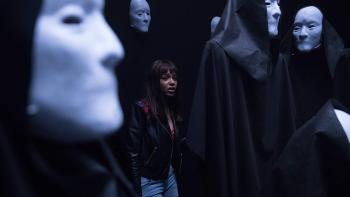
It has the standard slasher earmarks: the masked killer, the large cast of disposable characters with a clearly delineated final girl. But happily, it’s also more than the sum of its parts. It’s not particularly scary (or even suspenseful), but it does a good job of highlighting the concept of stranger danger, and that fiends “walk among us.” (And they’re nowhere near as recognizable as the final girl.) When the gals try to present their predicament to a security guard, even if he wanted to help them (he doesn’t), it’s a huge park, The Other is wearing the same Michael Myers/Freddy Krueger-blend mask that many of the park employees wear, and he blends in. It’s impossible to tell who the killer is. 

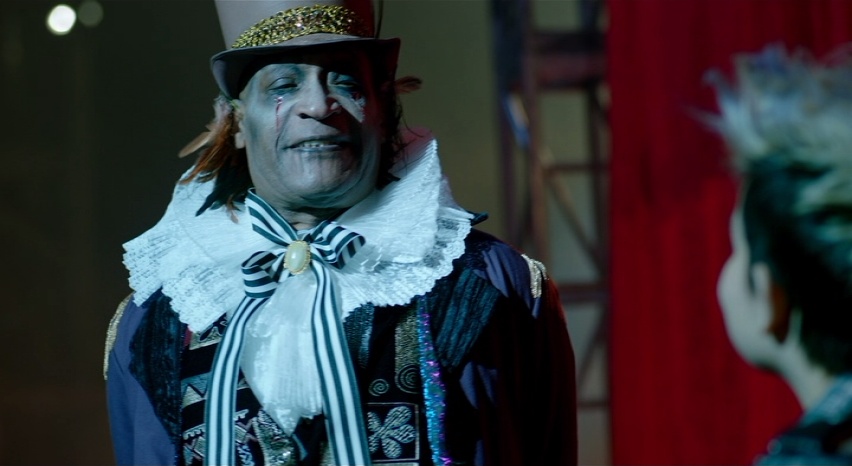
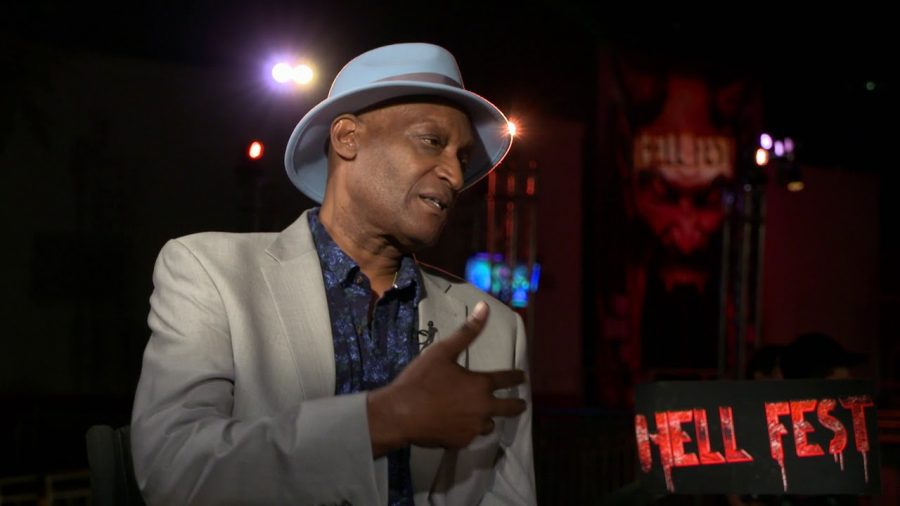
The movie is quite diverse—for a slasher. (Or any other kind of movie.) Roughly half of the main characters are people of color. Not the final girl, of course, but I guess I’ll take it. Speaking of which, horror icon Tony Todd has a cameo as a barker. 

hell fest 2
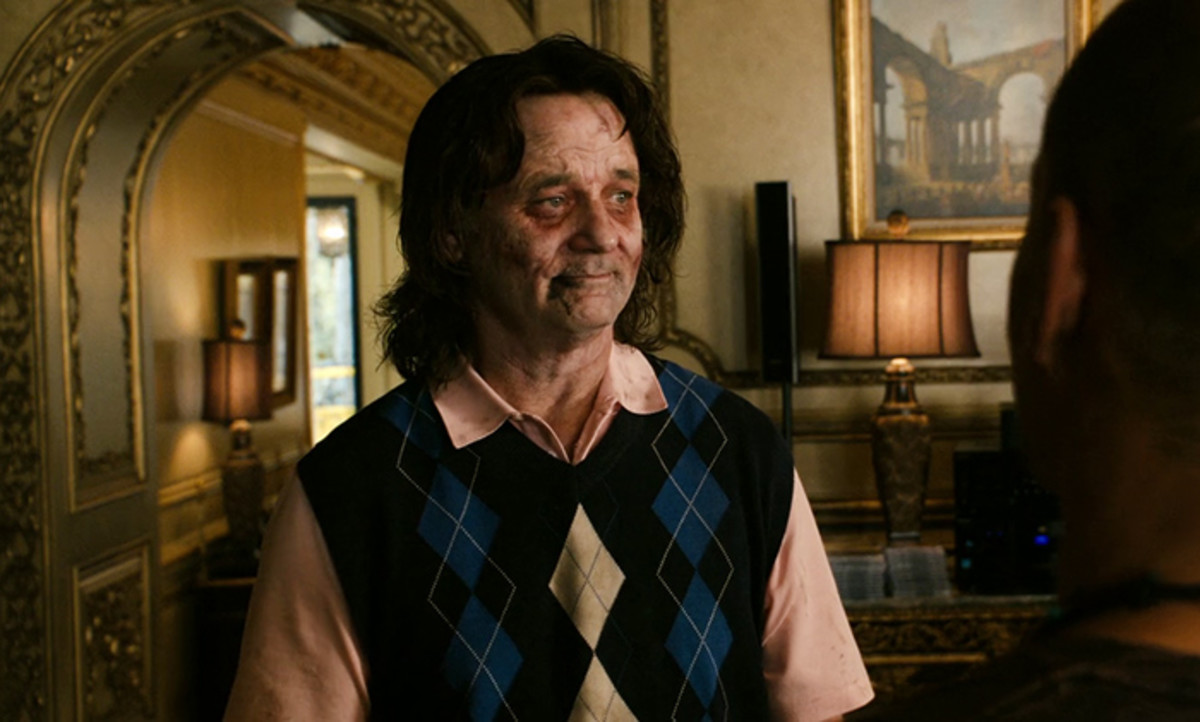
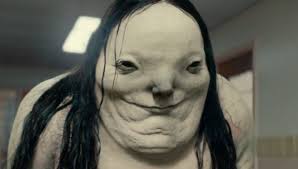
He does look disconcertingly pale, though

It raises some issues about gender and harassment as well. The killer’s victim in the opening bristles that he’s stalking her and snaps, “Now leave me alone.” And then he respects her wishes and leaves. Just kidding, he guts her. What kind of slasher movie would we have if women weren’t begging a man for their lives? Going back to the guard, another problem he has with helping Natalie is that the park employees are paid to scare people, and he pretty much calls her a whiny baby. It doesn’t matter that Natalie is being threatened and doesn’t like some stranger going outside of his job description and following her around (even before he starts stabbing her friends).  

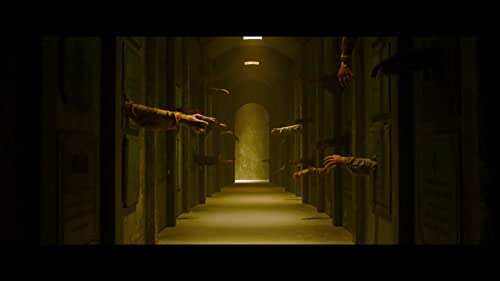
Even the walls are handsy

Aside from that, my biggest gripe is why the hell does this guy not wear gloves? I get that there are a bazillion fingerprints from the mob attending the park, but he has the maddening habit of throwing down his murder weapons at the scene and just leaving them. Overall, I liked (not loved) it. While watching, I grumped in my notes, ‘Losing what little taste I ever had for slashers,’ but the movie won me over. The characters are surprisingly easy to like and even tell apart, and it’s entertaining. Really, they had me at Tony Todd. Give it a look if you’re in the mood for something fun but mildly thought-provoking.

What Tony Todd actually looks like

Top Ten Performances by Actors in Drag

It’s been a long road for depictions of LGBTQ people in the movies. From the beginning of film history, men who dressed as women were depicted as a joke. As Quentin Crisp said, “There’s no sin like being a woman.” There is still a lot of room for improvement, especially in the department of genuine LGBTQ actors playing LGBTQ roles–you’ll notice that every single one of these dudes identifies as heterosexual–but here are ten instances when actors–most best known for their manliness–really nailed being a lady.

10. Vincent Cassel–Elizabeth

img_1770

The French Cassel here plays the Duc a’Anjou, a potential suitor for Queen Elizabeth. He also likes to play dress-up in beautiful gowns. Elizabeth is less than pleased, but despite the facial hair, he’s rockin’ that dress.  

9. Liev Schreiber–Mixed Nuts/Taking Woodstock

img_1771

The ultra-masculine and tall Schreiber makes a handsome woman. His mopey, lovelorn performance in Mixed Nuts is progressive for the time period (1994), but is a little offensive today. In one scene his character Chris guilt-trips Philip (Steve Martin) into dancing with her, and Philip pointedly dances with his hips as far out as he can get them to avoid touching her. Louie (Adam Sandler) fancies Chris, and sings her a song. In Taking Woodstock (2009), his Vilma is much more self-assured.  

8. Dom DeLuise–Haunted Honeymoon

img_1772

With his warm, buttery voice and zaftig frame, DeLuise makes a gorgeous, dignified lady. In murder mystery Haunted Honeymoon, he plays Aunt Kate, a performance he based on Ethel Barrymore.  

7. Guy Pearce–Priscilla, Queen of the Desert

img_1776

Before he was established as a man of action in films like Memento and The Hurt Locker, Pearce starred as exquisite, sassy drag queen Felicia, who’s taking a tour of the desert with pals, one another performing drag queen (Hugo Weaving) and one who is transgender (Terrence Stamp). 

6. Johnny Depp–Before Night Falls

img_1774

Before Night Falls is the story of gay Cuban writer Reinaldo Arenas, who wrote the source book while in jail. Depp is Bon Bon, a sexy queen who smuggles out Arenas’s manuscript. (Depp also doubles as an official who deems Arenas worthy (unworthy?) of being shipped to America for being gay.) 

5. Jordan Peele–Key and Peele

img_1775

Acclaimed director Peele was not so very long ago the co-host of a delightful sketch comedy show with Keegan-Michael Key. Both guys played female characters pretty regularly, but Peele stands out as the more beautiful of the two. His most famous performance as a lady is Meegan, an easily offended gal who’s always pissed at her well-meaning boyfriend (Key).  She’s fussy but oddly alluring.

4. Stephen Dorff–I Shot Andy Warhol

img_1777

Dorff is known for his rugged good looks and often plays action-type roles. But as Andy Warhol’s colleague, transsexual actress Candy Darling, he’s charmingly dainty and downright foxy. 

3. John Lone–M. Butterfly

img_1773

Lone is possibly the least well-known name on the list; his filmography contains a lot of gaps, and doesn’t list anything after 2007. However, his turn as female performer/spy Song Liling in M. Butterfly is imminently memorable. Song charms French diplomat Gallimard (Jeremy Irons) into believing he’s a woman, and Gallimard falls for him hard. Who wouldn’t? 

2. Cillian Murphy–Breakfast on Pluto

img_1778

Murphy made a splash in the acting world playing a menacing villain in Red Eye, as well as menacing villain Scarecrow in Christopher Nolan’s Batman reboots. But in Breakfast on Pluto he portrays adorable, willowy Kitten with aplomb. 

  1. John Leguizamo–To Wong Foo Thanks for Everything, Julie Newmar

img_1779

Of the three main actors in the film playing lovely women, Leguizamo stands out as the most natural. Patrick Swayze and Wesley Snipes, best known for playing ladies’ men and action roles, respectively, do a great job of playing drag performers, but Leguizamo has it all: the shape, the hair, the sexy voice. The movie is now pushing 25 years, but it’s one of the greats.   


‘3 from Hell’ is Well-Made, but Still Crushingly Disappointing

3 from Hell is Rob Zombie’s newest film in the series documenting the Firefly/Driftwood/Spaulding family, following 2003’s House of a 1000 Corpses and 2005’s The Devil’s Rejects. The end of the latter shows the remaining family members riding sorely unmatched into a shootout with the police, so I’m guessing the 14-year lapse had at least partly to do with thinking them back to life. The solution? The movie opens with Baby (Sheri Moon Zombie), Otis (Bill Moseley), and Captain Spaulding (Sid Haig) gravely wounded and requiring a year of hospitalization before being sentenced to prison. Roughly the first half of the story is their escape, and the second half is their adventures in Mexico dodging hitmen.

Luchador hitmen, I kid you not

For fun, I made five predictions about Three from Hell before I entered the theatre: 1. That Baby would giggle annoyingly (called it); 2. Captain Spaulding would mention fried chicken (wrong); 3. Something really gross would happen that would make me wonder why I watch all of Rob Zombie’s movies (naturally); 4. There would be good music (check); and 5. There would be moments that seem more like rip-offs of other movies rather than mere homages (not per se, but we’ll get to that later).

Many of Zombie’s regulars return: Richard Brake (Doomhead in 31) as Foxy, a ret-conned half sibling of Baby and Otis, Jeff Daniel Phillips (The Lords of Salem) as smarmy prison warden Harper, legendary scream queen Dee Wallace as prison guard Greta, Kevin Jackson (31) as a parole board member, and Tom Papa (The Haunted World of El Superbeasto). Danny Trejo returns briefly as his mercenary character from Rejects, Rondo. There are cameos by Clint Howard, Sean Whalen, Chaz Bono, Richard Riehle, and Barry Bostwick as the narrator.

Awww, triplets-ies

I bought my movie ticket unaware that it was a double feature with Rejects, and only having seen it once when it was a new release, didn’t recognize it; thus, I was quite confused for the first twenty or so minutes. Watching the two movies in a row gave me a chance to more closely study Zombie’s direction techniques, such as lots of close-ups, slow motion overlaid by music with no audible dialogue (I’m such a sucker for that shit, and he makes it look gorgeous), and panning from one shot over to a completely different setting. I appreciate Zombie’s skill with a camera, but sometimes his films are so angry and cynical that they’re hard to enjoy otherwise. The violence comes across as nihilism; the world is fucked up, so it’s okay to make it worse.

The first half makes an interesting statement on the nature of fame and how easily swayed public opinion is; the general consensus on the street is that the family is innocent of murder when a fuckton of evidence exists that proves otherwise. But the second half takes a detour right back to Corpses and Rejects without adding anything new to the series. The first film established them as a fucked-up family that kills people for fun; it was too close to The Texas Chainsaw Massacre for my taste, but the characters were compelling, and their insanity is front and center. The second film turned everything around by having the family experience being at the mercy of others and victimized. They got the comeuppance they deserved for being asshole murderers and appeared to die. In the most recent film, the titular three, having learned nothing from almost dying and spending a decade in jail, torture and maim innocent people again, and then are accosted at a bordello—again. This time it’s a gang of assassins run by Rondo’s vengeful son, who are just woefully terrible at their job. They can’t shoot or knife-fight for anything, and get slaughtered by Baby, Otis, and Foxy pretty effortlessly. The three are shown as brave heroes overcoming adversity.

3 from hell 2

The depiction of people of color is all-around offensive, from two biracial couples being ruthlessly terrorized to Mexican people being either whores or ignorant drunkards who utter phrases like “Diego is master of the blade.” Then there’s the image system that strongly emphasizes cultural appropriation. Baby steals a Native American headdress and bow and arrows from Harper, and later dons a Mexican-style dress, both of which are featured in almost all images from the movie. I can’t imagine any scenario in which Baby could symbolically represent marginalized people. And don’t get me started on Greta. Fucking. Greta. I loves me some Dee Wallace, but her turn as a guard with a thing for Baby is excruciating. A predatory lesbian character in 2019, are you kidding me?

3 from hell 3
Then again, you don’t have to be a lesbian to want to bed Sheri Moon Zombie; I don’t care what your sexual history up to that point had been

I did chuckle a little when Otis attempts to blackmail the warden into releasing Baby; Harper’s wife protests, “What you’re asking my husband is completely insane.” Otis replies cheerfully, “I’m completely insane!” But overall it was hard to watch. I’ve been reading lately about police brutality in regard to Black civilians, and knowing the statistics of how often people of color are singled out for violence makes it more difficult to see even fictional depictions of it. And I’m so done watching women begging not to be hurt. You can call me a bleeding-heart liberal, a social justice warrior wannabe, obsessed with political correctness, dumb for being shocked at the level of disturbing content in a horror movie directed by notorious gorehound Zombie, but I’m gonna be 100 percent honest with you: I went home and cried.

‘Ouija’–The Sequel is Better, but This One’s Grown on Me

Laine (Olivia Cooke) has just lost her friend Debbie (Shelley Hennig), who has seemingly killed herself. She longs to find out what happened, and decides that she, her sister Sarah (Ana Coto), their friend Isabelle (Bianca A. Santos), her boyfriend Trevor (Daren Kagasoff), and Debbie’s boyfriend Pete (Douglas Smith) should try to reach her with Debbie’s Ouija board. Surprisingly, this doesn’t work out for them.

ouija2
“Now, let’s establish how extremely important the rules are for using this board safely, so we can instantly forget them.”

I first saw Ouija when it was new, and I remember scoffing at it. This time around I have a new respect for it. The performances are great, particularly Olivia Cooke and Lin Shaye as the disturbed lady with all the answers. The cinematography is gorgeous, and the direction is top-notch.The twist and concept are pretty cool, and there are some legitimately creepy moments. The whole flossing scene is just brutal.

ouija4
That’s not how your dentist taught you!

There a couple of scenes that stretch credibility. Like when Debbie is chillin in her house and a door opens by itself and the oven turns on with no one nearby, and she just closes and locks the door and turns the oven off. Then she proceeds to head up to her room, mildly disconcerted. And of course there’s more than one instance of a character hearing a strange noise, calling hello, and then going to investigate the situation as slowly as possible. And my favorite, the convenient superstitious Latina (or possibly Italian?) maid (Vivis Colombetti) who knows all about how to defeat evil Ouija board spirits.

ouija3
“Oh, so you’ve already covered how to defeat the spirit with a separate ancillary character?” “Yeah, but I need a second lady for more specific information.”

Overall, I like it. It’s not without its charms. Give it a look if you’re in the mood for something without sex, gore, swearing, or comic relief.

A Side Trip into Neuroticism: Some Thoughts on The Belko Experiment and Surviving

*No spoilers*

Sometimes I struggle with what is called existential depression, when I ruminate on whether anything truly has a point. I recently did not get a job that I interviewed for and really really wanted. One of my coworkers was angry for me, but she went back to her daily routine, as did the rest of them. I thought about how it doesn’t really affect them. One person’s crushing disappointment is a mild annoyance for another person. The position I hold there now is a “sub,” a part-time person who covers the front desk and can be replaced at a moment’s notice. By nature the job makes the sub disposable; if I call in, another sub can (and must) be procured to do the job instead. The important thing is that the desk gets covered. So naturally, I feel like a disposable person rather than, as my counselor has stressed to me, a person with a flexible job. I think about how if I were to get hit by a bus tomorrow, maybe I’d be missed briefly, but life would go on as usual for the full-timers and other subs. The desk would be covered, and that’s what matters.

At times I think about how transient life is, how people come and go and when they leave us, we adjust. I guess that’s life. My father died three years ago, and I couldn’t live if I didn’t accept it. I miss him, I miss the chance to speak to him and for his grandchildren to remember having met him. I miss his dry, sarcastic humor. I share a lot of his features, like loving to read, having blue eyes, and bottling up my emotions until I crack. But there are so many people, and in the grand scheme of things, so few of us will be remembered except by the people we interact with personally. Sometimes it feels like nothing matters. But obviously I believe something matters, or I wouldn’t get out of bed and I wouldn’t be writing this. Hey, I’m working this stuff out as I go.

The Belko Experiment is about a large group of office workers of varied races and social positions who are ordered by an anonymous voice to begin killing each other. The command is that if 30 of the 87 employees present aren’t dead in 2 hours, then 60 will die. Most of them keep their cool at first. The main character stands up and refuses to kill, saying all human life has value. But once heads start blowing up (the company has implanted a device in the employees’ heads, which can be exploded at will), people start taking orders. In one scene, the COO starts singling out potential people to kill first. He begins with people who have kids under 18 to save then moves to people over 60 to start with. The scene, and the movie in general, makes us ponder who would “deserve” to die first. One man who’s chosen to die takes out his wallet and tries to show pictures of his young children, which are dropped on the floor. The camera lingers on them, letting us consider the implications of the man not going home to his kids. I had an “ah ha” moment in the theatre then, thinking of how you can’t put a price on someone. Everyone does have value; every person there had people who would miss them if his or her head exploded. The way the characters cling to survival reminds us that life is worth living. It’s hard, but as I know, it’s hard stuff that’s the most rewarding.

The Belko workers are at a faceless corporation. (John C. McGinley’s presence in the cast really evokes Office Space, another movie about the devaluation of the average office worker.) At one point a character muses about how they worked there for a year and didn’t really seem to be doing anything. We work and we work for leisure time and then we’re so tired from work we don’t enjoy leisure. We retire and we’re too tired to enjoy it. I have a problem with not being present, so everything feels like a race to get it over with. Even while doing stuff I enjoy like reading or watching a movie, I have a keen eye on how many pages or minutes are left until it’s over. I have trouble enjoying the present. I’m not sure if it’s meant to be a theme in the movie, but something to remember is that life isn’t guaranteed–at any moment you can be crushed in an elevator or have your head bashed in with a tape dispenser. So enjoy it.

images
These collared shirts are so itchy!

Jordan Peele’s ‘Get Out’: Terrifying, Funny, and Provocative–Sorry, I Wrote an Essay (not sorry)

Chris (Daniel Kaluuya) is a young Black man who’s wary about meeting his white girlfriend Rose’s (Allison Williams) super-rich family for the first time. Her parents (Catherine Keener, Bradley Whitford) seem friendly and welcoming. However, Chris is in over his head as a gathering takes place with a sinister purpose in store for him.

get2
“No! Not ‘The Legend of Bagger Vance!'”

The movie is written and directed by Jordan Peele, who at the time was most famous for being a comedian.

img_1775
And smokin’ hot in a dress

(He’s also married to a white woman, which has caused some speculation about his motivation for writing this movie.) So it seemed a little out of left field for a funnyman to be making a Blumhouse-produced horror movie. Well, it does have plenty of comic relief in the form of Chris’s friend Rod (Lil Rel Howery), who warns him not to go, and supplies amusing one-liners throughout. He’s definitely the voice of reason. Humor is used liberally, but it doesn’t detract from the creepiness, as Peele quickly established himself at being a master of horror as well as a comedic genius.
get6
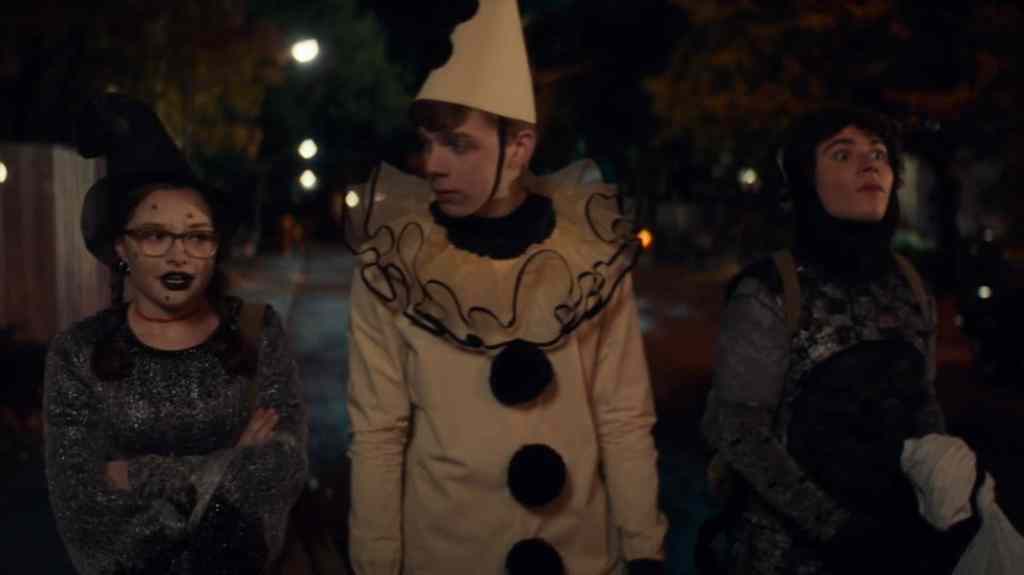
Rod: “I’m TS-motherfuckin’-A. We handle shit. That’s what we do. Consider this situation fuckin’ handled.”–actual quote

The tone of the film is often tense and masterfully suspenseful. Rose’s family exudes a sense of something being off, from her mother Missy, who is cold behind her kind facade, to the maid Georgina (Betty Gabriel), who constantly smiles, sometimes while crying. The music also helps set the mood; the score includes haunting, gospelly spiritual songs, which along with the rural Alabama scenery bring to mind slavery. Or there’s the more traditional for the genre screechy violin when something unsettling happens. There are quite a few effective jump scares, especially when Georgina appears suddenly.

Film Title: Get Out
Gah, how does she do that?!

Many of the frights are psychological. As a white person, it’s not every day I’m reminded of the advantages of my race (though I do try to stay conscious of them) and challenged to consider what life is like for someone without them. And, for those who say we are living in a post-racial society, I say bullshit, come at me. Peggy McIntosh, author of a seminal study on white privilege, wrote a lengthy list of benefits white people get simply because of their skin, whether they want them or not–not saying every white person is greedy and racist–some of which I quote here:

I can if I wish arrange to be in the company of people of my race most of the time. I can go shopping alone most of the time, pretty well assured that I will not be followed or harassed. I can turn on the television or open to the front page of the paper [this was published in 1988, btw] and see people of my race widely represented. When I am told of our national heritage or about ‘civilization,’ I am shown that people of my color made it what it is. I can arrange to protect my children most of the time from people who might not like them. I am never asked to speak for all the people of my racial group.

And those are just the emotional issues. McIntosh also states, “I do not have to educate my children to be aware of systemic racism for their own daily physical protection.” There’s a segment of the film when Rose hits a deer with her car (more on deer later), and she gets aggressive with the responding police officer who asks to see Chris’s ID for seemingly no reason. Chris stays calm and respectful and treats it as no big deal, while Rose protests because she can—there are no repercussions for her, because she’s white, and wealthy to boot. The scene serves as a reminder that Black people in America are targeted and potentially dehumanized by law enforcement. To quote Dr. Loretta P. Prater, who speaks from personal experience and authored Excessive Use of Force: One Mother’s Struggle Against Police Brutality and Misconduct:

When a Black man is a suspect, he is characterized as a potential menace to society who can legitimately be stopped and frisked, harassed, intimidated, and brutalized or killed, if necessary, in the interest of maintaining public safety. A comparison of racial victimization rates clearly documents that the rate of police killings is much greater for Blacks than for non-Hispanic whites. Thus, there is a disproportionate probability that Blacks, and especially Black men, will be killed by the police, in comparison to other racial and gender groups […] Black men, whether incarcerated or free, innocent or guilty, must carry the stigma of ‘suspect.’

In the course of the movie Chris is treated not only like a criminal, but also like an animal. Deer are a consistent image system in the movie, and symbolize two things. One is the angry white notion of a Black “buck”, as summarized by Wikipedia :

According to popular stereotypes during the post-Reconstruction era, ‘Black Buck’ was a Black man (usually muscular or tall) who defies white will and is largely destructive to American society. One would usually be hot-tempered, excessively violent, unintelligent, and sexually attracted to white women.

Rose’s father Dean professes to hate deer, stating, “You know what I say? I say one down, a couple hundred thousand to go. I don’t mean to get on my high horse, but I’m telling you, I do not like the deer. I’m sick of it; they’re taking over. They’re like rats. They’re destroying the ecosystem. I see a dead deer on the side of the road and I think, ‘That’s a start.'” At the same time, deer represent greed and possessiveness and the white coveting of Black bodies. Dean prominently displays mounted deer corpses in an attempt to show possession and power.

get4

Chris is viewed by Rose’s family and their guests as an object to be possessed. One of the scariest moments in the movie is when right after Chris and Rose go into the woods for a walk, Dean auctions Chris off. It’s filmed with no discernible dialogue, just blank-faced or jovial white folks bidding on a person (with bingo cards, ’cause white people). In Hell of a Book, Jason Mott explores white control over Black bodies:

My whole body felt like it wasn’t mine anymore. Like maybe it had never been mine. Like it might suddenly be taken away from me at any moment and there was nothing I could do about it. What’s worse, there was nothing I would ever be able to do about it. That’s what the Fear really came down to. That’s what all of the other fears were derived from for people of a certain skin color living in a certain place. But it wasn’t just a fear, it was a truth. A truth proven time and time again for generations. A truth passed down through both myth and mandate, from lip-to-lip to legislation. Certain bodies don’t belong to their inhabitants. Never have, never will again. A persistent, inescapable, and horrific truth known by millions of unsettled bodies. The Fear. It had always been there, but I could see it now. Could really recognize it. And once that happens, once you see it, you can’t look away. Can’t ever quiet it. Can’t ever forget that you don’t belong to yourself anymore, but to the hands, fists, cuffs, and bullets of a stranger.

get7

The film defies conventions. There are so few horror movies that directly examine issues of class and race. The People Under the Stairs comes to mind, but that was written and directed by a white dude. Overall, it’s an eerie, well-made film. Give it a look if you’re in the mood for something extraordinary.

get3
Did I mention the performances?! Look at that nuance!

A Side Trip into Neuroticism: Some Thoughts on ‘Lights Out’ and Depression

Warning: *Spoilers*

In Lights Out, Sophie is a woman with a history of depression, for which she had to be hospitalized as a teenager. While there, she met another teenager, Diana. Diana had a skin condition that precluded her from being in light of any kind (though she seems to do fine in the sun with a parasol). She is also jealous and dangerous, admitting to hurting Sophie because “She was getting better.”

The movie revolves around Sophie as an adult, with an adult daughter named Becca and a young son named Martin. Both of the childrens’ fathers have secretly been killed by Diana, because in Sophie’s words, they “made me feel strong.” Becca has commitment issues and is bitter toward Sophie for being so wrapped up in her depression that she was an incompetent mother. Sophie in turn insists that Becca abandoned her. Martin, who still lives with Sophie, is caught up in Sophie and Diana’s relationship. Sophie treats Diana as a friend and spends a lot of time talking to her (despite the fact that no one else can see her). Becca takes Martin to her apartment on the grounds that Sophie is a “nutjob” and “unstable.” At one point, Martin asks Becca, “If Mom’s crazy, does it mean we’re crazy, too?”

As a mother with depression, Becca and Martin’s struggle to understand their mother is poignant. Once I was upset and weepy, and my husband was trying to shoo our toddler Orion out of the room so he wouldn’t see. Orion protested, “No Daddy, Mama cry.” The first time I saw Lights Out I was disgusted how Sophie is portrayed as a selfish trainwreck of a woman. At the end of the film she shoots herself in the head to get rid of Diana, telling Becca she is “saving your lives.” However, after a second viewing, I think that while Sophie is overdone in her helplessness, the message seems to be that depression can’t be cured alone. What Sophie really needs is supportive relationships, like with her children, who encourage her to do potentially helpful things like take her antidepressants and see a therapist (both of which Sophie refuses to do).

lights out1
A note Sophie secretly passes to Becca

Becca and Martin are contrasted by Martin’s refusal to leave his mother the way Becca did. Towards the end of the movie, Becca admits her love for her boyfriend and declares, “No more running away.” A major issue in dealing with depression is that it isolates people. The person experiencing from it feels damaged and liable to be better off dead, as Sophie does.

I’ve struggled with depression since I was fourteen. I suffered for four years in silence before asking my mother to take me to get professional help because I didn’t think my problems were important. At times I hate myself. To be honest with you, I’m writing this while railing at myself for a mistake I made at work last week. I feel inferior to everyone else because I can’t function like most people. I have painful social anxiety, and actually feel general anxiety 24/7. Sometimes it feels easier to just be dead. Or asleep. Sleep is good. So why not stop? Why not goddamn just think positive? It’s not that easy.

Diana is such an apt metaphor for depression because she’s jealous of Sophie’s occasional ability to live and feel good about herself. Depression whispers, you’re too tired to write. So I pick up a book. Depression whispers, you’re not accomplishing anything. I go to work, where I’m generally competent. Depression lets me feel good about my performance until I make a mistake. You’re going to be fired, depression whispers. No one likes you here. Maybe you’re good, but you’re not good enough. You’re part time, you’re disposable, you’re stupid, you’re worthless, you’re complacent. You’ve been here for two years, why do you still make so many fucking mistakes?

lightsout2
Yeah, this is pretty much how it looks in there except with more cursing

I go to the gym. Depression says, look how fit those other people are, why do you even try? Fat bitch walking on the treadmill while everybody else is running. Is twenty pounds seriously all you can lift?  I hang out with friends or family, and afterwards I ruminate about mistakes I made. I live in terror of offending people and being rejected. In between writing this, I called my supervisor and confessed to the aforementioned mistake, which I have blown out of all proportion and actually wasn’t even a mistake. After hanging up, I realized that even if it had been a grievous error, nothing she said to me could be worse than that voice in my head. Nothing is ever good enough. Hey my counselor was right, writing this stuff out does help. It’s hard to pinpoint how fucked up the whole thing is when it’s just running a hamster wheel in my head. Whoever ends up reading this, I’m not fishing for compliments (I always think people think the worst of me, natch). Thank you for reading, I so needed to say this.

A Side Trip into Neuroticism: Some Extra Thoughts on the Movie ‘Feed’

Feed is a movie about a detective (Phillip) tracking a serial killer (Michael) who kills women by overfeeding them until they die. He takes bets on when they’ll die and exploits them sexually. I wrote a review about the technical aspects of the movie, but I had a more personal reaction to the film than I typically do. It resonated with me because I can identify with Deidre, Michael’s victim, in some ways; the themes also struck a chord with me because of my struggle to accept my body.
My first boyfriend, when I was eighteen, was a broken twenty-four-year-old multiple amputee named Ryan who had already lost his mother to cancer. He didn’t want to hear about my depression. I told him I loved him and he responded in kind, but he didn’t  know how to love me. He was wrapped up in his trauma and his two young kids (who had two different mothers, both of whom hated him). I can understand the kind of mindset that would make a woman destroy herself for a paltry gain like Michael’s affection. When Ryan told me he loved me, I put up with his silences and refusal to see me. When Deirdre tells Michael “You make me so happy,” I cringed inside because I’m pretty sure I said those exact words to Ryan. How that must have scared him.

I understand self-destruction. I too am morbidly obese (but thankfully mobile). I exercise, my job requires me to stand for long periods of time, I eat a lot of fruits and vegetables, but I sometimes binge eat junk food at night because I have major issues with anxiety and low self esteem. I see food as either a reward for putting up with a job that stresses me out or as a punishment, depending on my mood. Either way, I deserve to destroy myself. It’s safe. It doesn’t judge like people do. Food is all mixed up with love. Food is a reward. Begging for food is a continuous occurrence in Feed. Even Phillip’s traditionally attractive girlfriend Abbey comes up to him trying to seduce him, saying “Feed me.” Food as religion is touched upon; Phillip goes to a church and when offered communion, he replies, “I’m not hungry.” Hunger and desire is a constant image system.

The movie touches on cultural aspects of beauty. Or as Michael puts it, “I enable my women to be free of the social pressure to conform to a body norm which is based on abstract.” I’ve spent many a year trying to free myself of that same social pressure. It’s something I live with, knowing that men don’t look at me and only slender women are seen as beautiful and worthy in most of western culture. In one scene, Phillip’s boss, exasperated by Phillip’s drive to investigate Michael, exclaims “If these women are as fat as you say they are, they’re going to die of a stroke or a heart attack or downright fucking ugliness anyway!” One character in Feed who provokes thought about conventions of beauty is Michael’s adoptive sister Jesse, who when being pumped by Phillip for information in the guise of flirtation, expresses doubt that he could be attracted to her. As she says, “I’m a big girl. I’ve been stared at and sneered at my whole life.” *Spoiler* Phillip ends up living with her at the end of the movie, and seems quite happy.

There does seem to be more of a movement these days toward acceptance of all kinds of body types, or at least Facebook would have me believe with all its positive body image pages and such. I’ve done well for myself as far as relationships go; I had a couple awesome girlfriends and ended up marrying a decent guy who loves me for who I am. We live in as close to domestic bliss as people get. And I’m writing this instead of eating ice cream, so I have that going for me. Cheers.


M. Night Shyamalan’s ‘The Visit’: I Swear the Twist is Great and Somewhat Unpredictable

Becca (Olivia DeJonge) and Tyler (Ed Oxenbould) are two teens whose mother (Kathryn Hahn) has shipped them off to stay with her estranged parents for a week. Nana (Deanna Dunagan) and Pop Pop (Peter McRobbie) seem nice enough, but their behavior soon turns odd. Pop Pop is paranoid and quick to anger, while Nana tends to crawl on all fours, laugh hysterically at nothing, and strip down to claw at the wall. With no phone service and their mom on a cruise, the kids are left to face the odd ducks alone.

visit4
Talk about a bad mom!

It’s one of M. Night Shyamalan‘s better efforts. I spent maybe half the movie giggling and talking shit, as opposed to just about the whole running time of Lady in the Water. I liked the allusions to “Hansel and  Gretel.” The whole witch fattening up the kids is used cleverly; Nana is constantly baking and offering the kids food—every other scene they’re eating. Best of all is the eerie scene when Nana says to Becca, “Would you mind getting inside the oven to clean it?” We all know Becca’s not going to get cooked, but still. Then the motif is suddenly abandoned, which was disappointing. A couple of scenes were genuinely shocking. Overall, Shyamalan does a good job of building and maintaining tension.

visit3

Of course I have gripes. Tyler is an obnoxious little shit. His rapping (which he’s undeservedly smug about) is agony, particularly his final one. He did grow on me after a while, though, I have to admit. Becca is a pretentious auteur but pretty tolerable. The performances are more than satisfactory. Olivia DeJonge and Ed Oxenbould do a great job as the kids. Peter McRobbie as Pop Pop is ominous, and Deanna Dunagan as Nana is downright scary.

visit2
The theme of letting go of anger is inspirational, but the theme of “old people are terrifying” is less heartwarming

One of my bigger complaints is that Tyler is established as being afraid of germs, but only when it’s convenient to the plot. There’s a scene when he handles a shit-filled diaper with nary a twitch, but later he flips out when he has to flush a toilet without a tissue to wipe his hands on. I’ve been changing loaded diapers for the better part of 13 years, and let me tell you—a toilet flush is nothing compared to touching a poo-poo diaper.

visit5

But all in all, it was quite worth the watch. Give it a look if you’re in the mood for something creepy but kinda fun.

3 Bellezas: Naughty, Fun, and Dark *No Spoilers

Venezuelan movie, AKA 3 Beauties. Perla (Diana Peñalver) is a former pageant “miss” who is living through her daughters Carolina (Fabiola Arace) and Estefania (Josette Vidal). She pushes them to compete against each other, with Carolina as her favorite. Meanwhile, her son Salvador (Fabián Moreno) is neglected. The sibling rivalry continues into adulthood when Carolina and Estefania compete to be Miss Venezuela. The contest culminates in a bloody showdown.

3 2

One of the most striking things about the movie is its theme of how women are devalued and objectified. Perla tells her girls flat out that their appearances are the most important thing about them. She teaches Carolina to vomit after eating and locks up all of the food. Then there is Cosme (Francisco Denis), the head of the pageant, who weighs all the contestants, and he calls those who are slender by even U.S. standards gorda. He forces contestants to have plastic surgery to be eligible to compete (prompting Perla to rationalize, “Don’t you know that plastic flowers don’t wither?”). Cosme literally makes the contestants pieces of meat, classifying them as “tenderloin” or “spam.” One woman, who is taking diet pills, gets diarrhea, mood swings, and tachycardia; she finally just keels over and dies foaming at the mouth.

bellezas1
“Get on the scale, fatty!”

On an aesthetic level, the cinematography is gorgeous. I like also how Carolina and Estefania’s roles as the favorite are shown by their clothes. When Carolina feels good about her appearance, she wears frilly pink clothing, and when Estefania is jealous of her, she wears white; the outfits continue from childhood on, and emphasize how much impact their roles have on their lives. In the images below, look how anyone not getting Perla’s immediate attention fades into blurriness.

3 3
3 4

I was also impressed by Carolina’s love scene; it’s hard to make them original and memorable in the movies, but this one succeeds. Carolina and her lover Chino (Diego Guerrero), who’s a mechanic, are in a garage full of cars. She ducks away from him into a car, and after he follows her, she goes out the other door and into another car. Finally their climax makes a car alarm go off, and then all the cars in the garage are ringing.

3 5

The movie is classified as a comedy/horror, but it’s not scary per se. The horror is quite subtle, with a focus on comedy and a really creepy ending. Here’s the trailer–oh, and for those of you who don’t know Spanish–learn! (I stole that joke from Paul Rodriguez.) Just kidding, there’s an English one too.