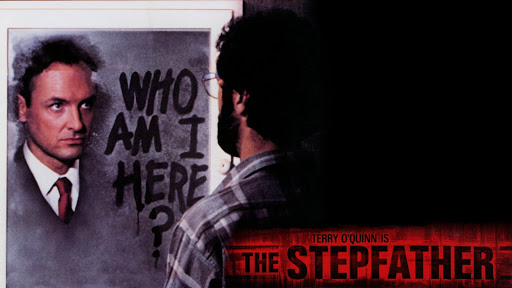
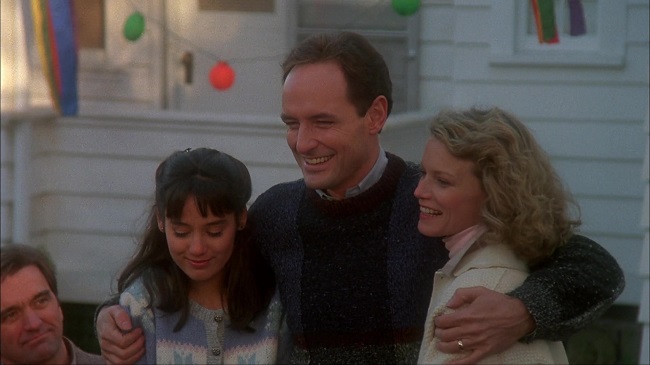
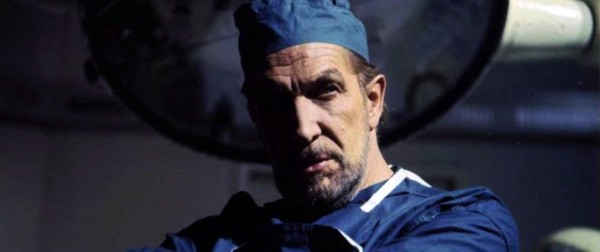
Jerry (Terry O’Quinn) is a nice guy who’s all about family values. He’s a genial real estate agent, a fun neighbor, and a loving husband and stepfather. He’s also a serial killer who likes to marry into families and murder all of the members. His latest soon-to-be victims are Susan (Shelley Hack) and her daughter Stephanie (Jill Schoelen), who’s having trouble adjusting to the marriage. She sees through his façade of nicety and suspects he’s the killer she’s been reading about in the paper. Jerry realizes it’s time to move on—but he has some baggage to get rid of first.
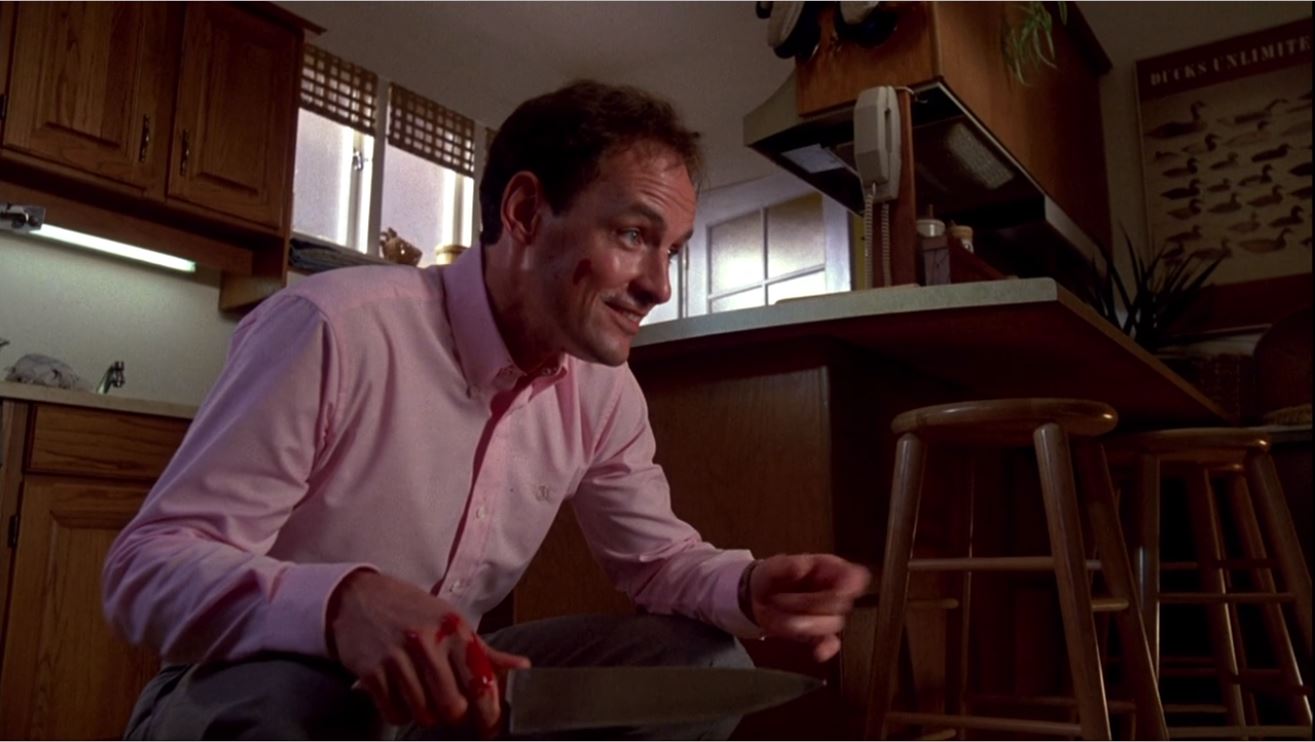
Terry O’Quinn gives a brilliant performance as Jerry: his smarm, his rages, his blank-eyed calm after he murders someone. He’s just creepy. As is the first scene, set in an idyllic suburban neighborhood, paperboy and all. Jerry changes his appearance by shaving off his beard and cutting his hair, then walks to the blood-spattered living room, where his slaughtered family lies. He pauses to pick up a pillow off the floor, then leaves whistling. This film made #70 on Bravo’s 100 Scariest Movie Moments for the scene when Stephanie witnesses Jerry flipping out in the basement; upon seeing her, he seamlessly collects himself. What’s most unsettling about the movie is its emphasis that appearances are deceiving, and that strangers can’t be trusted—Susan and Stephanie’s home is invaded by someone who lives there.
I had been aware of The Stepfather for years but avoided it because I was under the impression it was just a cheesy slasher movie. After deciding I wanted to see everything featured on Scariest Movie Moments, I grudgingly sat down to watch it. And I loved it. It’s not bad for a sequel-spawner. If you haven’t seen it, it’s worth a look.
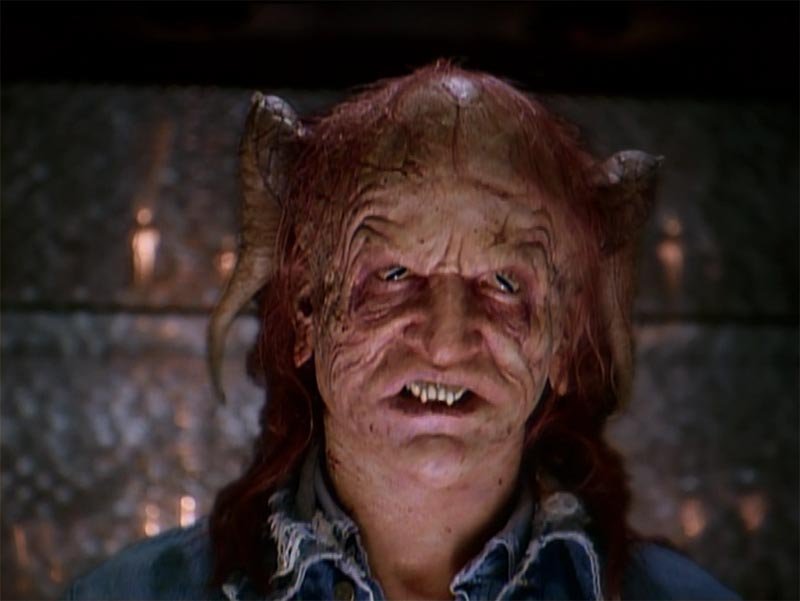
A human-made plague that is accidentally loosed wipes out about 99% of the population. Guided by dreams of either a saintly old woman named Mother Abigail (Ruby Dee) or a scary guy named Flagg (Jamey Sheridan), the good survivors head to Colorado, and the bad ones go to Nevada. There’s a sizable cast of characters, but the highlights include Texas good ol’ boy Stu (Gary Sinise), his pregnant girlfriend Franny (Molly Ringwald), former pop star Larry (Adam Storke), deaf/mute Nick (Rob Lowe), professor Glen (Ray Walston), good ol’ boy # 2 Ralph (Peter Van Norden), and intellectually disabled, awesome Tom (Bill Fagerbakke). On the bad side there’s head guy Lloyd (Miguel Ferrer), offensive Black stereotype Rat Man (Rick Aviles), and lunatic Trashcan Man (Matt Frewer). It all boils down to an epic battle between God and Satan, with humans as pawns in their chess game.
It’s a made-for-TV movie from 1994, so it looks cheap and the special effects are godawful. The adult situations more prevalent in the book are easily edited, so the jump to primetime television is actually a smooth one. The teleplay is penned by King, so it’s quite faithful to the book; there are some changes, mostly weeding out characters due to time constraints—and I am glad for them. I certainly don’t miss The Kid, who for some reason makes Trashcan Man give him a hand-job, or Rita the whiny granny.
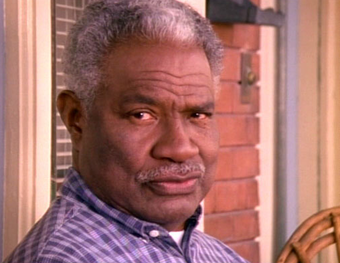
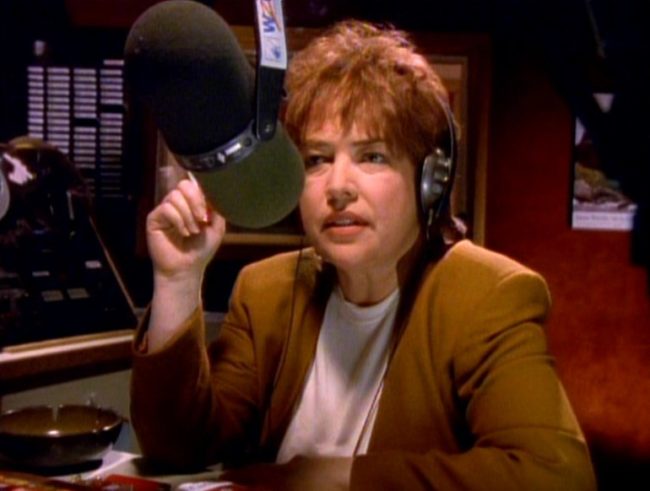
The Stand used to be one of my favorite Stephen King adaptations, but it just gets cheesier every time I watch it, from Larry’s crappy hit single to the giant hand that shows up to save the day. My biggest gripe is the lack of diversity—aside from the occasional mute extra, the majority of people are white, with a few Black people. But even that’s a slight improvement from the book; they upped the level of social awareness a tad by making a male character, Ray Flowers, a woman (cameo by Kathy Bates), and they made a white character, the Judge (Ossie Davis), Black. BUT they did heter-ize a character who was bisexual in the book, Dayna. BUT don’t get me started on Dayna; this is a link to an article I wrote for horrornovelreviews on the depiction of gay and bisexual characters in King’s works. So, eh. As I’m editing this in 2020, I did come across casting information for a remake from this year–they’re upping the ante by making Larry Black. Good on them. I also see no Rat Man in the credits, cheers. One can only hope that in 2020 they see fit to include more LGBTQ characters.
Aside from my griping, I feel some things are done well. Though there are quite a few characters, it’s fairly easy to tell them apart—unless you wander in ¾ of the way through the movie like my friend Hope did. I had to explain over and over who was who and what was going on. The acting is decent, though Molly Ringwald gets on my nerves with her one expression of wide-eyed surprise.
Okay, she has two expressions: wide-eyed surprise and wide-eyed disgust
Also, as corny as the movie gets, it still conveys a powerful message: the planet is fucked up, and our possessions and nuclear weapons won’t save us. The solution posed by the movie is that we need to start all over, stop polluting, and stop acting like jerks to each other.
While it’s not one of King’s eerier efforts, horror fans should still be pleased. King himself has a small role, as does Shawnee Smith. There are cameos by director Mick Garris, John Landis, Sam Raimi (the latter two playing dim-witted henchmen), and John Bloom, AKA Joe Bob Briggs. There is one scene I find a little creepy—the camera pans over a plethora of dead scientists while “Don’t Fear the Reaper” plays. Otherwise most of the attempts at scares come from Flagg turning into a circa-1994 CGI demon. Check it out if you’ve got six hours to kill.
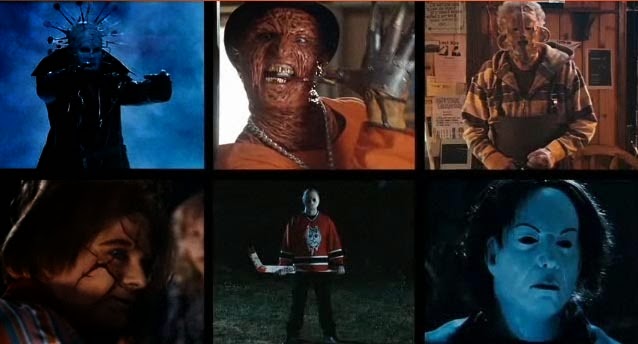
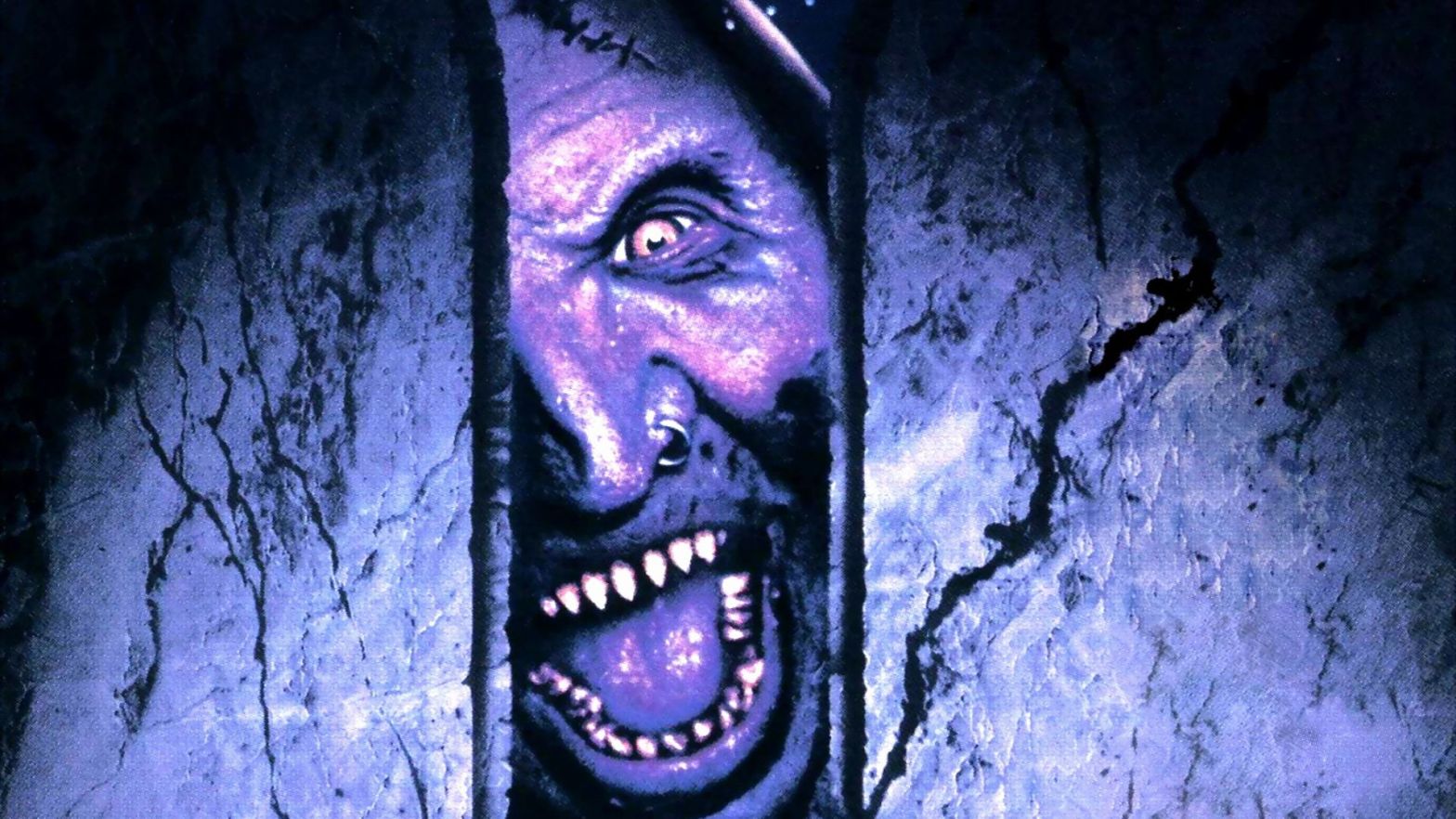
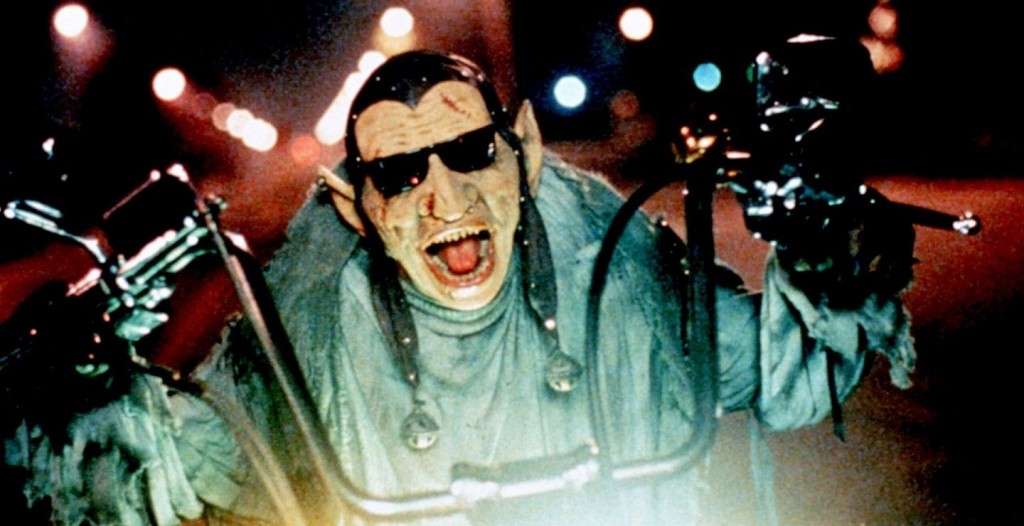
Stan (Steve Howey) is a video store clerk who on Halloween night gets roped into making a delivery to the owner’s mother with his ex-girlfriend Nadine (Diora Baird), his friend Teddy (Kenan Thompson), and Teddy’s date Mia (Desi Lydic). Despite Stan’s philosophy of not getting involved in other peoples’ problems, his friends are forced to when they run out of gas at Stormy Night Estates, a cursed place that used to be a film studio. Good thing Stan is a relative of Van Helsing (despite the fact that there isn’t a single vampire in the movie), because he and his friends now get to fight knockoffs of Freddy Krueger, Jason, Leatherface, Chucky, Pinhead, and Michael Myers.
One striking thing about the movie is parody while not totally committing to the gag. It’s kinda funny that “Fweddy” (Freddy) has a Flavor Flav clock and a Charlie Brown shirt, while “Needlehead” has a cranium stuffed with push pins and darts. The counterfeits get a little old after a while, though, with Stan working at “Schlockbuster” and the monsters singing a revamped version of “YMCA.”
Often the jokes are potty-inspired, with no less than four scenes taking place in a bathroom. Or they revolve around breasts. The majority of the shots are at medium level, emphasizing cleavage.
The film tends to be pretty sexist, with the ladies (especially Mia, a former stripper) wearing skimpy costumes throughout and being constantly objectified. Mia seems to have no purpose otherwise. Nadine is a fairly strong character, but it’s Stan who does much of the fighting. Teddy as the Token Black Guy fares a little better; he’s often the voice of reason and has a lot of screen time and funny lines.
Put them in a toilet stall and this is pretty much the whole movie
I did find some moments amusing, for example Schlockbuster’s section for “Returns of The Ring Only”—people collapse upon returning it. There’s also a pretty funny bit with the guard at the Estates fielding horror-movie-related phone calls like a chainsaw malfunctioning. My favorite bit of dialogue: [A crow caws] “Nevermore!” Mia: “That sounds familiar.” Nadine: “You’re an idiot!” Mia: “Hey, that sounds familiar, too!” If you’re in the mood for boobs and cheap but occasionally funny jokes (who isn’t?!), check this one out.
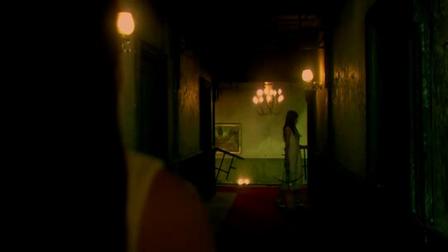
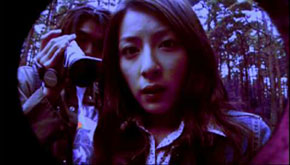
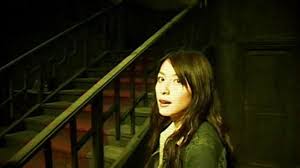
Japanese movie, AKA Otogiriso. Nami (Megumi Okina), a video game designer, has just inherited a mansion from her late father, whom she never knew. Wanting to check out her new place (and get some game ideas), she and her ex-boyfriend/fellow designer Kohei (Yôichirô Saitô) head over there. What they don’t know is that the house is haunted, and there’s a reason Nami didn’t know her father.
It’s low-budget, but the special effects aren’t bad. Actually it looks a lot like a video game. When Nami and Kohei drive to the house, the main camera angle used is a point of view shot, similar to a driving game. The colors of the scenery are over-bright and arbitrary, and look computer-generated. Then there’s the meeting with the caretaker, which is definitely like a video game; he’s not shown as a person, but as an animated icon with a dialogue box.
I think it’s a clever movie, but also a bit slow. A lot of time is spent on Nami and Kohei roaming the house and not finding anything particularly interesting. It can also be confusing. But it’s creepy too, and pretty original. One of my favorite things about the movie is that (unusual for the thirty or so Asian horror movies I’ve seen) there is a romantic subplot, but it’s wonderfully subtle and painless.
A word about subtitles vs. dubbing: the first time I saw the film, it was subtitled. The second time I saw it, it was dubbed, with no option for subtitles on the DVD menu. I prefer subtitles myself; I don’t like the translation to be even more Americaned-up for me. For example: [an object flies across the room suddenly] Subbed Kohei: “That was a surprise!” Dubbed Kohei: “Oh, that scared me!” Subbed or dubbed, check it out if you’re in the mood for something beautifully shot and creative.
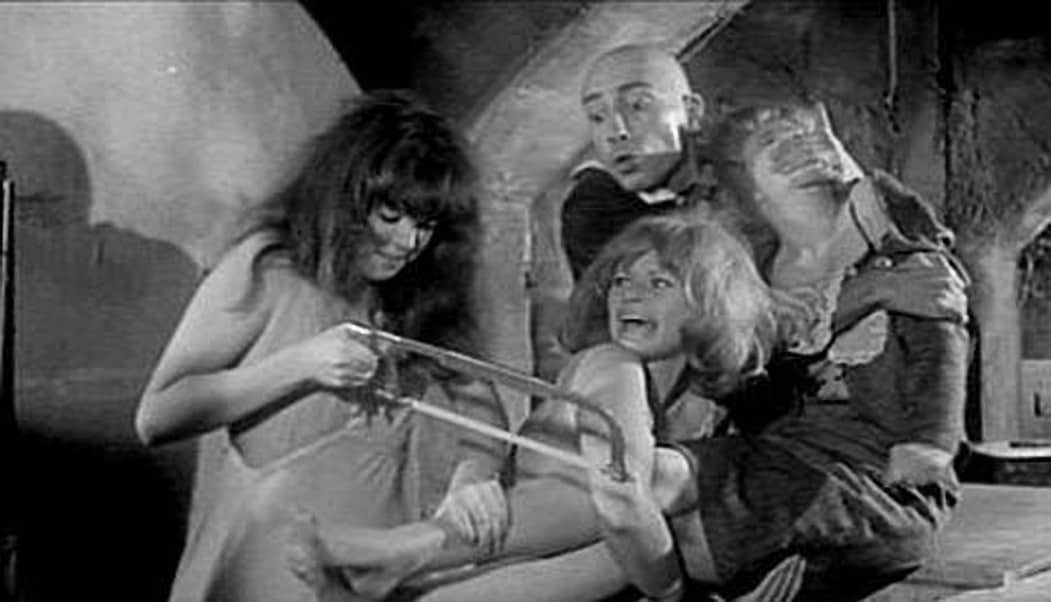
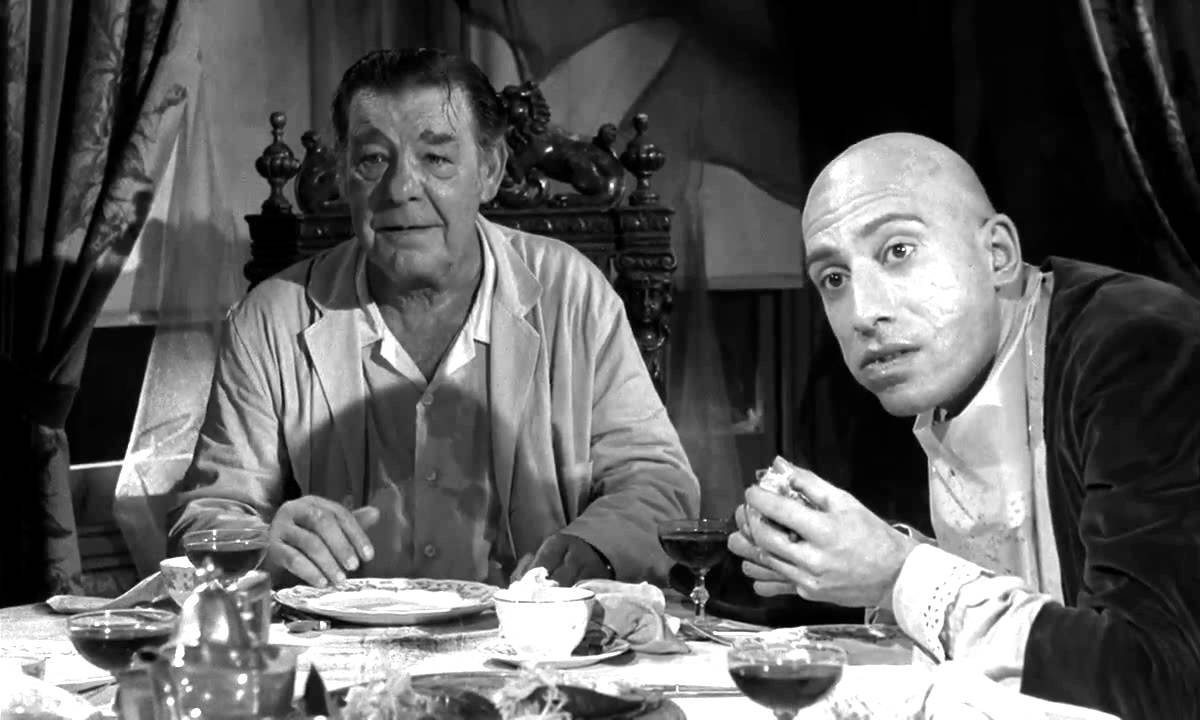
The Merrye family is exhibiting some odd behavior—the Merrye Syndrome, which is an age regression so far back it goes prenatal, at least psychologically, which apparently leads to “savagery and cannibalism.” The last of the bunch are teenagers Virginia (Jill Banner) and Elizabeth (Beverly Washburn) and their older brother Ralph (Sid Haig). They haven’t yet achieved the level of backwardness of their Uncle Ned and Aunt Clara (who live in the basement, eat corpses, and look like they’re in the Broadway show Cats); the girls are childish, wearing baby doll dresses and bows in their hair, while Ralph is more like a baby—he sucks his thumb and doesn’t speak. They’re taken care of by their kindly chauffeur Bruno (Lon Chaney Jr.), who made a promise to their late father that he wouldn’t let anything happen to them. Their idyllic lives are disrupted by money-grubbing Aunt Emily (Carol Ohmart) and her lawyer Schlocker (Carl Schanzer). She, along with her friendly brother Peter (Quinn K. Redeker), plan to take custody of the kids and the family fortune. However, the children want to stay where they are, and aren’t afraid of a little murder—in fact, they rather like it.
The opening credits of the film, with its goofy cartoons and theme song (sung by Chaney) belies the violence to follow. I was shocked multiple times, even on my second viewing. I had no idea that in 1967 a movie could be released that involves incest and cannibalism. There’s a scene when the Merryes serve up a cat for dinner, pretending it’s rabbit. It’s also ahead of its time in horror movie clichés. There’s a Black guy who dies first, and then there’s a woman in lingerie and high heels running around in the woods.
Awww an established horror icon and an itty bitty Sid Haig
In between shocks I appreciated the acting. Haig is adorable, Jill Banner as Virginia is very creepy, and Chaney is at his least whiny. Despite the serious subject matter, there is quite a bit of humor, my favorite being Schlocker’s lawyer-talk as he’s being attacked: “There are proper procedures…” I wouldn’t call it by its alternate title, “The Maddest Story Ever Told,” but it is indeed pretty off-kilter. Check it out if you’re in the mood for something wacky and unpredictable.
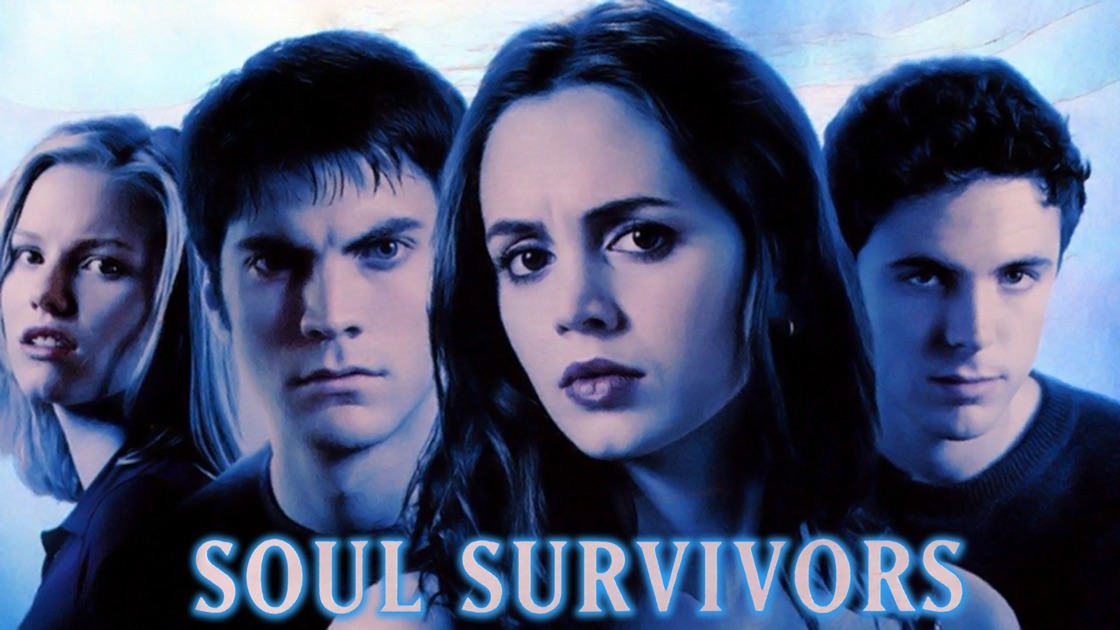
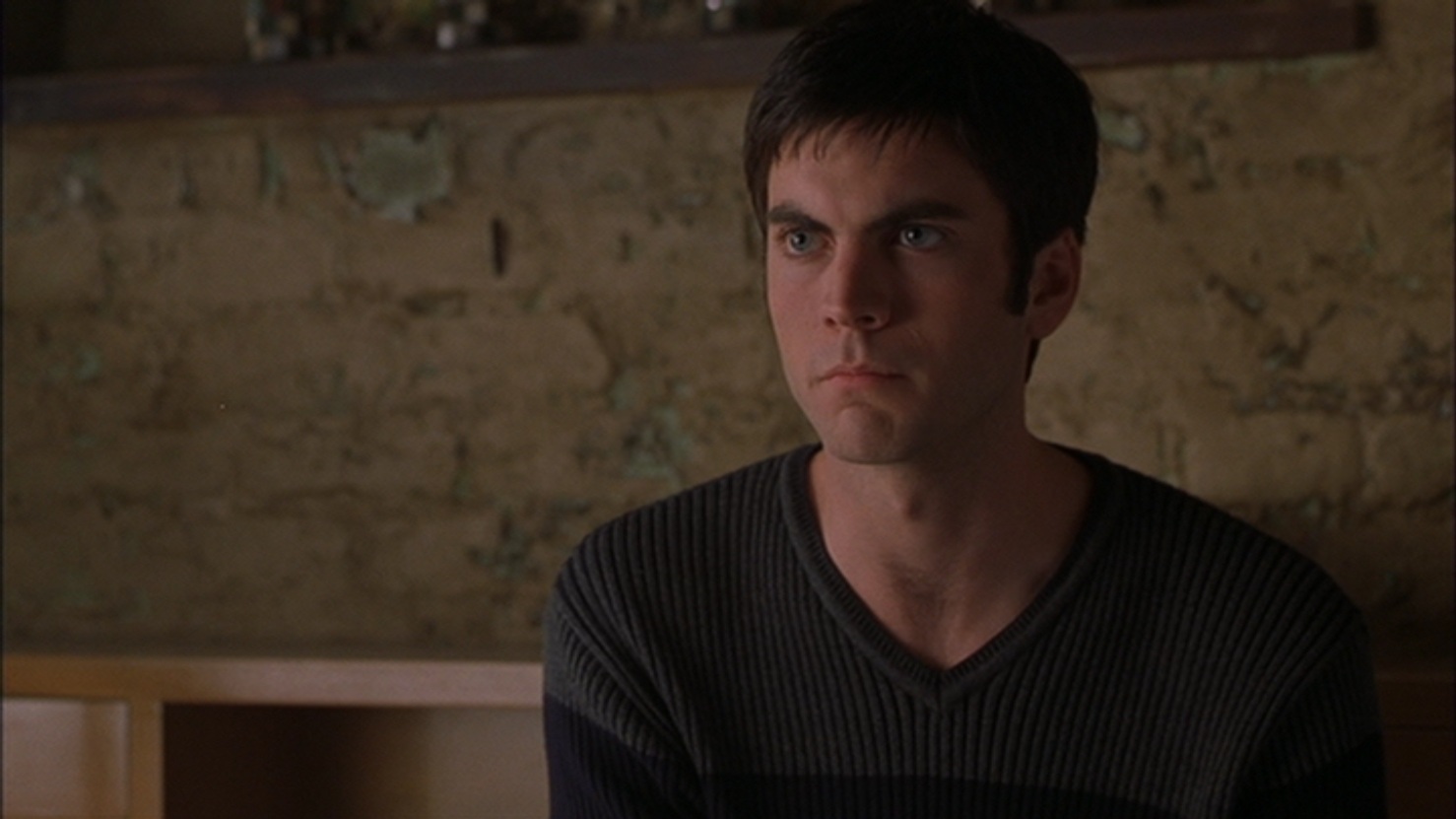
Cassie (Melissa Sagemiller) is a college student plagued by the ghost of her dead boyfriend Sean (Casey Affleck), whom she accidentally killed in a car accident. She also continuously hallucinates two guys in masks who keep trying to kill her—and occasionally succeed. Her friends Matt (Wes Bentley) and Annie (Eliza Dushku) don’t believe her, but then again they may also be involved.
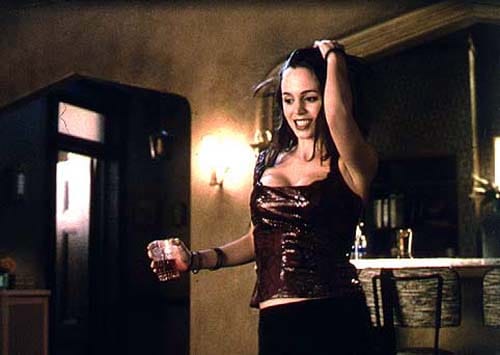
She’s partying! Everybody run!
The film’s primary scare tactics revolve around the guys in the masks and Cassie’s hallucinations, which become repetitive very quickly. It feels like they’re always chasing her, and she’s constantly waking up from crazy dreams, leaving me not caring what’s actually happening.
Wes Bentley always has an intense stare, but in this movie it’s just outlandish
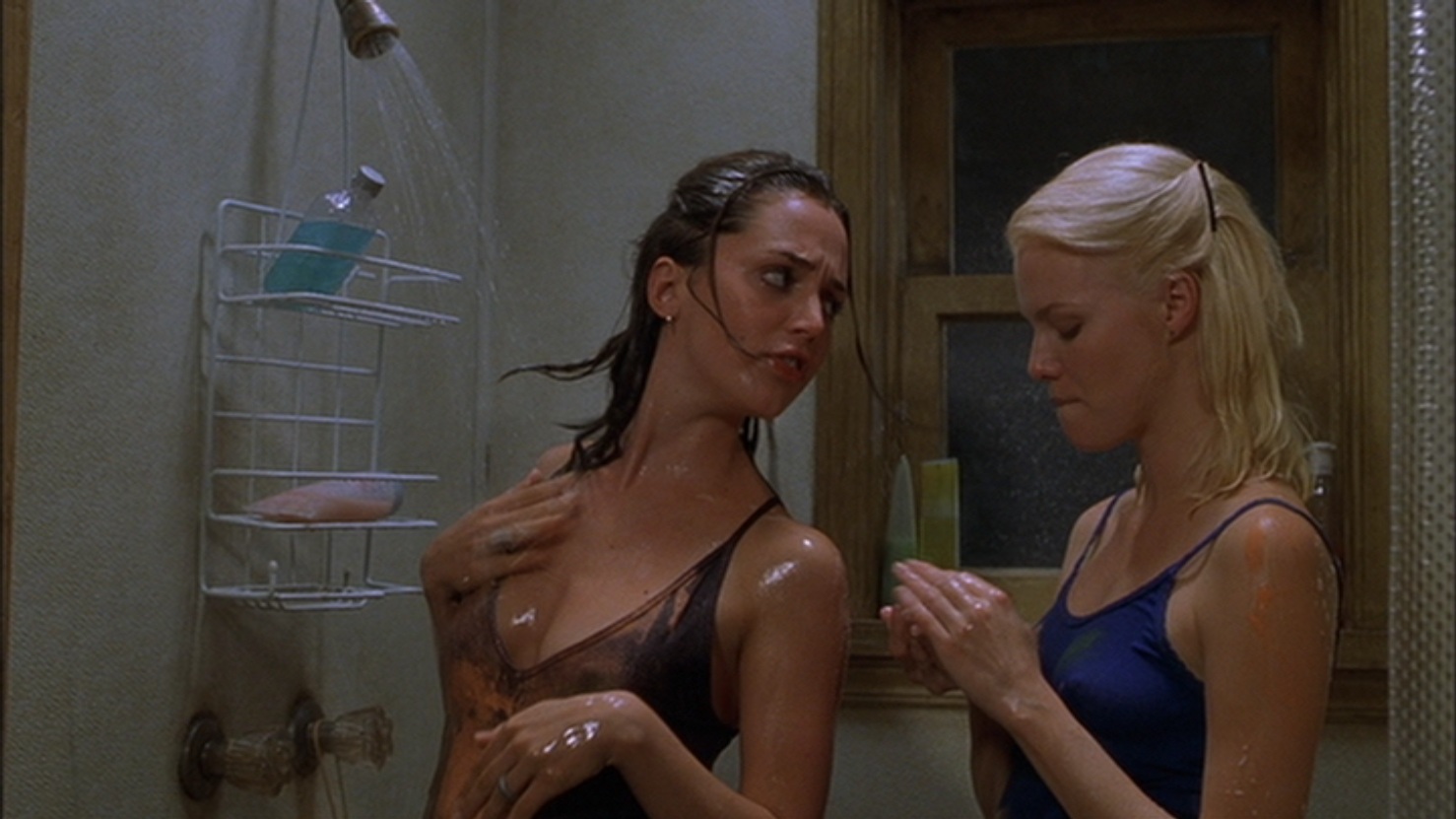
The creepiest aspect of the movie for me is Matt and his obsession with Cassie. They used to date, and he’s wont to say things like, “I just wanna see you in a bathing suit again.” None of the characters is extremely likable, so I spent much of the movie waiting for it to reach its predictable conclusion. Actually, I spent quite a while waiting for a scene I remembered from my first viewing, when Cassie and Annie cover each other with paint and make out in the shower, but I’m either delusional or I watched some kind of director’s cut, because that scene didn’t happen.
Kiss her! I command you!
I normally enjoy Luke Wilson, but his stint here as a priest doesn’t work for me. Nor does Angela Featherstone as Raven, Annie’s sort-of girlfriend, who’s pretty much pointless aside from being a reason to show girl-girl snogging. Said snogging is the only bright point of the movie for me, as I want to squish everyone’s face.
The scariest thing about Raven is the filmmakers said, “Yup, this is a lesbian.”
Normally, a film has some redeeming factor for me, whether it’s an actor I like, a funny or scary moment, or a good quote. But with Soul Survivors, I got nothing. It’s not terribly original. The acting is unimpressive. I guess give it a look if you want something that’s not an utter pile of shit?
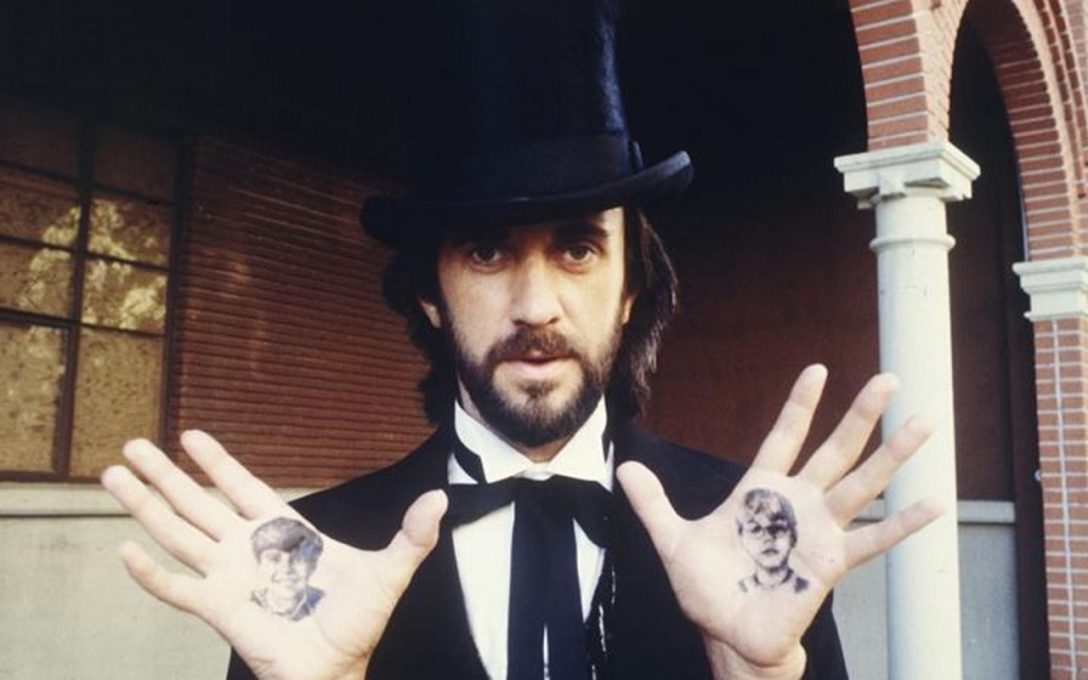
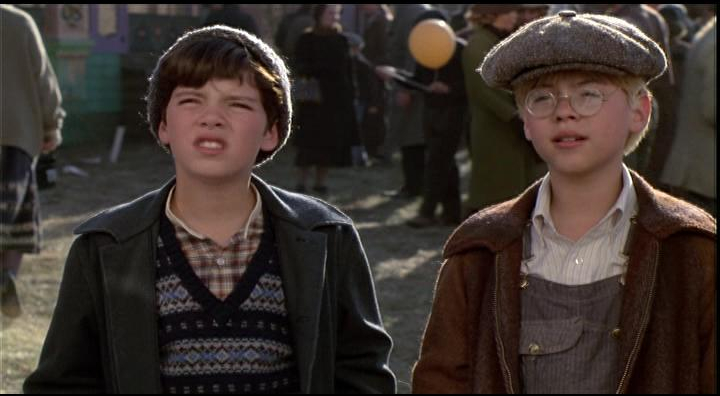
Young kids Will (Vidal Peterson) and Jim (Shawn Carson) are always looking for an adventure. They get more than they bargained for when an evil circus rolls into town. As they do. Proprietor Mr. Dark (Jonathan Pryce) grants wishes, but in a monkey’s paw-type way, for example giving an elderly school teacher the chance to be young again, and then making her blind. The boys are singled out after learning the carnival’s awful secret, and are subsequently hunted by Dark and his minions.
Pam Grier is awesome as the Dust Witch
Made by Walt Disney Productions, it’s meant to be a kid’s movie—it’s rated PG. But naturally for Disney, which operates on the blood of fictional dead parents and antagonists falling to their doom, there are un-kid-appropriate segments. For example a wannabe lady’s man cavorting shirtless with a troupe of belly dancers, and a villain getting stabbed in the gut with a lightning rod. There’s also a rather creepy scene when Will dreams his room is full of tarantulas.
This is disconcerting for multiple reasons
However, it’s also meant to be thought-provoking. There’s the dichotomy of good and evil, embodied by Will and Jim, and the massive amounts of character development rather than action. The film can be a bit slow (but not boring) and is very dialogue-driven. The children’s lines in particular can sound a bit unnatural, for example Will’s exclamation of “Why, that’s tomorrow!” It was made in 1983, but the book it’s based on was published twenty years earlier. So there’s an overwhelmingly golly-gee feel to it at times, with sap like, “Even now, on those special autumn days, when the air smells like smoke and the twilights are orange and ash gray, my mind goes back to Green Town, the place where I grew up.”
I’ll give you three guesses as to which is the “good” kid and which is the “bad” kid
Overall, it’s schmaltzy but scary. That’s just a darn good premise, I’m always down for movies about wishes that backfire in horrible and ironic ways. Give it a look if you’re in the mood for crisp autumn mornings and the promise of adventure just around the corner and the smell of…I dunno, pie? Just kidding, give it a look if you’re in the mood for nostalgia and pervy circus dudes.
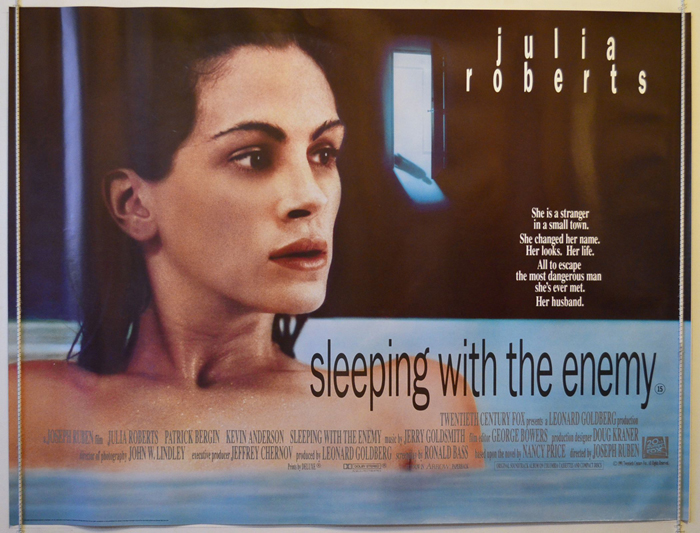
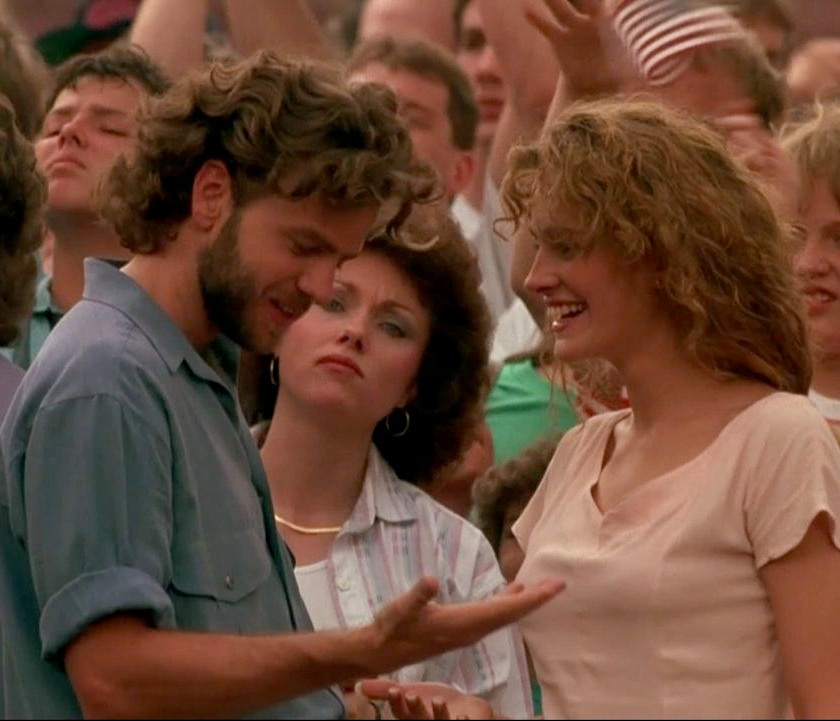
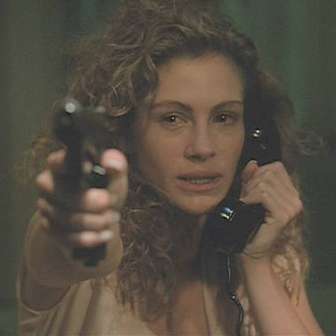
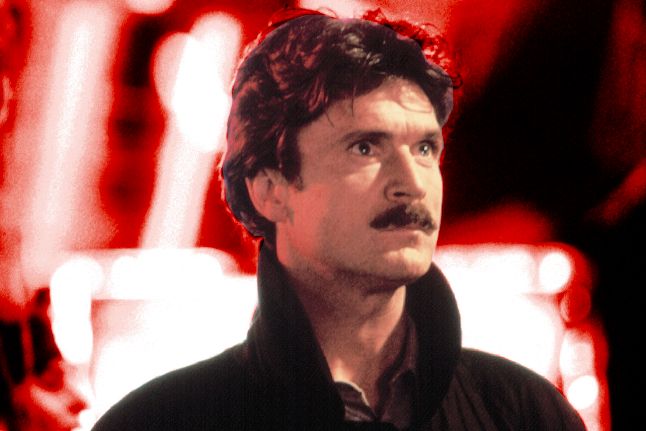
Laura (Julia Roberts) is married to Martin (Patrick Bergin), a batterer. She knows if she runs away he’ll find her, so she fakes her own death by pretending to drown and starts a new life in a small town far away. Her next-door neighbor Ben (Kevin Anderson) helps her learn to trust and love safely, and things are just about perfect. Until Martin finds out she’s alive and tracks her down.
One of my favorite scenes–Laura and Ben goofing around
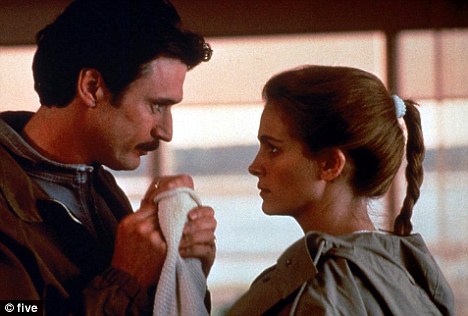
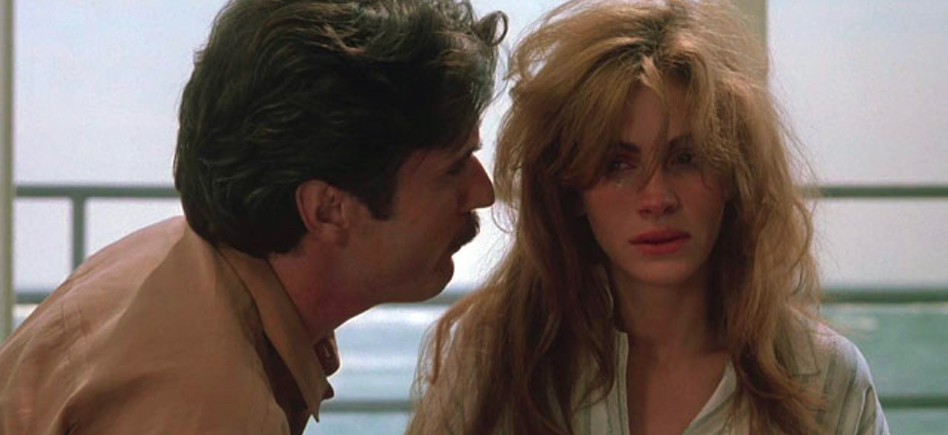
I’m not a huge Julia Roberts fan, but she gives a good performance. I like how in the scenes with Martin she shows how Laura wears a mask for him—smiling when he’s looking at her and angry when he’s not paying attention. Roberts’s hair also does a good job—it symbolizes Laura’s mindset. When Laura’s with Martin it’s flat and reined in, usually over her shoulder. It’s really long and looks like a pain in the ass to take care of. Then the night she leaves him she cuts it. A few scenes later it’s wild and curly, and even when she has it tied back, it looks free.
Before:
After:
At its heart, the movie is about Laura’s search for freedom and agency. In addition to the beatings, Martin is a control freak, dictating how Laura keeps the house, what she cooks, whether she works, and even what she wears. She’s the clichéd housewife; when she’s not doing domestic chores, she’s arranging flowers. Laura escapes him and gets her own house, where she’s free to be a little messy and love a guy who’s kind and sensitive and makes pot roasts and has one of the least threatening jobs ever: drama teacher. In their relationship they’re well-matched, but Laura is also powerful. When Martin shows up, Ben does little besides get beaten up. Laura saves herself.
“Take that, male oppressor! I got a tool of the patriarchy now!”
The movie is extremely predictable, but not without tension, for example when Laura suspects Martin’s in the house and searches for signs of his prissy towel hanging; she at first finds nothing, then suddenly her cupboard is rearranged. One scary scene is when Laura’s blind mother is knitting, and drops her needle. She feels around for it, and we see Martin’s shoe. He’s been standing over her without her (or us) knowing he’s there, and he has this horrible intense look of hatred on his face.
This isn’t the exact scene, but you get the picture
Overall the dialogue is decent and there are no major plot holes. Check it out if you want something creepy without sleaze—you know, when a woman can take a bath without showing her boobs or getting hacked up.
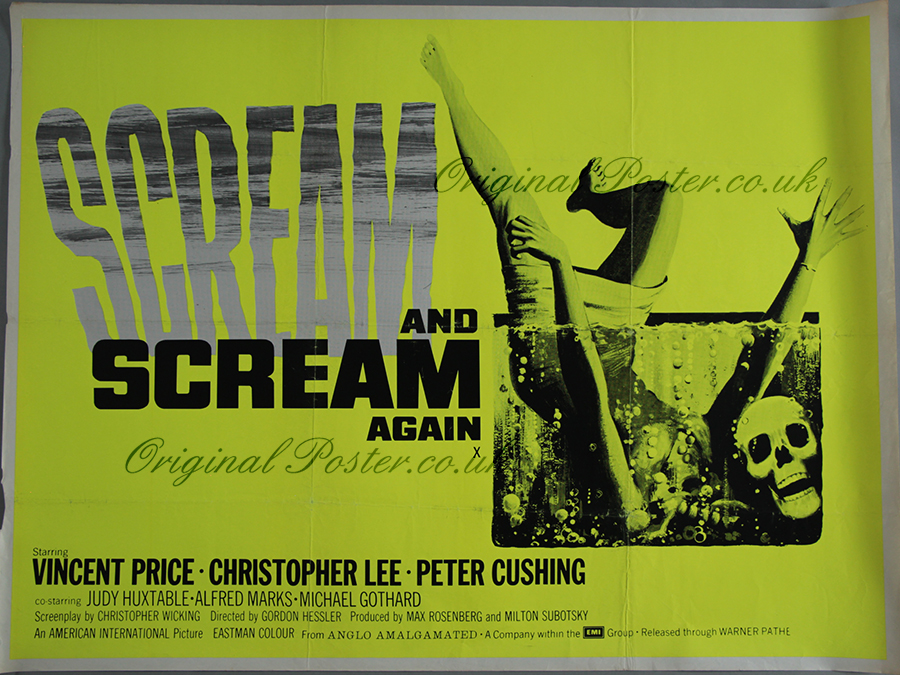
U.K.-based American International film. Multiple storylines include: serial killings of young women, cop on the trail Superintendent Bellaver (Alfred Marks), officers Griffin (Julian Holloway) and Helen (Judy Bloom), forensic technician Dr. Sorel (Christopher Matthews), evil guys Konratz (Marshall Jones) and Dr. Browning (Vincent Price), and a jogger in hospital who’s slowly losing his limbs. Eventually they all sort of come together to reveal Browning’s plot to make synthetic people out of used body parts.
It’s early in the decade, but already the thumping bass and swelling trumpets of the ’70s are rampant. This one even has a theme song by The Amen Corner. But aside from the cheesy music, my main complaints are about the overly large cast (even wedging in Russian spies) and the chase scene: English police officers don’t carry guns, so to catch the killer there’s a merry car chase, then a foot chase, then he’s on foot and they’re in cars. The whole thing is very drawn out and short on suspense.
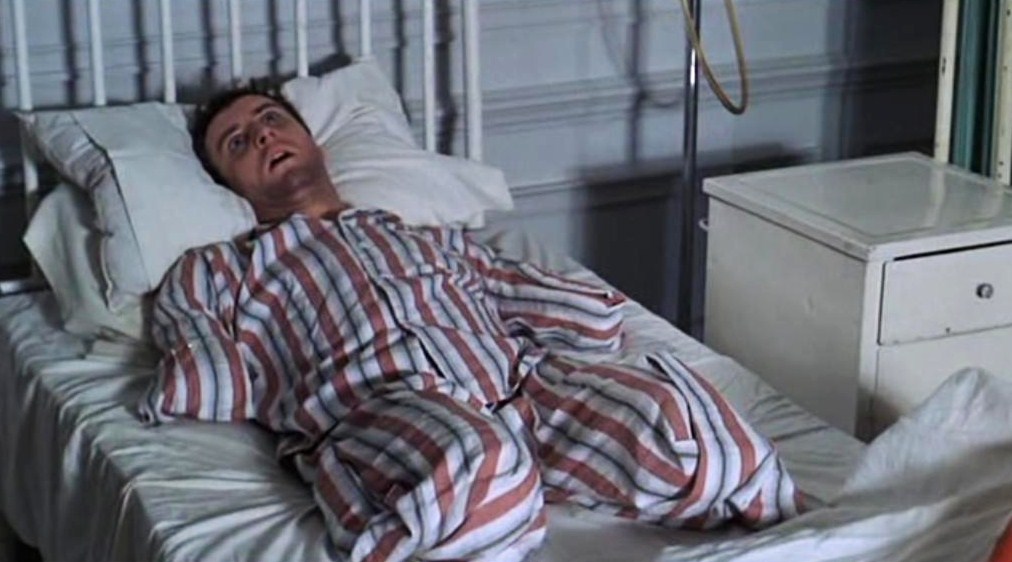
But there are also things to like, for example cameos by Christopher Lee and Peter Cushing. It’s an interesting look at the changing face of technology. It’s also quite amusing to watch on VHS; there’s handy trivia on the box (like how critics at the time often remarked that the character Keith [Michael Gothard] looked like Mick Jagger), and the closed captions don’t work very well—people “urgle” rather than gurgle. Though it’s often corny, there are a few effective moments, mostly involving the poor jogger, who keeps waking up to find more and more of himself missing. The only person he sees makes no reply to his plaintive statement, “Nurse, what are they doing to me?” She sticks a tube in his mouth and walks away.
He doesn’t have a leg to stand on
Since it’s the ‘70s and the censors were loosening up, there are references to drugs, and also gratuitous tit shots, as well as an instance of a woman lasciviously caressing a gear shift. So check it out if you want something classic, droll, and the opposite of prudish.
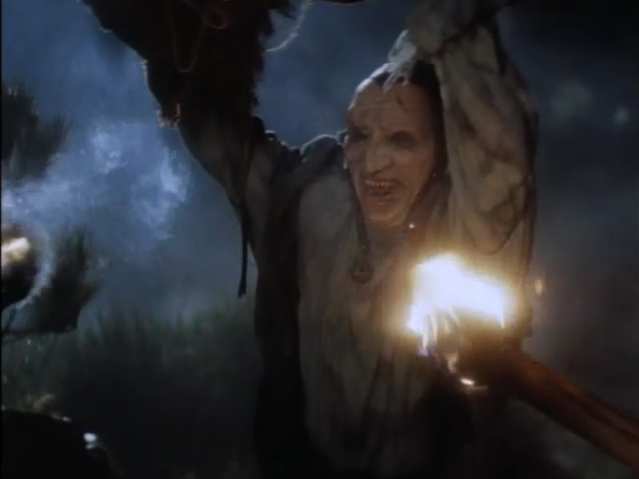
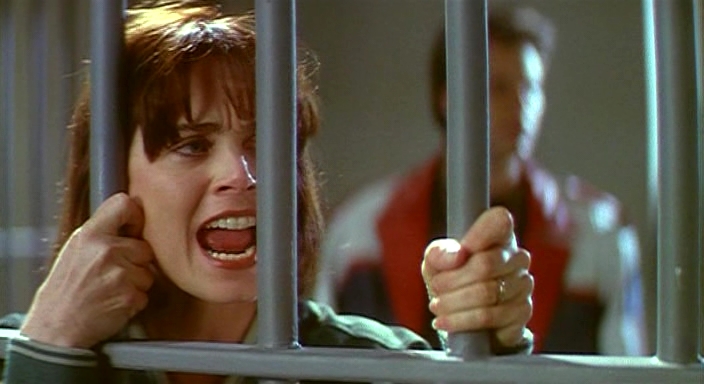
Rumpelstiltskin (Max Grodénchik) is a goblin-type guy in the 1400s wanting to trick people into letting him grant them wishes so he can claim their first-born babies. The local villagers are less than pleased with his conduct and hunt him down, and a witch turns him into a statue. Flash-forward to present-day LA, when housewife Shelley’s (Kim Johnston Ulrich) husband Russell (Jay Pickett) has recently been gunned down by a carjacker. She buys the statue and cries on it, wishing that Russell could meet their son, which allows the creature to manifest himself in the flesh. Russell “returns”, and shortly after he reveals that he’s really Rumpelstiltskin (which is a cheat in my opinion, considering he didn’t actually bring Russell back from the dead—lawsuit!). Shelly is of course far from tickled at the prospect of losing baby John, and leads Rumpy on a merry chase. In the process she meets Max (Tommy Blaze), a talk show host who helps her out. Together with the help of another witch, they stop running and fight.
My sisters and I rented this in the mid-’90s when it was new, and about halfway through it our television’s picture tube quit. Yes, the movie’s so bad it broke my TV. The opening is less than auspicious, the title card reading “Somewhere in Europe—1400’s.” Vague and an unnecessary apostrophe. Rumpelstiltskin tells the crowd, “Come. Bring the pain.” That’s only the first in a series of terrible one-liners, for example “Fucketh me.” There are also goofy goings-on like the monster’s severed arm flipping Shelley off.
“Yes, please set me on fire! I crave the sweet release of death!”
Meanwhile Shelley’s best friend Hildy (Allyce Beasley) is profoundly irritating (she’s doing the lonely woman with a string of bad boyfriends bit), as is Max, who delivers most of his dialogue at the top of his voice. I’m also annoyed that Shelley is frustrated at Max for not immediately believing her crazy story and that later they make plans for a date, even though Russell has only been dead for eight months. In addition, the sound is off-kilter; Rumpelstiltskin’s words hardly ever match his lips, and the baby tends to cry silently.
“I TOLD you, a goblin is trying to kidnap my baby because he brought my husband back from the dead! What part of that story are you having trouble with?”
Max Grodénchik gives a good performance as Rumpelstiltskin, at least as far as the physical; he hops and squats and runs very nimbly. But the rest of the acting isn’t great, and the movie is somewhat melodramatic. Further also, the way the film is structured involves Shelley running away from the beast for about an hour, which gets really old. Give it a look if you’re in the mood for a Leprechaun rip-off without the charm of Warwick Davis.