*Author’s note: In the process of analyzing films, I let loose major spoilers.*
The horror genre is loaded with movies about evil children. From a sociological standpoint, you can interpret this as reflecting worries about the next generation (those dad-ratted millennials and their trophy-hunting, nostalgia-obsessing, avocado-toast-making!) or just a gimmick to make something that’s supposed to be harmless creepy instead, like that urban legend about John Denver being a sniper in the Vietnam war. The children are evil for varying reasons, be it supernatural, genetic, environmental, or sometimes even for no reason, but a prevailing theme is either guilt on the part of the childrens’ guardians for their misdeeds or fear of losing control over them.
Supernatural corrupt youngsters abound in films like Pet Sematary (a zombie), ‘Salem’s Lot (a vampire), The Ring (an angry ghost), and The Omen (the antichrist). They’re often born to mortal people who are horrified by their behavior. From a real-world perspective, there is some scientific study regarding body chemistry as a cause of psychopathy–though obviously the real-life issues don’t stem from curses, possession, or coming back from the dead; they involve deficiencies in serotonin and an overage of dopamine (Fallon, 82-84). Some theorists even posit that for some people, being a psychopath is natural: “As far as ‘will’ is concerned, I want someone to say with a straight face that Oprah, with her constant losing battles against obesity, lacks will. That woman had more will than 99.9 percent of people. But it is not the ‘will’ that society, her friends, her family want. They want her to be wonderful and to do great works, and be famous, and be thin. Well, folks, unless she gives up everything else and stays focused solely on her weight for the rest of her life, she is going to keep coming back home. All behaviors can be modified in the face of a genetic and epigenetic makeup that says otherwise. But to stay changed in the face of those genetic imperatives usually means you have to give up nearly everything else you hold most dear. Our genes and how their effects are modified by stressful experiences early in life don’t necessarily predict categorically who we are and what our deep character is about, but they create constant pressures to be and act a certain way. Psychopathic tendencies are particularly hard to fight, and attempted cures may make only small differences. Drugs that influence the monoamine neurotransmitter systems can partially reduce impulsivity and aggression, and early interventions involving diet and meditation can decrease behavioral problems, but the core neuropsychological deficits leading to lack of empathy and remorse remain. There are no magic bullets” (Fallon, 206) (unless it’s a werewolf movie). This reflects an underlying fear for parents that we have no control over our children: can we influence our kids enough to polish them into moral, upstanding citizens? Or will we fail?
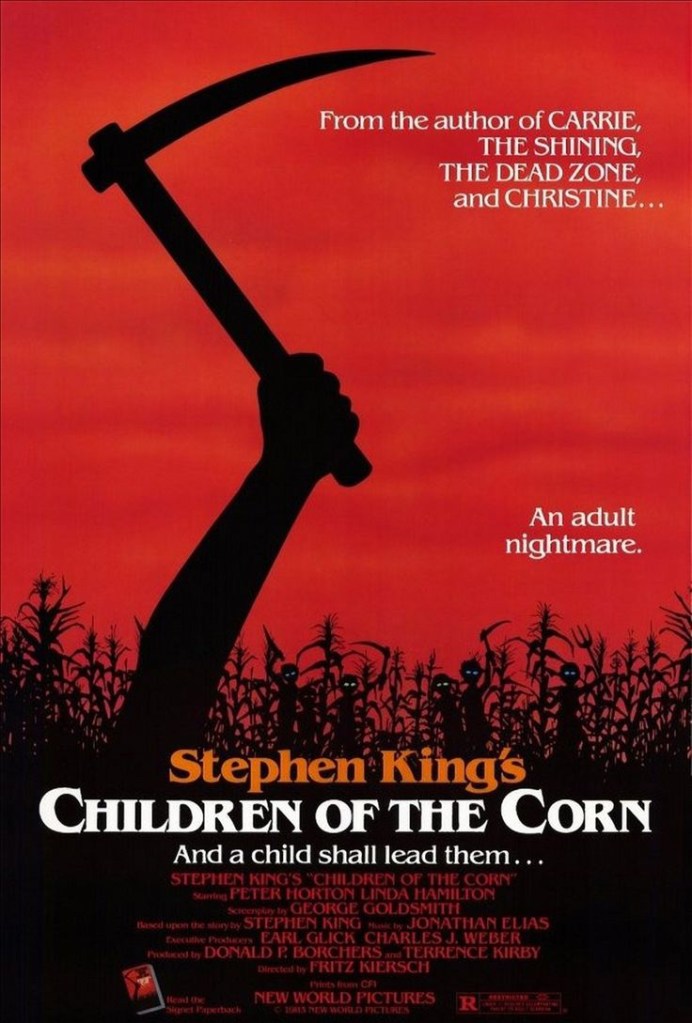
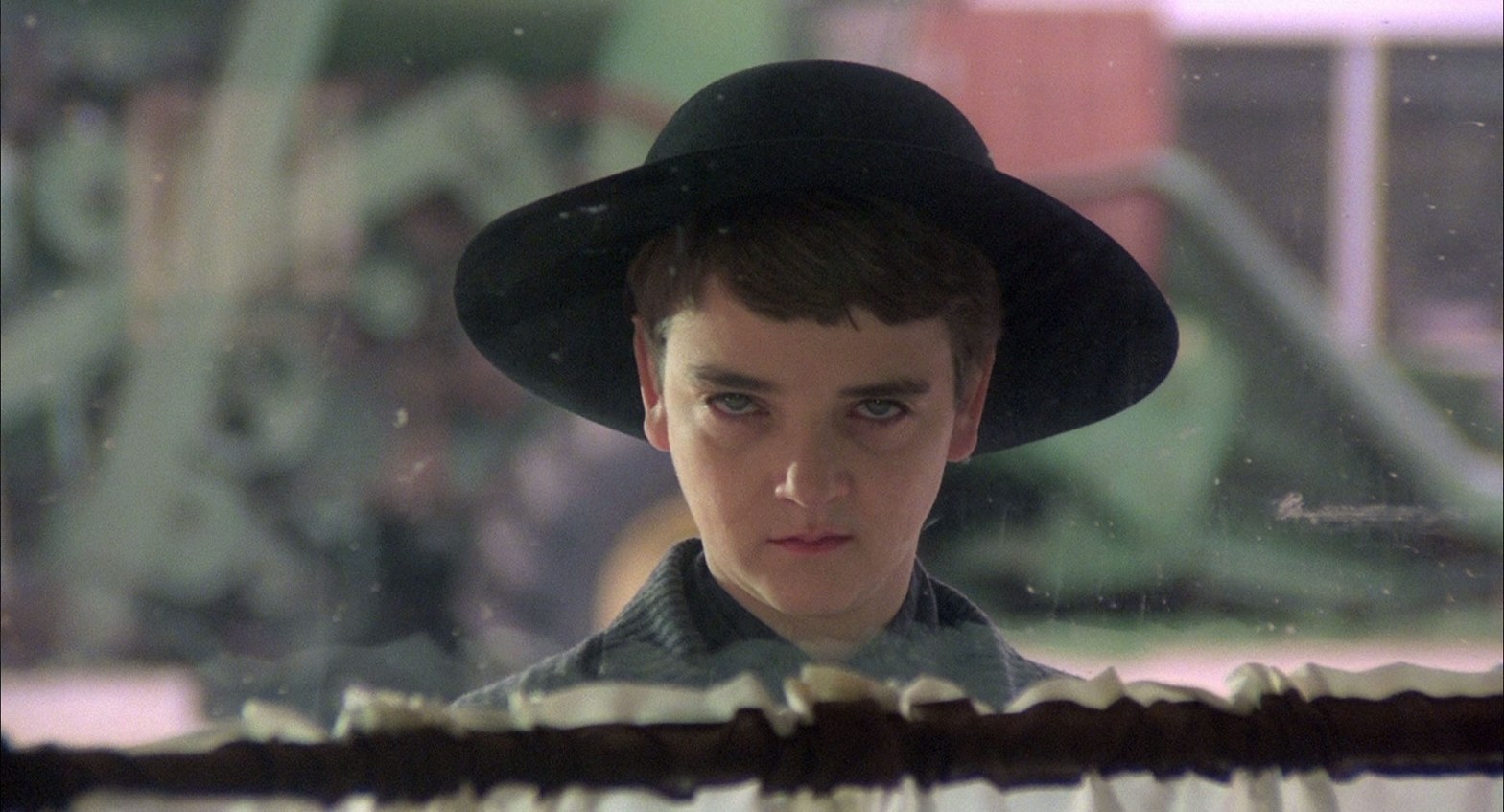
In Children of the Corn, the juveniles of a small Nebraska town are being influenced by tween Isaac, who educates them about the awesomeness of He Who Walks Behind the Rows, a corn-based god.
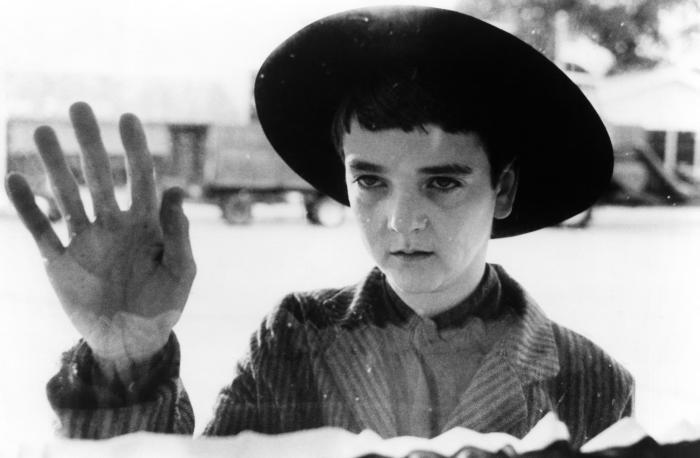
As Job, a good Christian boy, narrates, “They were acting real creepy.” He and his sister Sarah are the only children in Gatlin who don’t suddenly embark on a killing spree, murdering every adult around. The others are driven by religious fervor, and seem to really enjoy poisoning, maiming, and dismembering people. Later they graduate to crucifying their victims.
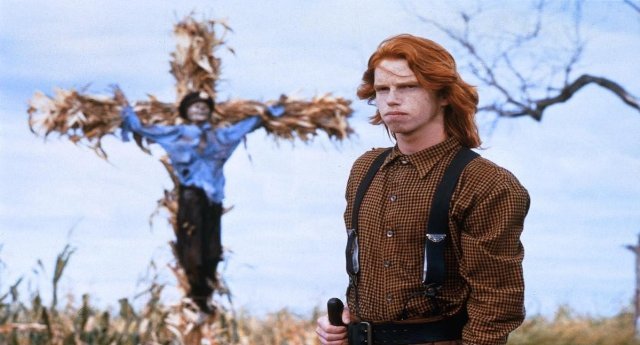
They’ve completely lost their fear and respect for authority, at least the secular kind. Isaac claims that adults are “unbelievers and profaners of the holy,” and once a corn child turns nineteen, off they go to be sacrificed. The children of the corn are the penultimate two-year-olds who won’t listen or behave. “Children, particularly young children, control precious little in their lives. Parents control everything. This lopsided power dynamic doesn’t sit well with those on the losing end. Kids sometimes challenge parents just because they can” (Pearlman, 15). The film asks the question of what would happen if children (who often outnumber their parents) realized that their elders are only humans, with a limited amount of real power.
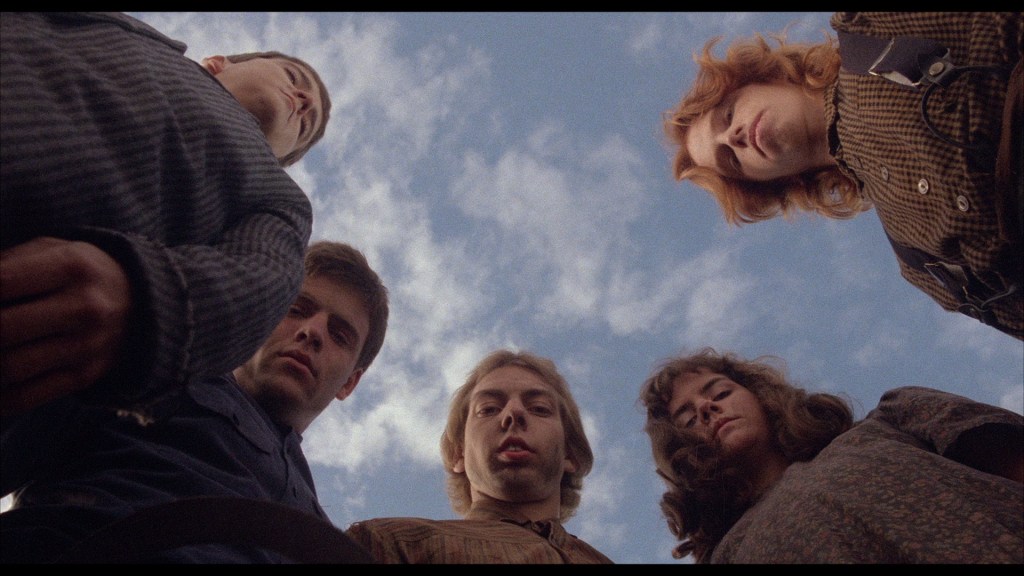
It’s easy to get wrapped up in guilt and anxiety about how heredity will affect our children. My husband’s family has a sizable amount of alcoholism, dementia, and cancer, while mine has depression, OCD, and heart problems. My daughter Layla, even when she was a preteen, was strikingly like me as a teen; we share the same traits of low self-esteem, shyness, and gender dysphoria. My son Orion, at age nine, is also a mini-me at that age: sensitive and quick to tears, but kind. According to some reasearchers, genetics are exceedingly important influencing factors in a child’s life, possibly more so than environment: “Parents matter, but they don’t make a difference. Parents obviously matter tremendously in their children’s lives. They provide the essential physical and psychological ingredients for children’s development. But if genetics provides most of the systematic variance and environmental events are unsystematic and unstable, this implies that parents don’t make much of a difference in their children’s outcomes beyond the genes they provide at conception […] shared environmental influence hardly affects personality, mental health or cognitive abilities after adolescence. This even includes personality traits that seem especially susceptible to parental influence such as altruism, kindness and conscientiousness” (Plomin, 107.) Once again, parents are left worrying about things we can’t control. How much influence do we really have, and what’s predestined in our genes?
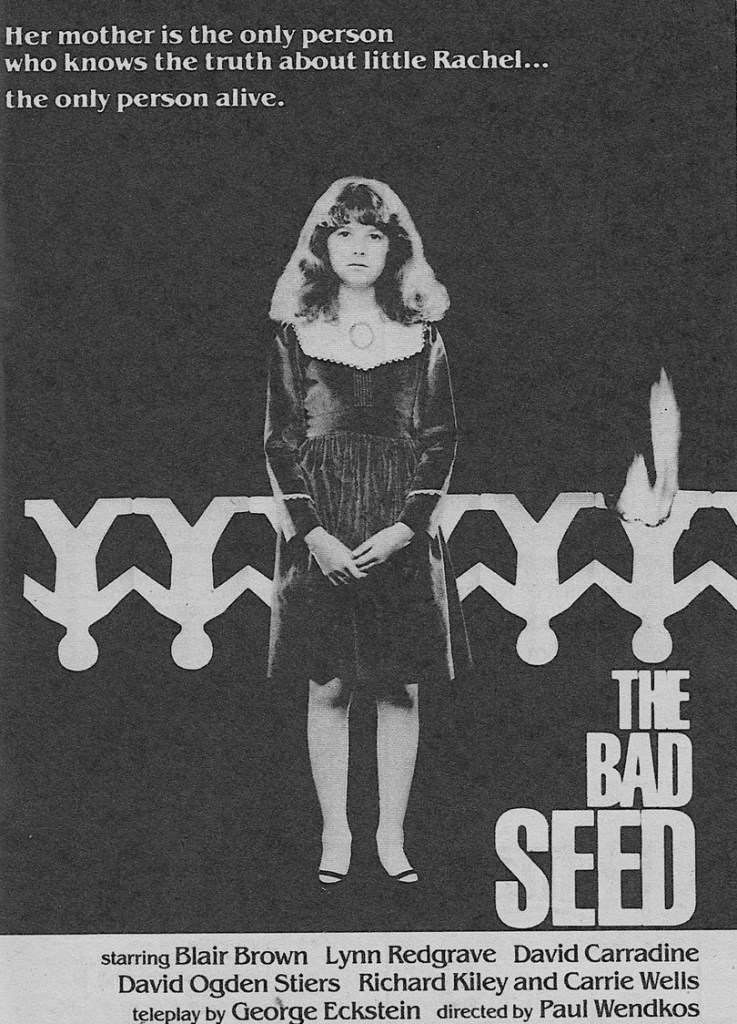
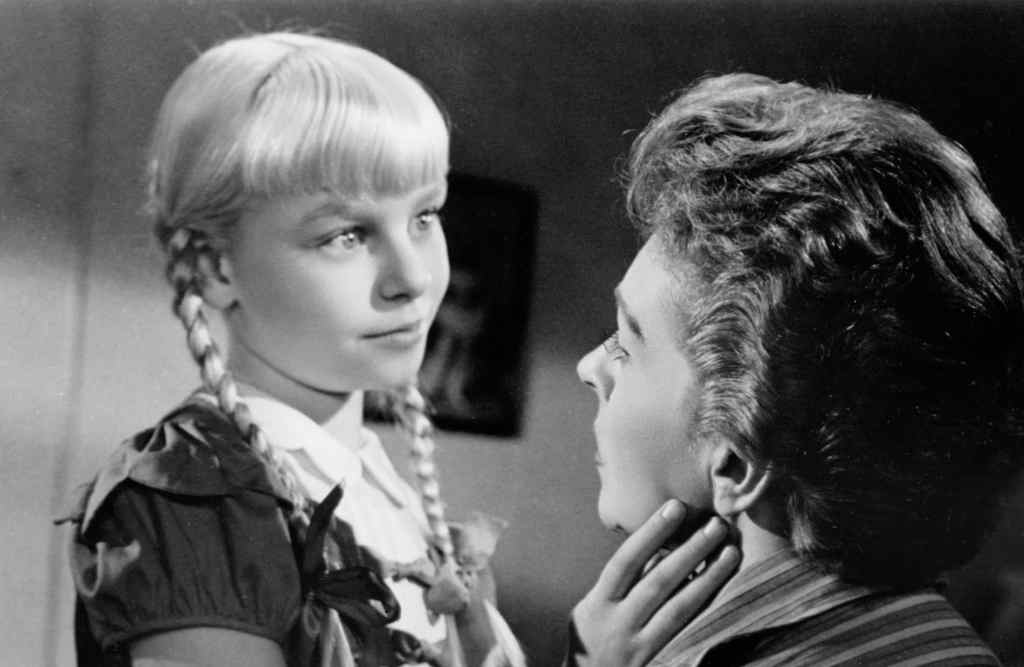
The Bad Seed (I went with the 1985 remake that’s much less wishy-washy1) regards Christine, the daughter of serial killer Bessie Denker. Bessie’s murderous ways have skipped a generation and been passed on to Christine’s young daughter Rachel. Bessie, in pursuit of an inheritance, killed 13 members of her own family, starting with the attempted murder of her brother as a child. She was caught while hunting down toddler Christine, who was taken in by Richard, the reporter covering the case. In the movie, sociopathy is regarded as almost wholly a genetic condition. Christine’s neighbor, Emory, is a true crime writer who states: “I’m not saying that environment is irrelevant, but your hardcore murderer has to have something very basic missing in his genetic makeup.” Christine responds, “So what you’re saying is that a lack of morality can be inherited.” Rachel, though possessing a shallow charm and cutesiness, has no sense of empathy, only acquisitiveness.
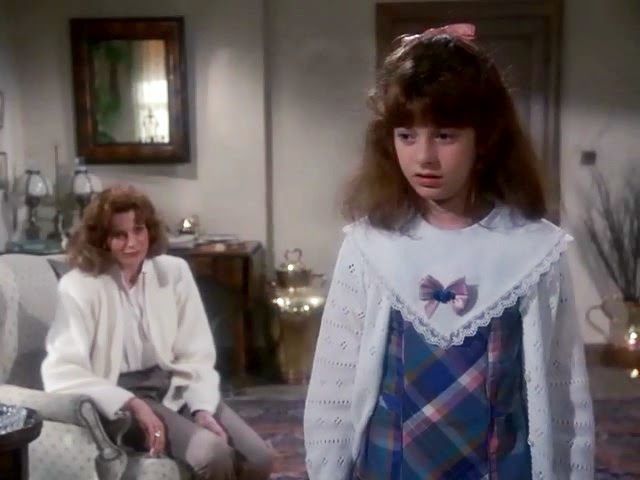
Christine aptly recognizes that “She just seems so greedy.” To which her neighbor Monica replies, “Everybody’s greedy, children just don’t hide it as well, sweetie.” People are constantly giving Rachel presents, but she’s still prone to theft, stealing from her classmates and Monica’s purse. The opening shows Rachel pushing Mrs. Post, a sweet lady trying to feed a cat, down the stairs, because the woman promised her a Christmas ornament when she died. When classmate Mark wins a penmanship medal instead of her, she beats him to death with her shoes and steals it. Then she comes home and goes roller skating. The only person to immediately see through her facade is the maintenance worker Leroy (look, it’s David Carradine!).
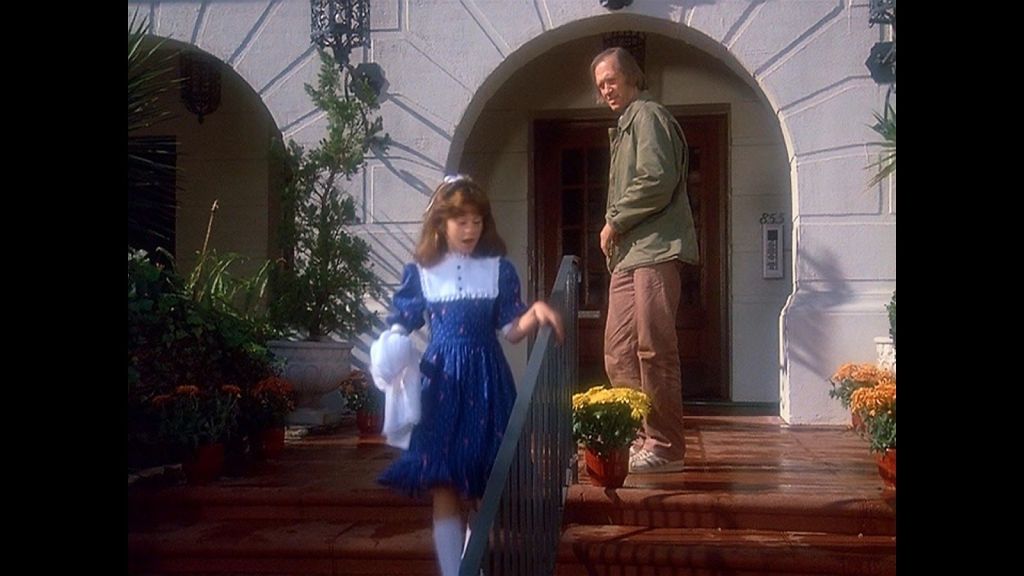
Rachel strikes fear into the hearts of her enemies. She has to chase Mark down; he runs away from her. She even scares Leroy, after he figures out that she killed Mark. He insinuates that he took her shoes out of the incinerator, and she threatens, “I want those shoes back. You give them back to me, or you’ll be sorry […] I want them back as soon as I get home from school. Do you hear me?” Leroy, panicking, tries to find the shoes (which actually had burned) and hides from her when he can’t find them. Not to be deterred, Rachel merrily burns him alive. Meanwhile, Christine has also figured out that Rachel is a bit murder-y, and Rachel is happy to use Christine’s guilt over Rachel’s dead father to her advantage: “Ever since Daddy got killed, I’ve been scared. I miss him so much, Mommy!” She also exploits Christine’s motherly love when she admits to killing Mark: “Please, Mommy. It wasn’t my fault. You’re not gonna tell on me, are you?” Christine replies, “No, Rachel. No, darling, I’m not gonna tell on you, no. It isn’t your fault, sweetheart, you’re right. It’s my fault.” Christine, after telling Rachel to burn her shoes and throwing Mark’s medal out to sea, snaps after Leroy’s death. She gives Rachel a massive dose of sleeping pills, saying, “Sleep well, darling. Sweet dreams. Oh God forgive me! I love you so much.” Before waiting to make sure Rachel actually dies, she shoots herself. In the end, Rachel survives and goes to live with Richard. But she asks, “Can I come back and visit Aunt Monica sometimes?” A recurring motif in this subgenre is the child who is not a child–they have adult tendencies and at the very least instincts towards–if not outright expertise for–manipulation and harmful behavior.
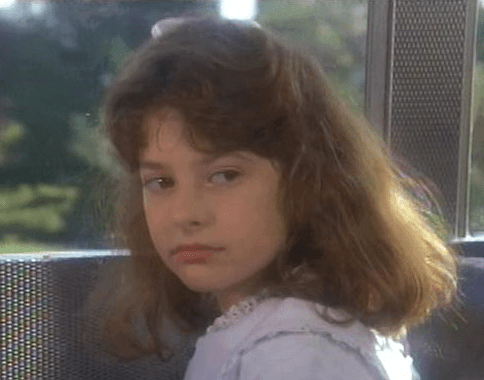
Young children and babies are, obviously, not born knowing how to behave like reasonable people (or the facsimile that most of us manage eventually), and have a disconcerting resemblance to an adult with antisocial personality disorder—a condition that involves “a pervasive disregard for the rights of others […] failure to conform with social norms and standards of lawful behavior, deceit, impulsiveness or failure to plan ahead, irritability and aggressiveness, reckless disregard for the safety of oneself and others, consistent irresponsibility, and lack of remorse” (Black, 52-53). Any parent can recognize their own offspring in that description, having seen them hit another over a toy or make a dangerous jump. I have to admit to feeling a twinge of nervousness about Layla as a baby, when she loved pulling my hair and slapping me. Orion had a biting problem and repeatedly tormented Layla by snatching her toys and throwing them either in the litter box or the toilet. (I won’t bore you with the lengthy description of conduct disorder, the under-age-eighteen version of ASP, but if you’re interested, I included the full list of criteria as a footnote.) The flip side of nature in child-rearing is nurture; of course we’ll make mistakes, but will our own flaws cause us to do things we can’t take back?
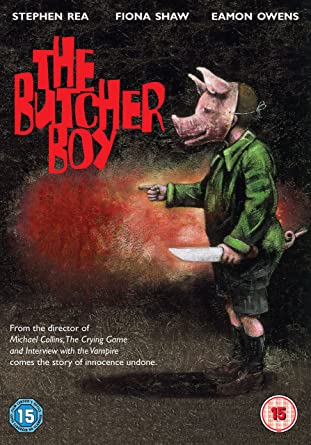
The Butcher Boy is not strictly a horror movie, but it does portray graphic and upsetting subject matter: Francie, a troubled preteen, acts out in cruel ways until finally he murders a woman.
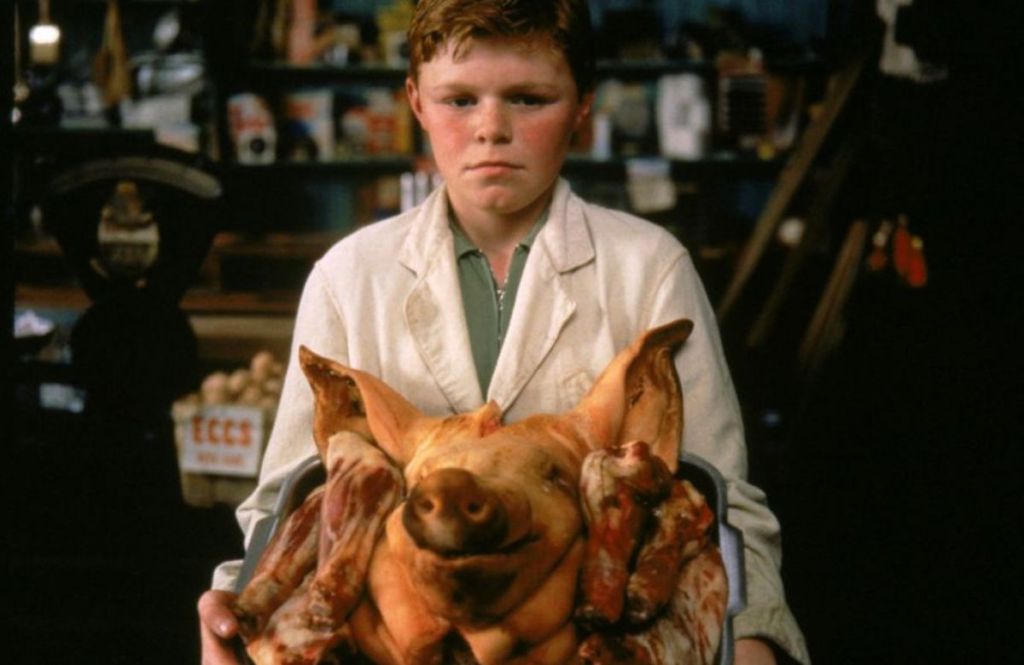
Francie experiences multiple environmental causes for conduct disorder, mainly his sympathetic but deeply flawed parents: “Many children who become antisocial endure poverty, substandard housing, bad neighborhoods, parental abuse and neglect, and inadequate nutrition and medical care” (Black, 154). He grows up poor with his alcoholic, abusive father Benny and mentally ill mother Annie. In one scene, Benny chases Francie with a belt in an attempt to beat him, while Annie frantically takes a handful of pills. At one point, Francie gently stops her from hanging herself. Annie is then sent to a mental hospital, and Francie is left to clean and do the shopping when they run out of food. When Annie comes back, she’s no longer depressed but instead manic, obsessed with baking at all hours. When Francie runs away after his parents have a fight that culminates in Benny slapping Annie and calling her a bitch (also a criteria for conduct disorder: “Has run away from home overnight at least twice […] or once without returning for a lengthy period”), Annie throws herself in the ocean and drowns. Benny blames Francie, and soon succeeds in drinking himself to death, leaving his corpse to draw flies in the living room, while Francie does his best to deny that Benny is dead. Francie, true to form for conduct disorder, charms many of the adults in his life; he’s well-liked by the town priest and the ladies at the grocery store, who call him a “rare character.” As one of them says later, “What chance did he ever have, the poor creature.”
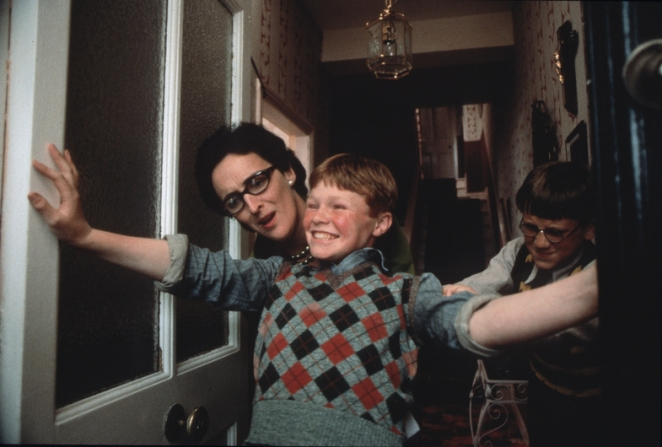
Francie meets the criteria for conduct disorder: “A repetitive and persistent pattern of behavior in which the basic rights of others or major age-appropriate societal norms or rules are violated.” He “Often bullies, threatens, or intimidates others,” taking a special interest in his peer Phillip and Phillip’s mother Mrs. Nugent. He “has stolen while confronting a victim.” In fact, Francie himself acknowledges that stealing apples from the Nugents’ tree is his first bad deed, which he quickly follows up with by stealing Phillip’s comic books. He has “deliberately destroyed others’ property.” He has “broken into someone’s house, building, or car”–he breaks into the Nugents’ house, vandalizes it, and then takes a dump on the floor.
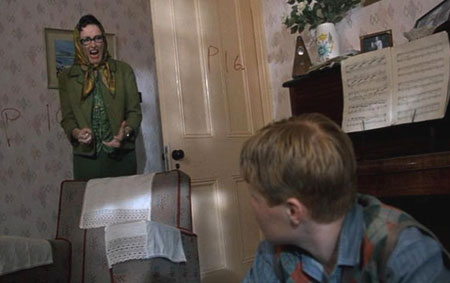
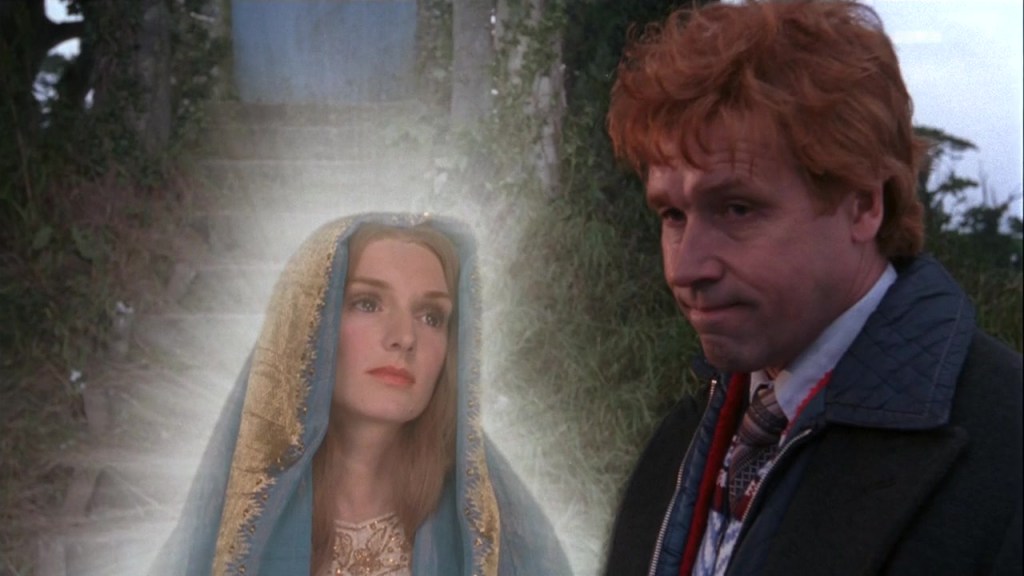
Mrs. Nugent is so scared of Francie that twice in the movie she sends her brothers to rough him up; the second time it happens, Francie gets the better of them and hits them with a rock. Francie sees the Nugent family as the source of all of his problems: “If she hadn’t poked her nose in between me and Joe, everything would have been all right.” Francie’s friend Joe is the most stable influence in Francie’s life. At first, he joins Francie in taunting Phillip, but then he has a crisis of conscience, convincing Francie to leave him alone and then disowning Francie as a friend completely. Despite getting psychiatric care, Francie escapes, begins drinking, and in a poorly timed series of events, finds out his parents’ sweet honeymoon story was a lie and is turned away for a final time by Joe. Francie attacks Mrs. Nugent, dehumanizing her by calling her an alien. He murders her, dismembers her, buries her, then tries to burn down his house.
In some cases, psychopathy seems to be something almost inevitable, not preventable. Dr. Kent A. Kiehl, a leader in the field, describes the multiple letters he receives from worried parents: “One of the most telling aspects of the letters is that none of the children are described as normal from birth. Parents say they noticed something different, odd, or abnormal about the child from the very beginning. The letters never describe a normal child, followed by a sharp transition in behavior precipitated by something like a head injury or stressful event (i.e., divorce or death of a parent or sibling). They never describe a period of time where the child went from a normal state into a slow decline. Such a pattern is seen in a number of mental illnesses and is commonly referred to as a prodromal period–a slow, progressive change in normal functioning until a real mental break occurs. These children’s histories are presented as qualitatively different from other siblings or children from a very early age; if anything, the behavior has been disappointingly consistent, if not worsening, since birth” (127). What can we do with a child we can’t change?
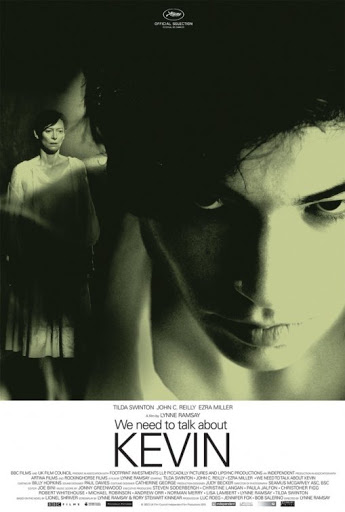
In We Need to Talk About Kevin, a sixteen-year-old boy massacres a group of his classmates by locking them in the school gym and picking them off with a crossbow. The movie is from the point of view of his mother Eva, who is baffled by his lifelong cruel behavior. From the time he’s a baby, Kevin hates her, crying nonstop unless his father Franklin is holding him. (In one scene, Eva is so desperate for an end to the squalling that she stands with his stroller by a construction worker using a jackhammer.) As a toddler, Kevin mocks Eva and purposely goads her. He refuses to talk and glares at her. He throws his food at the wall (prompting Eva to say, “Mommy was happy before widdle Kevin came along”).
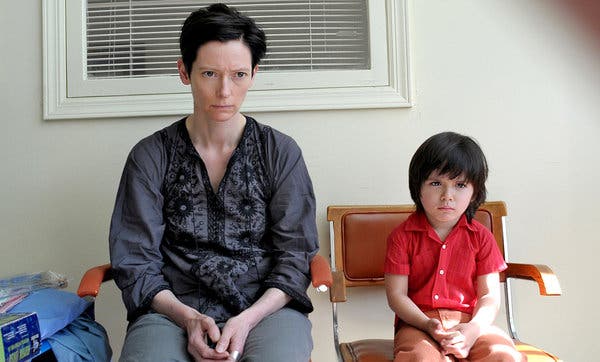
As Kevin gets older he shows evidence of conduct disorder but without the kind of environmental predictors that Francie has. Like most of the parents in this subgenre, who love their horrible children unconditionally, Eva keeps trying to mother Kevin even though she’s not fooled by him. Eva is sometimes impatient but always loving, and we’re meant to empathize with her. It’s well established that she was reluctant to become a mother and misses her freedom as a travel writer to just pack up and leave when she wants. In one scene, pre-pregnancy, she and Franklin frolic in the rain. But even Franklin wants to tie her down, saying, “Promise you’ll never go away again.” In a flashback she’s juxtaposed with the happy pregnant women in her class, standing alone and unsmiling. While giving birth, the nurse has to chide her, “Stop resisting, Eva.” Afterwards, she stares dazedly into space while Franklin plays with the new baby. She also has to give up her busy New York life to move to the suburbs. When Kevin is a few years older, he shows an actively destructive side, in one scene purposely destroying Eva’s decoration of her study with maps of places she’s been. However, he convinces Franklin that he was only trying to make Eva’s room more special and that he is sorry, and Franklin, who continues to view him as a “sweet little boy,” buys it. Kevin also refuses to be potty-trained for years, taunting Eva with having to change his diapers. In her most flawed moment, she loses her temper with him, and he ends up breaking his arm. Unexpectedly, she wins a small amount of his respect, as he lies to the doctor and Franklin about how it happened. (He tells her later, “It was the most honest thing you ever did.”) That night, he finally uses the toilet and continues to do so. However, he does use the event as a way to manipulate Eva, as in a scene when he guilt-trips her into skipping the grocery store and going straight home instead.
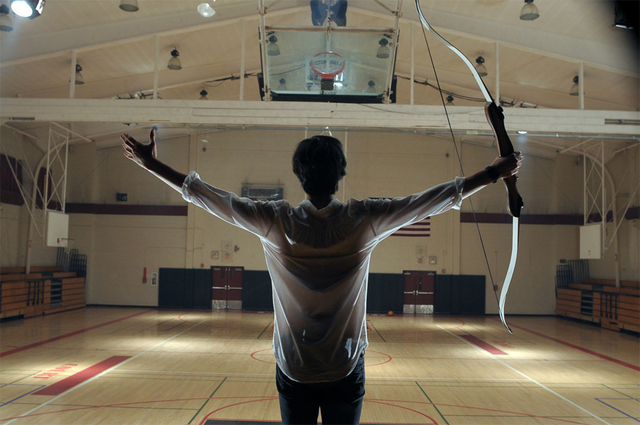
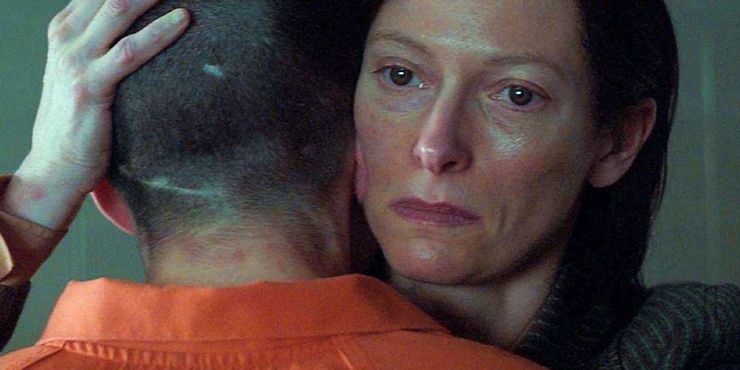
As a teenager, Kevin amuses himself by torturing his younger sister Celie, who adores him nevertheless. He puts her guinea pig in the garbage disposal and tricks her into getting drain cleaner in her eye. In marked contrast to Kevin, Celie is kind and happy. When Eva cleans her wounded eye, which is clearly painful to Celie, she still thanks Eva afterwards. Meanwhile, Franklin is increasingly frustrated with what he still sees as Eva being hysterical, and the couple is planning to get divorced. This information is used to hide one of Kevin’s most horrific acts: shooting Franklin and Celie and leaving their bodies in the backyard. Kevin is immediately caught, which seems to be part of his plan; he tells Eva he “might be tied up” on his upcoming birthday and calmly lies down to get arrested. Eva is blamed for his behavior, with strangers yelling “You stole my baby! You’re so evil!” and “I hope you rot in hell, you fucking bitch!” One woman even slaps her in the face. Eva visits Kevin in jail, so regularly that she’s on a first-name basis with the correctional officer. At the end, Kevin admits to Eva that he’s not sure why he did it anymore. Scared about going to “big-boy jail” after he turns eighteen, he hugs her.
Parenting is scary. But take heart. According to neuroscientist James Fallon (not the comedian), parents are putting too much emphasis on the overall impact they have on their children: “I don’t want to overplay the role of environment in development. Kids learn to do a lot of things on their own without explicit instruction–laughing, walking, speaking. And even more complex adaptive behaviors like personality development happen on their own. Kids are malleable, but mostly at the extremes. In the absence of bad abuse or extreme genetics, kids will turn out okay […] Every parent of a grown child knows that no kid turns out how they’d originally thought, and we have very little control over what type of adults our children will grow up to be. Pediatric neurologists I work with have told me this, too. That kid is going to turn out the way he’s going to turn out, unless you mess him up royally” (104-105).
Works Cited
Black, Donald W. Bad Boys, Bad Men: Confronting Antisocial Personality Disorder (Sociopathy). NY: Oxford University Press, 2013.
Fallon, James. The Psychopath Inside: A Neuroscientist’s Personal Journey into the Dark Side of the Brain. NY: Portfolio/Penguin, 2013.
Kiehl, Kent A. The Psychopath Whisperer: The Science of Those Without Conscience. NY: Broadway Books, 2014.
Pearlman, Catherine. Ignore It! How Selectively Looking the Other Way Can Decrease Behavioral Problems and Increase Parenting Satisfaction. NY: TarcherPerigee, 2017.
Plomin, Robert. Blueprint: How DNA Makes us Who We Are. UK: Allen Lane, 2018.
1Though there is something to be said about Patty McCormack’s performance as the itty bitty psychopath.
2 A. A repetitive and persistent pattern of behavior in which the basic rights of others or major age-appropriate societal norms or rules are violated, as manifested by the presence of three (or more) of the following criteria in the past 12 months, with at least one criterion present in the past 6 months.
Aggression to People and Animals
- Often bullies, threatens, or intimidates others
- Often initiates physical fights
- Has used a weapon that can cause serious physical harm to others (e.g., a bat, brick, broken bottle, knife, gun)
- Has been physically cruel to people
- Has been physically cruel to animals
- Has stolen while confronting a victim (e.g., mugging, purse snatching, extortion, armed robbery)
- Has forced someone into sexual activity
Destruction of Property
8. Has deliberately engaged in fire setting with the intention of causing serious damage
9. Has deliberately destroyed others’ property (other than by fire setting)
Deceitfulness or Theft
10. Has broken into someone else’s house, building, or car
11. Often lies to obtain goods or favors or to avoid obligations (i.e., “cons” others)
12. Has stolen items of nontrivial value without confronting a victim (e.g., shoplifting, but without breaking and entering; forgery)
Serious Violations of Rules
13. Often stays out at night despite parental prohibitions, beginning before age 13 years
14. Has run away from home overnight at least twice while living in parental or parental surrogate home (or once without returning for a lengthy period)
15. Often truant from school, beginning before age 13 years
B. The disturbance in behavior causes clinically significant impairment in social, academic, or occupational functioning.
C. If the individual is age 18 years or older, criteria are not met for antisocial personality disorder (Black, p. 45-46)
 GhoulieJoe