I’m late, y’all. Late to the autism party. But I’m finally here.
I’m an older millennial, and I was introduced to the concept of neurodivergence sometime in the twenty-tens, probably. When I could spare a thought its way, I derided how doctors were over-diagnosing and throwing pills at kids. Something something Big Pharma? Case closed. What I was basing that on, I can’t say.
Flash forward to my late thirties, when I had my son Jack. He was a handful from the start. Every night, from around 6 to 11 pm, he’d scream inconsolably. Walking and rocking and carrying and feeding did not help. We called it “colic o’clock” and got used to it.
Jack was suspected of having learning disabilities at around 18 months, when he was not hitting the general milestones for kids his age. For example, he did not want to walk. He had the muscle strength, he had the know-how, he just didn’t wanna. Enter his physical therapist, the marvelous Colleen, who had him up and about in what seemed like two minutes. She just held up a toy he wanted, and he stood up and walked to it.
Jack is also nonverbal, a trait that remains to this day, when he is four. My mother told me I was a late talker, too: “You just didn’t have anything to say,” she reported. I grew up sensitive, given to difficulty speaking to people. I have a memory of Mom trying to introduce me to someone while I hid behind her. My friend Paula, after listening to me gripe extensively about my OCD and how customer service jobs zap my strength, suggested that, like her, I may have late-diagnosed autism. She described the relief she felt when she realized “I’m a zebra, not a weird horse.”
In the interest of transparency, I haven’t been formally diagnosed, but I took an online test. And before you scoff, it was created by two doctors with autism, and it’s similar to a screener a professional would give–autism is not something you can determine with a blood sample. We’re not playing a guessing game of allergies/cold/flu/COVID–the symptoms aren’t vague and difficult to determine for sure without a nasal swab. Whilst writing this piece, I came across the lovely book The Autistic’s Guide to Self-Discovery: Flourishing as a Neurodivergent Adult by Sol Smith, and he explains concepts so beautifully that I have to steal some of his ideas. To quote him regarding the struggle to come out to others as autistic and being disbelieved:
“I don’t know anyone who has self-diagnosed because they knew someone who was autistic and thought that person was so cool. […] They never saw that they had anything in common with other autistic people, and when they heard the word or its description, they didn’t see themselves there. But when they heard about the struggles of being an outsider, wrestling with dysregulation over sensory issues, being repeatedly misunderstood, and feeling like their every effort makes their lives harder, it was then that they started their journey of self-discovery.”
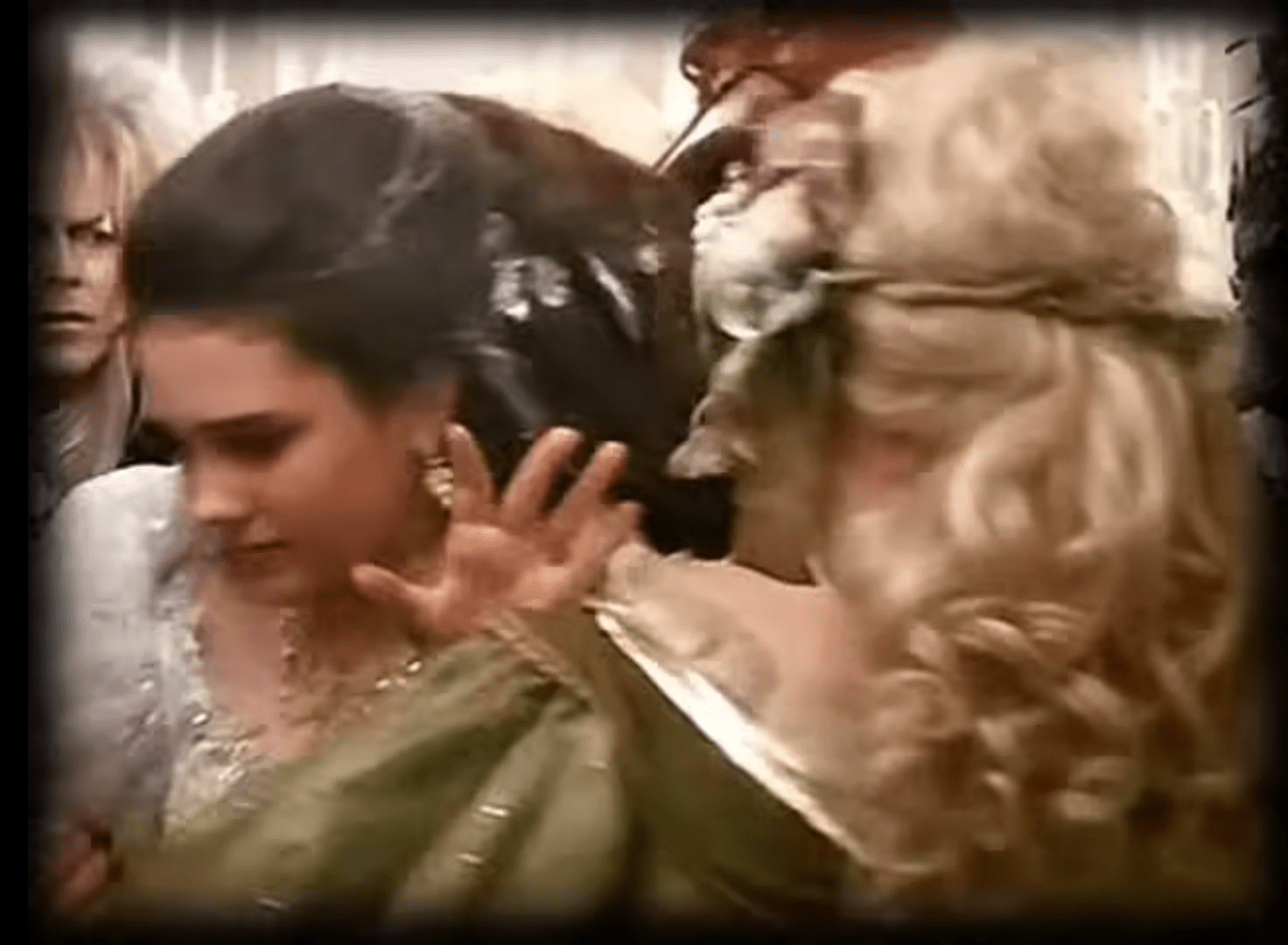
The neurotypical party, which I go to every time I leave the house, feels like the ballroom scene in the movie Labyrinth (if you’re unfamiliar with this mid-’80s gem, please review the clip below), and I’m Sarah. Except I’m the one wearing a mask. (Though actually, if I’m any character in that movie, it’s Ludo, quietly helpful and eternally grateful someone wants to be my friend.) Any outgoing-ness on my part is faked unless I’m with people I trust. I was once told by a college instructor that I have a “flat affect”–meaning that I have a blank expression. Emoting with my face and voice does not come naturally. Inside, I may be ecstatic about a Christmas present, but you wouldn’t know it by looking at me unless I whip out my acting skills. I have big-time resting bitch face; repeatedly throughout the day I have to manually unscrunch my forehead with my fingers, because I frown unconsciously when I’m concentrating.

I’ve been working with the public since I was seventeen, when I was a shelver at the library. My coworkers taught me the basic niceties of exchanging pleasantries, and I moved from fielding questions from patrons by mumbling “You can ask at the information desk” to covering the storage desk, although I did cry one time when a particularly cranky patron did not get the issue of TV Guide that she wanted fast enough. I like the people-pleasing aspect of customer service, believing whole-heartedly in “wow moments” and other such smarmy slogans meant to encourage bending over backwards to make customers happy. In fact, I am obsequious to a fault. This is not uncommon for autistic people, as Smith explains:
“A lot of high-masking autistics are chronic people pleasers […] The issue is that once your identity and self-worth merge with making others happy, you can drift further from knowing yourself. When you learn how to mask, you learn how to people-please. […] People-pleasing is the highest form of masking because you learn not only to fit in but also to reflect back the person others want you to be.” Indeed, it’s disorienting to realize just how much I cast off my authentic self while growing up. I’m quiet, and that weirds neurotypical people the fuck out; they have responded to me with anything from gentle mockery to screaming, “Are you shy? I hate shy people!”
Being around others, even my loved ones, can wear me out. I have a tendency to obsess over every conversation I have with people, replaying them, scanning them for rudeness on my part or things that I may have done wrong, trying to decide if I was likable. When I have to talk with someone on the other side of a customer service setting, such as when I had to renew my California car registration after three years of living in Kentucky, I made sure to drag my husband along. He speaks the language of the normies. I plan and rehearse and sometimes write a physical script of what I need to say and accomplish, in fear that I won’t be understood or that I’ll forget something important.

Smith describes this social rumination very eloquently:
“One familiar autistic experience is rehearsing anticipated interactions. You aren’t ever sure what scenarios are going to come up the next school day, but many of us would lie in bed going through the motions in our minds. We would try to guess what the day would look like, whom we’d talk to, and what would be expected of us. Of course, this was only after we had finished unpacking the day we just finished–reviewing what worked, what didn’t, and what caught us off guard. While many kids do this, autistics do it to a pathological extent. We review our actions and words obsessively throughout our lives, always second-guessing whether we are coming across as ‘normal enough.’ […] The impression of ‘otherness’ becomes deeply embedded at an early age and never leaves.”
When I interact with people, I expect to be disliked, yelled at, and rejected. There are unwritten rules to social interaction that neurotypical people all seem to know (like sidewalk politics–it’s so awkward to be walking and someone comes from the opposite direction–eye contact, no eye contact? How do I give them enough space to pass me without seeming like I’m shrinking away from them in disgust, everyone knows this stuff but me, and no matter what I do I am doing it WRONG, and yes this is my brain all of the time), and I am not privy to them. Little did I know that this fear of rejection has a name; as Smith states:
“Rejection sensitivity doesn’t just mean that you dislike being rejected; it means you are so sensitive to it that you arrange your life to avoid the feeling at all costs. Worst of all, some people can experience rejection sensitivity dysphoria (RSD), a condition in which you see rejection in places where it hasn’t even taken place […] Going through life not looking for rejection but expecting it everywhere, we find it in unlikely places. We often figure that if we are one of seven people invited to dinner, our invitation came out of pity or because the host knew we’d find out about it and was just trying to avoid a problem […] Spending a life pretending to be someone you’re not has led you to conclude that who you are is not good enough for anyone.”
I can have difficulty with verbal commands, instructions, and directions. Often things fall out of my head the second I hear them. And I don’t always realize it. I’ll be nodding enthusiastically and then realize I absorbed nothing of what was said to me, and I’ll have to ask the other person to backtrack. Answering questions is fraught with anxiety, because I need extra time to absorb the question and then think out my response, while I feel pressured to answer not only instantly but articulately. Let me tell you, allistics (that’s the nice, non-othering, way to say neurotypical), if you make a statement or ask a question and you get back a blank, confused, or startled stare, repeating what you just said louder, faster, and angrier is not the way to go. And footie how, don’t get me started on my inability to remember a person’s name AND face; I’m lucky to retain one of them.

It’s common for autistics to have issues with employment. For social reasons, for sensory reasons (fluorescent lights are often majorly disruptive to the neuro-atypical), because job interviews are fucking hard if you’re not hemorrhaging charm and confidence. My biggest hurdle is meltdowns; as long as I can remember, I have had bouts of uncontrollable crying. With the right job, I can keep my shit together at work, but lately I’ve had a pattern of jumping from one low-hanging fruit to the next in a mad dash to find a job that’s not a soul-crushingly bad fit. I need a certain level of stability and familiarity to thrive. The job I left most recently was a retail job that felt unreasonably demanding, both physically and emotionally. I had a major crisis, feeling on the brink of hurting myself rather than continue going in. I haven’t cut myself in twenty years, but I could clearly picture the knife I would use, and I could see it going into my arm. Thankfully my husband’s sweet grandparents, who have taken us into their home with our three kids while we regroup from a cross-country move, held me up when I broke down. “Shouldn’t I just suck it up and go?” I wailed. “No,” they reassured me. They gave me the space and grace I needed to seek counseling and get a prescription for brain meds and find a better fit. I can’t count the number of times in the past I’ve berated myself for not being able to function like everyone else. It was a weight off my shoulders to discover that it’s not my fault.
Smith describes meltdowns thusly: “Adult autistic meltdowns happen when you lose agency over how emotions are processed in your body. Emotions happen in the more animal parts of your brain, and autistics (especially high-masking ones) have the habit of quickly bringing them into the neocortex. You think through your emotions by rationalizing what you are feeling, trying to talk through the logic and reasoning of your immediate disempowerment. When the emotions are too much, you feel like they take up physical space in the body and cannot be moved to the thinking part of the brain. Instead, they overflow, and your whole body fills with panic and chaos […] The overarching sense of powerlessness puts you in a feedback loop, spinning your thoughts and showing you cause/effect/cause/effect/cause/effect in quick succession. You feel isolated and alone, unable to help yourself, as if no one can help you. You might wave your limbs, hit your head, scream, be unable to talk, fall on the floor, or cry. For many people, this is an intensely physical reaction […] Something important about meltdowns: Once they are triggered, they cannot be stopped. You have to let them run their course until you are out of energy.”
Aaaaaand there’s the stimming. For the longest time, I mistook my boundless affinity for repetitive motions as anxiety-based, but now I know that I just really don’t like to be still. Pacing, rocking, calf raises, I like to move it move it. I don’t care what anyone thinks, I’m letting my fidget flag fly!
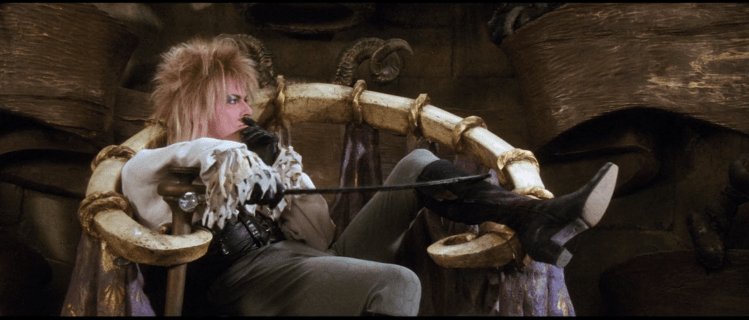
I have a tendency to conclude my pieces abruptly, and it’s tempting to do so here, because I am having difficulty wrapping this up without sounding too serious or preachy. To sum up, labels are useless, judging people is pointless, and I’m tired of trying to pretend to be someone I’m not. Oh yeah, I was talking about Labyrinth…um…look, it’s hot ’80s David Bowie!
 GhoulieJoe
I think it’s great you’re sharing all of this! I feel like it’s always great to know a little bit more about ourselves. You rule!
LikeLiked by 1 person
Thank you, Eric! That’s kind of you. Footie how!
LikeLiked by 1 person