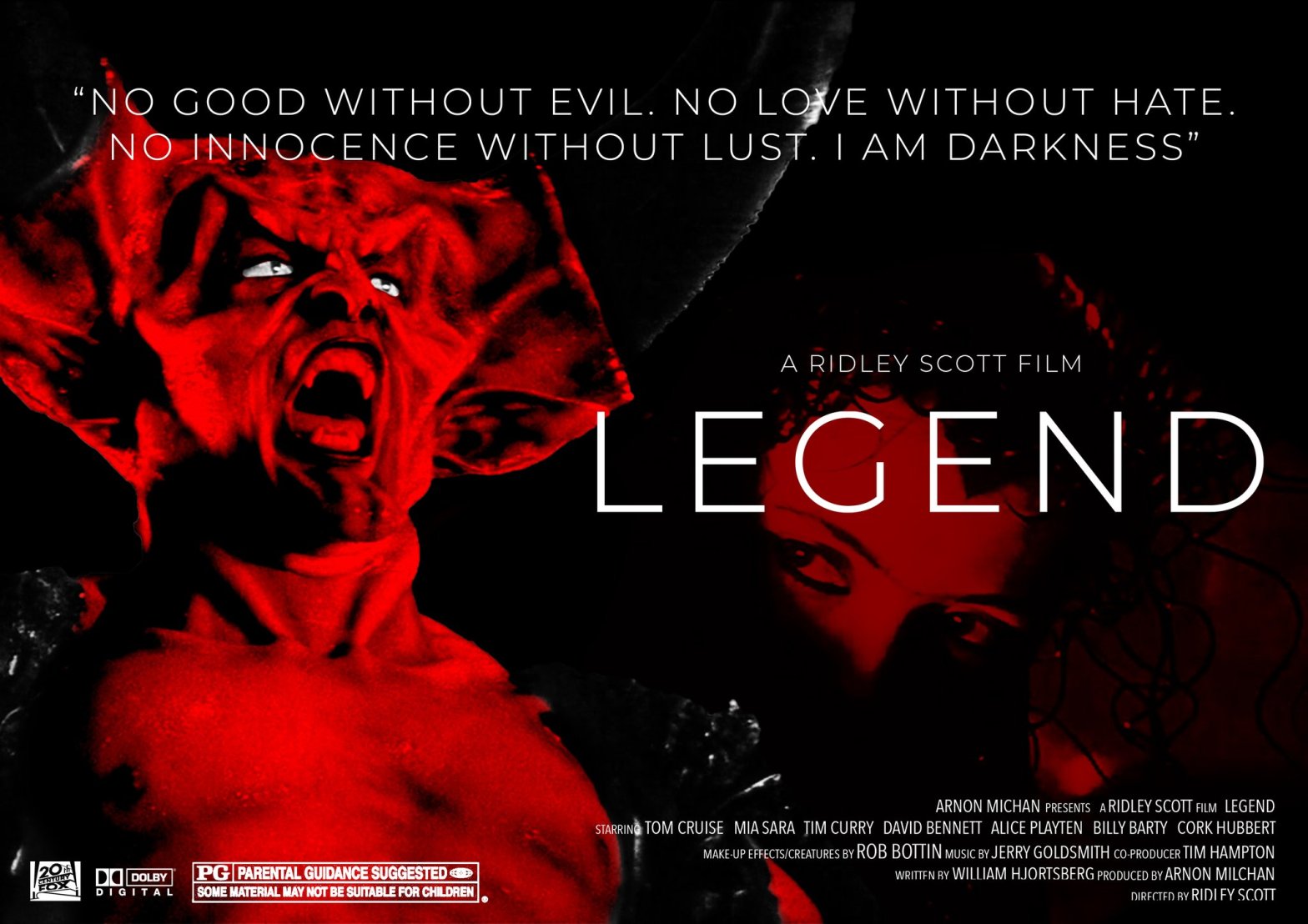
If you’ve never seen the 1985 fantasy-but-occasionally-horrifying movie Legend, here’s a music video of the theme song by Tangerine Dream. It’s the ’80s in a nutshell.
Horror movie reviews and stuff
If you’ve never seen the 1985 fantasy-but-occasionally-horrifying movie Legend, here’s a music video of the theme song by Tangerine Dream. It’s the ’80s in a nutshell.
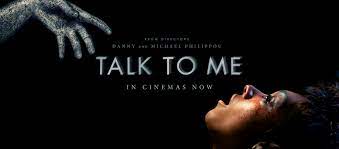
Not too long ago, I was fortunate to see the film Talk to Me. Because I’m as self-centered as I am full of appreciation, I’m tying Thanksgiving, an emotionally charged celebration rooted in colonization by whites, to a movie depicting the consequences of exploiting a little-understood people–but also, me and my feelings. In Talk to Me, a troop of teenagers comes into possession (pun definitely intended) of a hand statue that allows them to communicate with ghosts and invite them into their bodies. Naturally, they make it all a big party and put that shit on YouTube. As Joss, co-caretaker of the hand, scoffs, “Apparently it was the hand of someone who could connect with the dead, right, so everyone around him thought, let’s just cut his hand off. White people shit, man.”
A large plot point in the film is Mia, the main character, losing her mother Rhea to an overdose of sleeping pills. As someone who struggled with suicidal ideation when I was younger, I empathize with Rhea; she leaves a suicide note stating her belief that she finally feels hope and that the family would be better off without her. Luckily for me, I have two amazing sisters whom I knew would be sad if I died. Many years of happy pills and therapy and growth later, I have come to a better place. I still falter sometimes, no longer thinking of ending things, but I’m sometimes prone to bouts of self-hatred and intrusive thoughts of cutting myself. It’s nothing I would actually act on, but a couple weeks ago I had a wake-up call (literally) during a phone appointment with my counselor. I was hysterically crying and so distraught that even after asking me multiple times if I was going to be safe when we hung up, she called the police to come check on me.
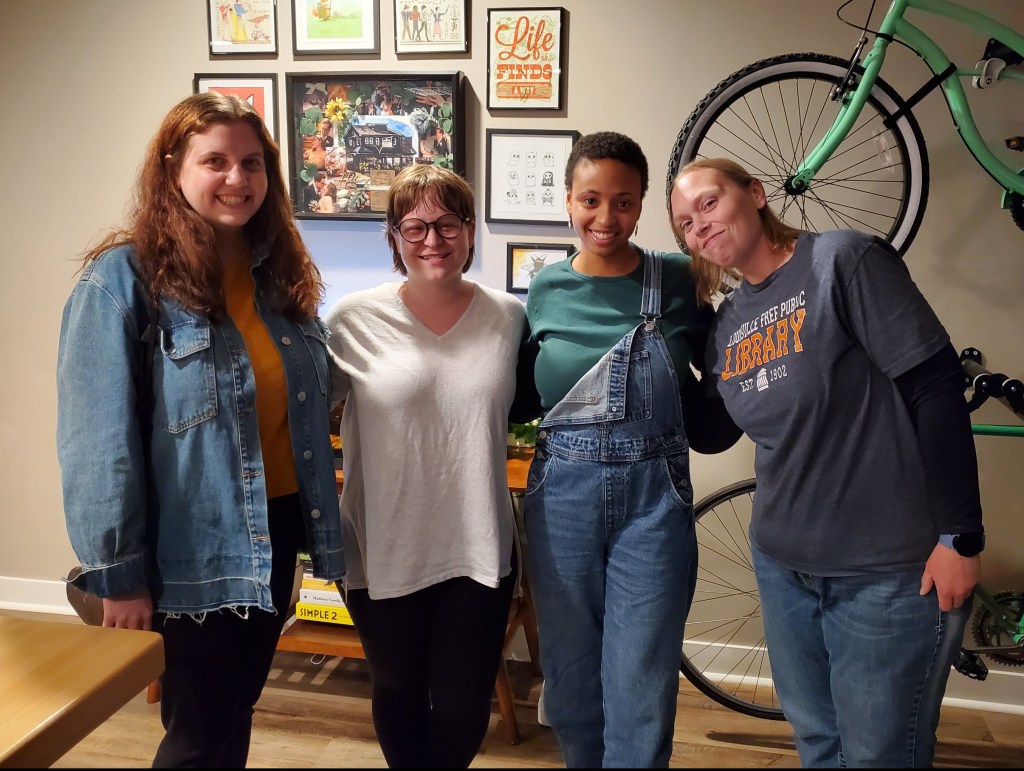
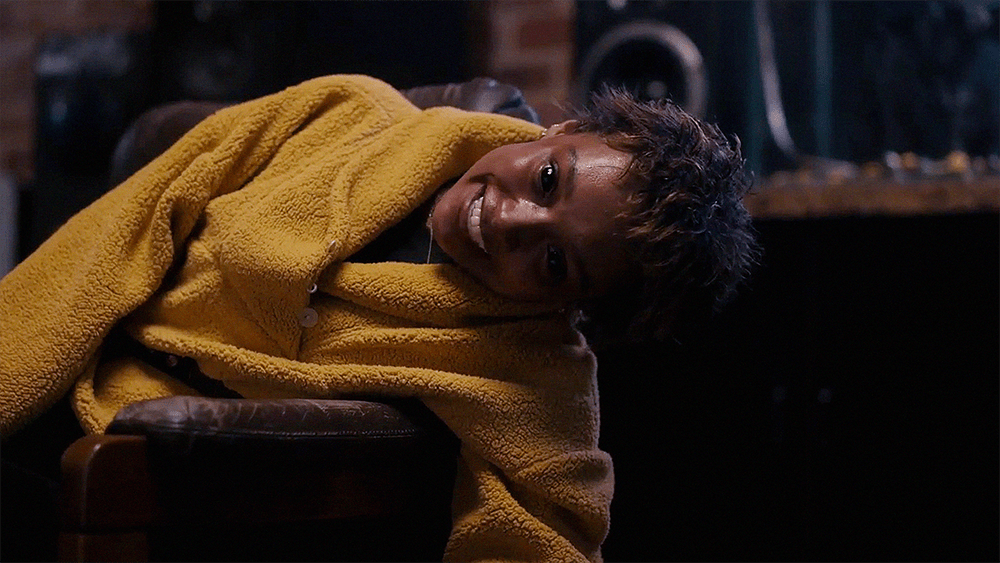
On to the gratitude part. A big contributor to depression is suffering in silence. I hid my issues for years before finally saying something and seeking treatment. My family has always been very supportive, but a year and a half ago I moved to Kentucky from California, so it’s hard to keep in touch. The three-hour time difference doesn’t help. I haven’t made many friends here, but I’ve become close to a handful of coworkers. I’m fortunate to work with lots of amazing people. (Seriously, ya’ll, I love these folks!) It was with three of them that I saw Talk to Me. From left to right, Jaclyn, Hillary, Terra, and me:
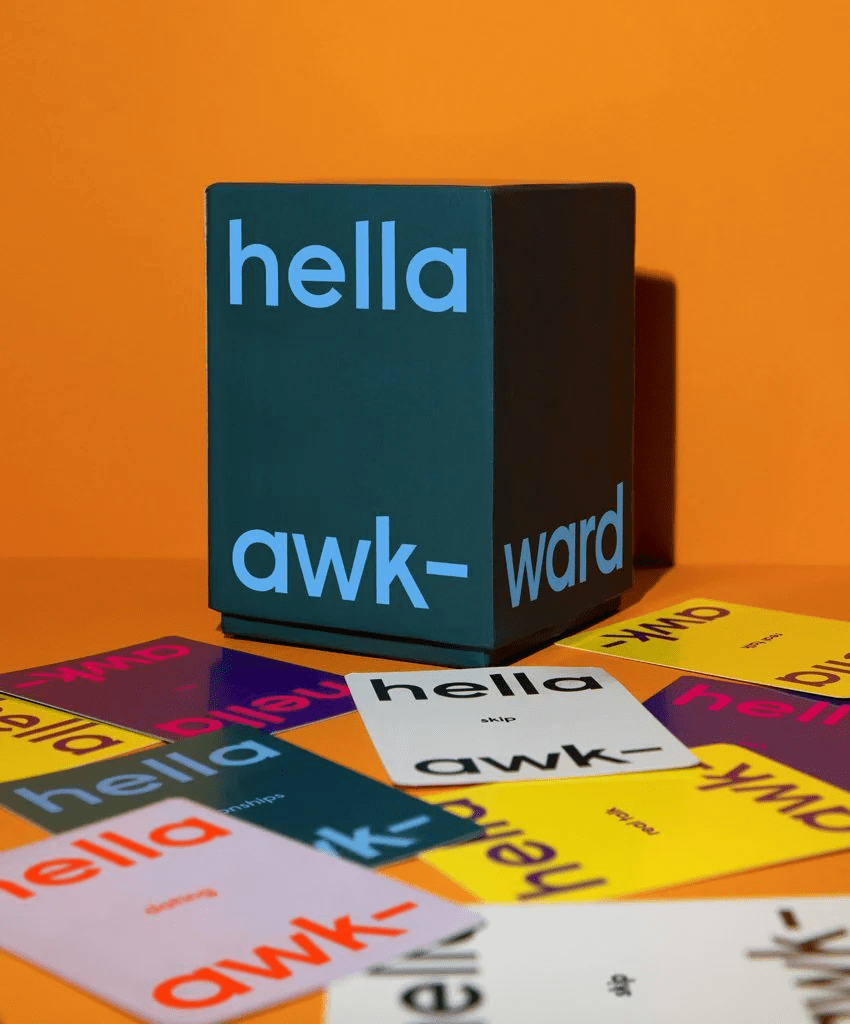
We had dinner (Hillary’s an amazing cook!), chatted, and played a card game called Hella Awkward, the point of which is to disclose extremely personal things to the other players. I was blabbing all kinds of stuff to them, and they listened. It’s so validating to have a circle of friends to confide in and laugh with (and most importantly, watch horror movies with!). Even at work, I’m able to goof around and joke with everyone. I’ve been so repressed for so long, it’s all coming out.
Continuing with more thankfulness, I’m big time in love with Talk to Me. It was shocking and creepy and funny and thought-provoking. The performances are great, especially by Sophie Wilde as Mia. And if you’ve made it this far, pal, a big thank you to you! Thanks for letting me talk to you.
I’m a clerk at the library, and a large part of my job is to check in, check out, and search for library books. As such, I have seen some doozies when it comes to absolutely nightmarish books. (Plug for my Instagram, which mainly features creepy book covers, goes here.) These are my most recent top five.
5.) Creepy Pair of Underwear! by Aaron Reynolds, illustrated by Peter Brown
Jasper the rabbit buys a pair of underwear that turns out to be both sentient and not amenable to the idea of being disposed of for being scary. Underwear should not have a face.
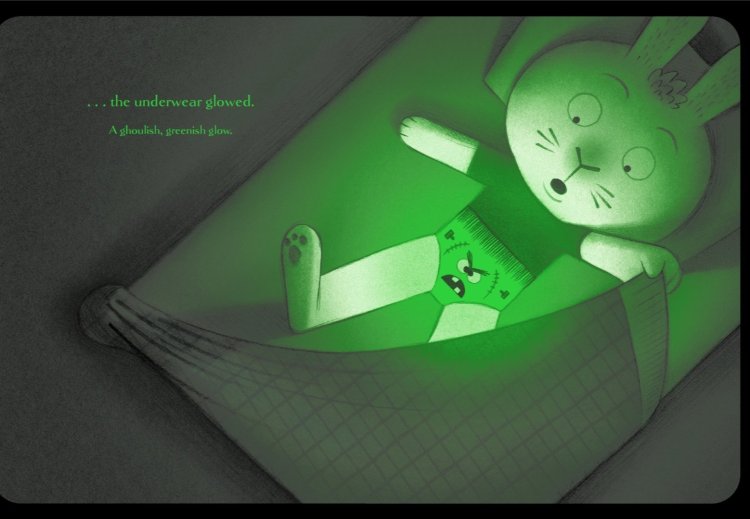
After Jasper takes the hideous creature off, it reappears on him in the morning.
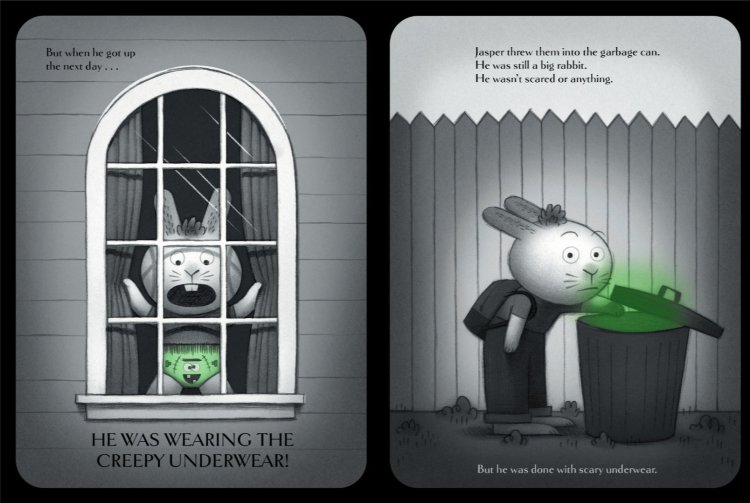
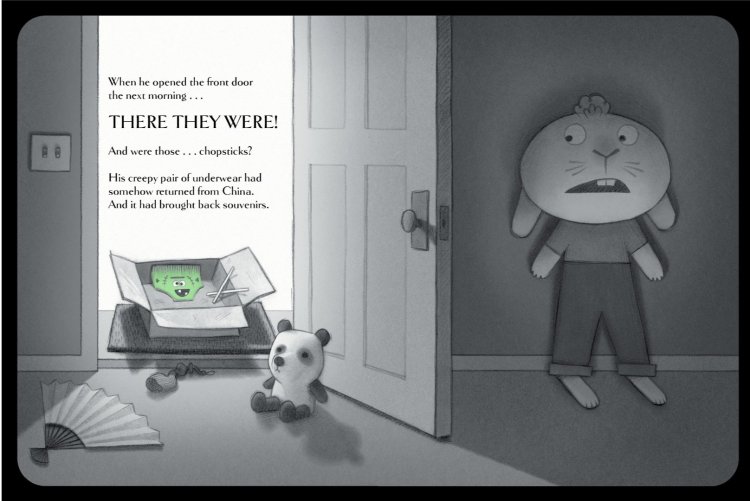
When he throws it away, it materializes in his drawer. He sends it to China, and it comes back with stereotypical mementos from the trip.
This time, Jasper has had it. He destroys the disconcerting but very much alive being and uses its remains as confetti.
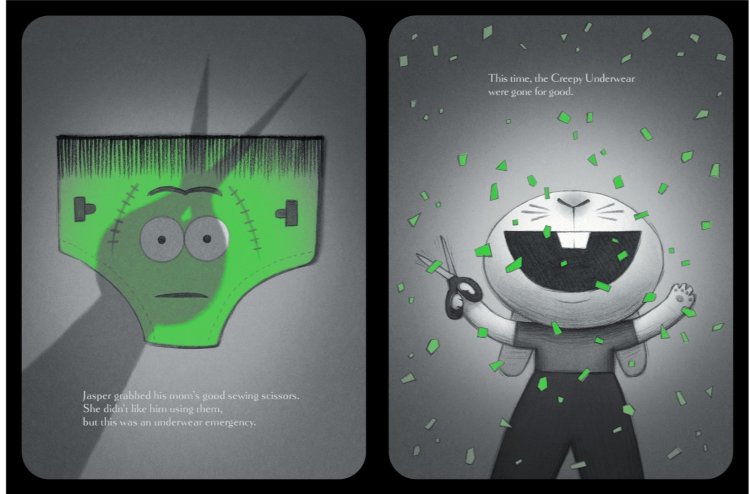
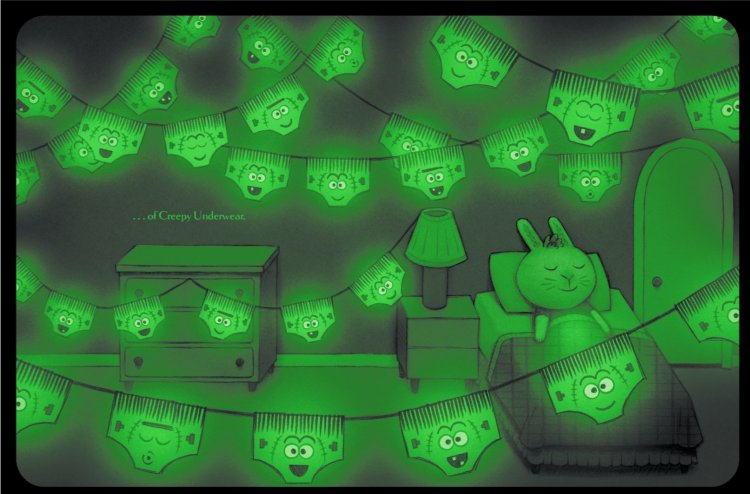
Once he’s finally rid of it, Jasper decides that he doesn’t like the dark and buys a shitload of the creepy underwear. The underwears are happy, “because they had finally found somebody who wasn’t scared.” Gee, why would anyone be afraid of immortal underclothes that pursue you relentlessly?
4.) Pinkalicious and the Cupcake Calamity, written and illustrated by Victoria Kann
I first came across this book when I saw it on a first grade reading list and got it for my daughter to practice reading. You may consider this one a bit of a cheat, since it’s not technically horrifying, but I was shocked by the unpunished bratty behavior of the protagonist.
Pinkalicious is strolling along looking for a treat and notices a crowd gathered around Mr. Swizzle’s Cupcake-Create-O-Matic, which will make a personalized cupcake for a dollar. Never mind the line of kids who were there first, this little asshole shoves her way to the front, shouting “Me first!”
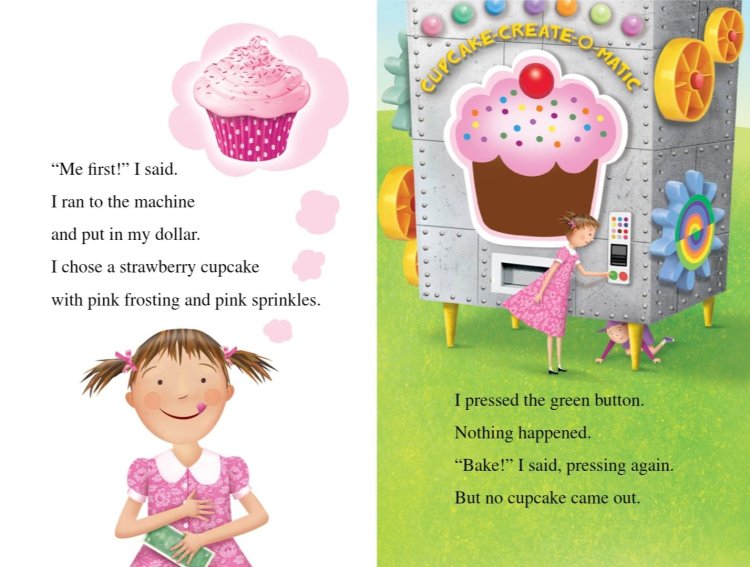
The kid puts in her money and pushes the button, but nothing happens. She immediately gets impatient. ” ‘Bake!’ I said, pressing again.” The entire crowd is getting upset, but none is so important as Pinkalicious, who declares, “I couldn’t wait that long. I wanted a pink cupcake!” She goes around to the back of the ‘matic and climbs inside. She sticks her gross kid hands into the batter to taste it, and then she touches all the cupcake wrappers because she wants them to be polka dotted.
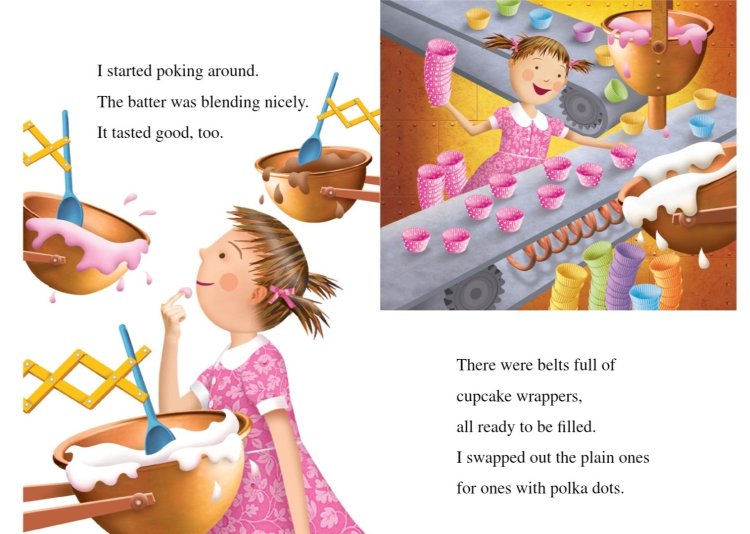
Realizing that the issue is that the batter is not being poured, she pulls a random switch. The whole machine implodes, but at least she gets her bloody pink cupcake–a giant one, and despite it being full of gears and Pinkalicious germs, the other kids shove their unwashed kid mitts in, too.
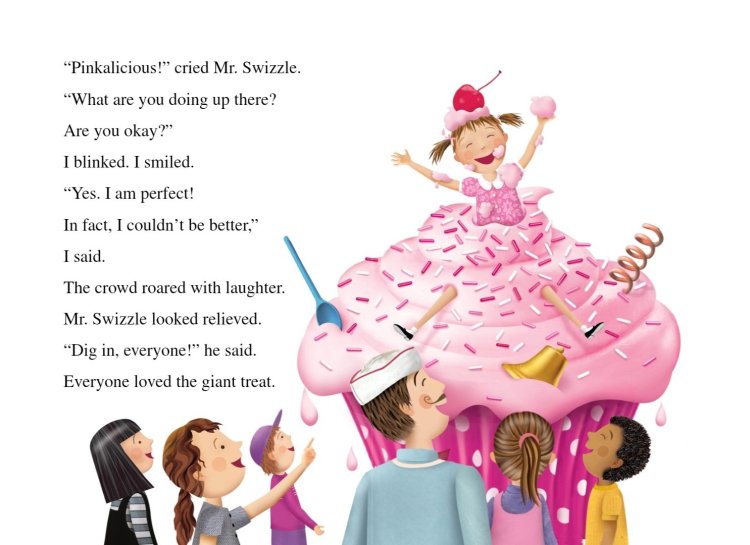
After destroying his new business venture, Pinkalicious gives a half-assed apology: ” ‘Sorry about your machine,’ I told Mr. Swizzle. ‘That’s okay, Pinkalicious,’ he said. ‘From now on, I’ll stick to ice cream and leave the cupcakes to you!’ ” That’s it, the end. She faces no repercussions whatsoever. She’s not learning a lesson about acting like an entitled jerk–the central conflict of the book is that she wants a cupcake and can’t have it instantly.
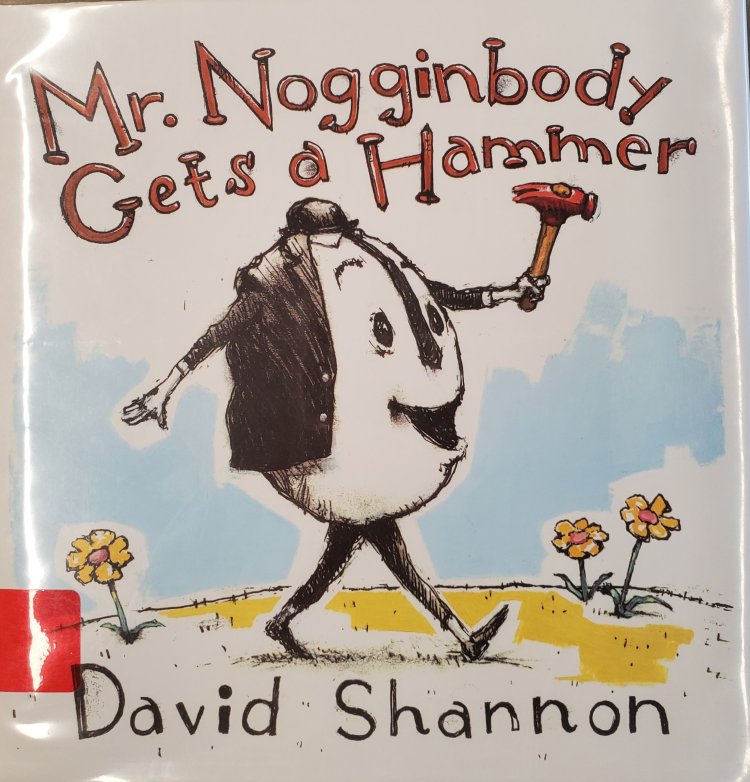
3.) Mr. Nogginbody Gets a Hammer, written and illustrated by David Shannon
Okay, first of all, as his name suggests, his stomach is also his face, which is home to his mouth and beady, soulless eyes. And his tie is his nose.
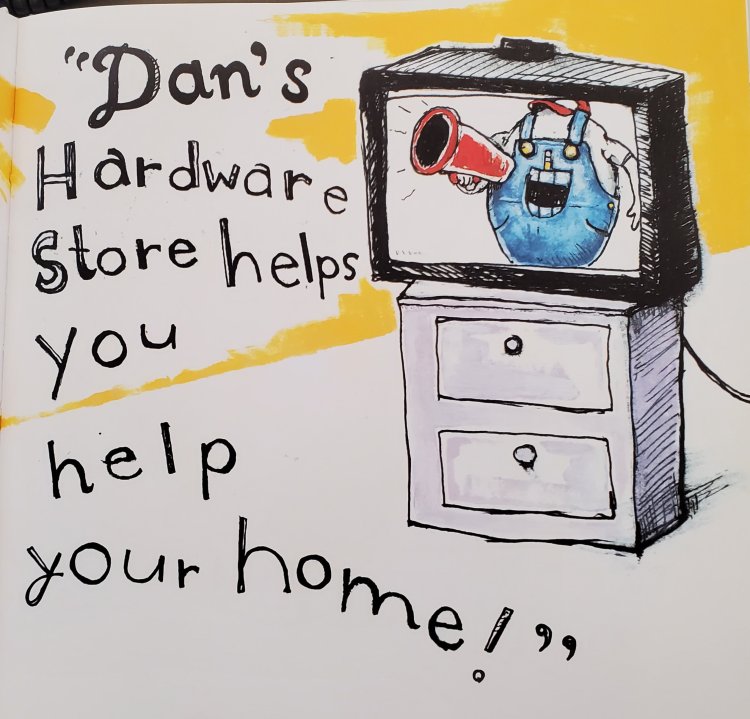
Mr. Nogginbody stumbles across a nail sticking out of his floor, and his TV instructs him to go to the hardware store. Once there, the man from the TV, whose eyes are buttons, like an evil character in Coraline, helpfully gives him a hammer. After pounding his thumb, Noggy manages to flatten the nail into the floor.
In his joy at fixing the problem, he whacks all sorts of things with his tool. Spying a bent-up nail, Mr. N observes, “Hmm…that doesn’t look like a nail. [Upon seeing a flower] But this does!” he screams, shadily hiding the weapon behind his back before pouncing. He then goes on a smashing spree, destroying things and declaring them fixed.
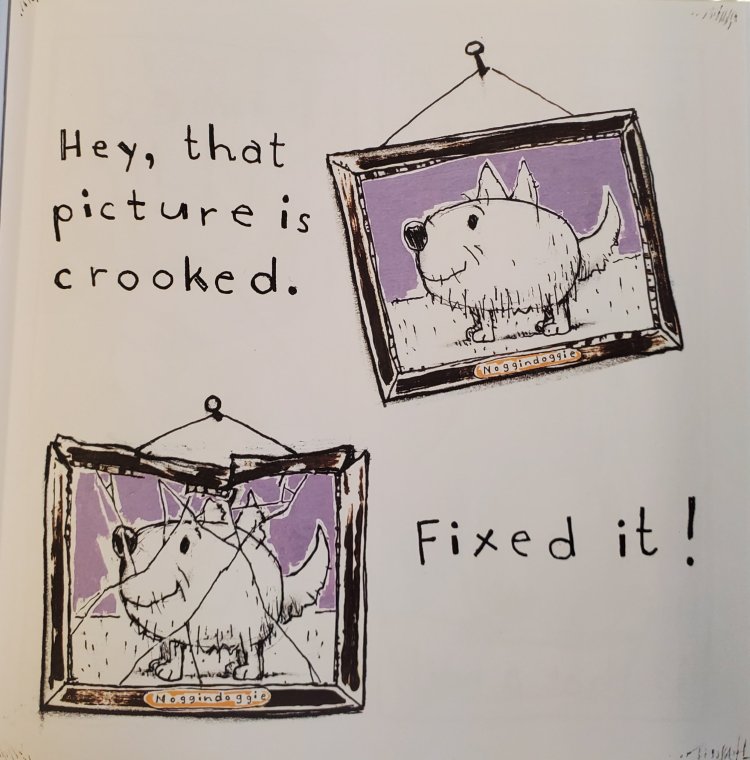
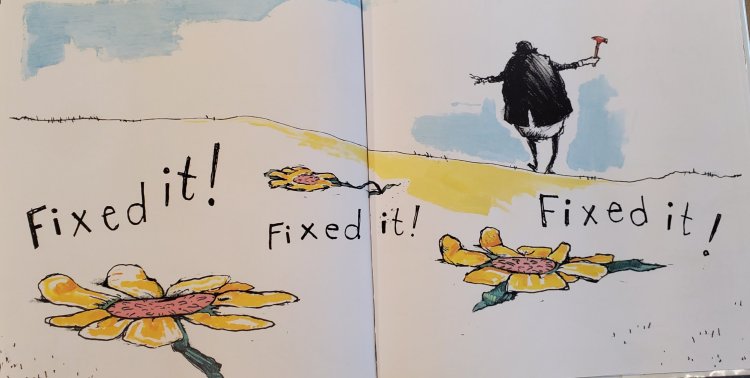
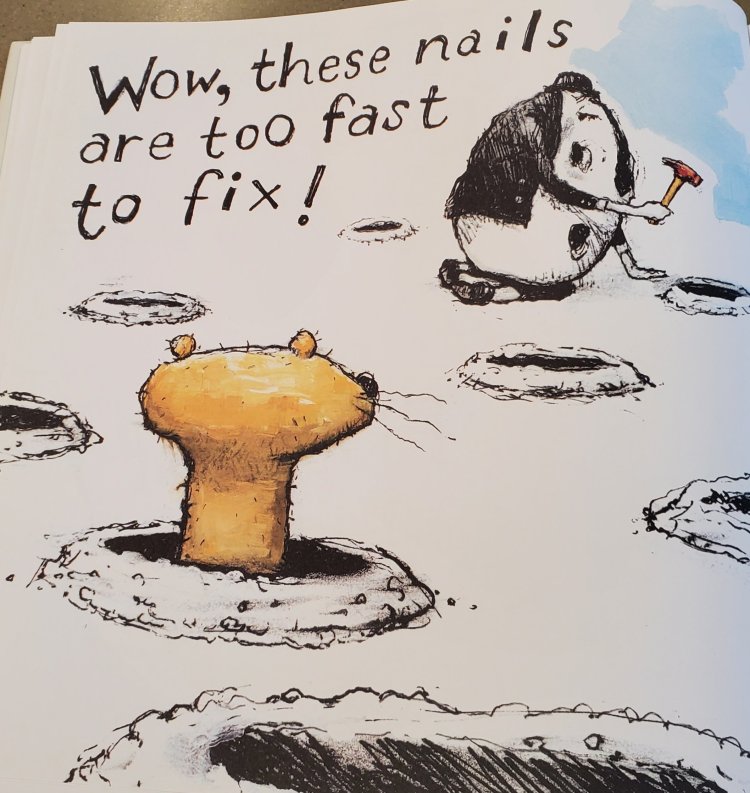
Mr. N remarks about a hole-dwelling rodent, “Wow, these nails are too fast to fix!”
After a head injury, he realizes that not everything is a nail, and decides that “Maybe I can’t fix everything with a hammer.” Serial murders narrowly avoided.
2.) If You Cry Like a Fountain, written and illustrated by Noemi Vola
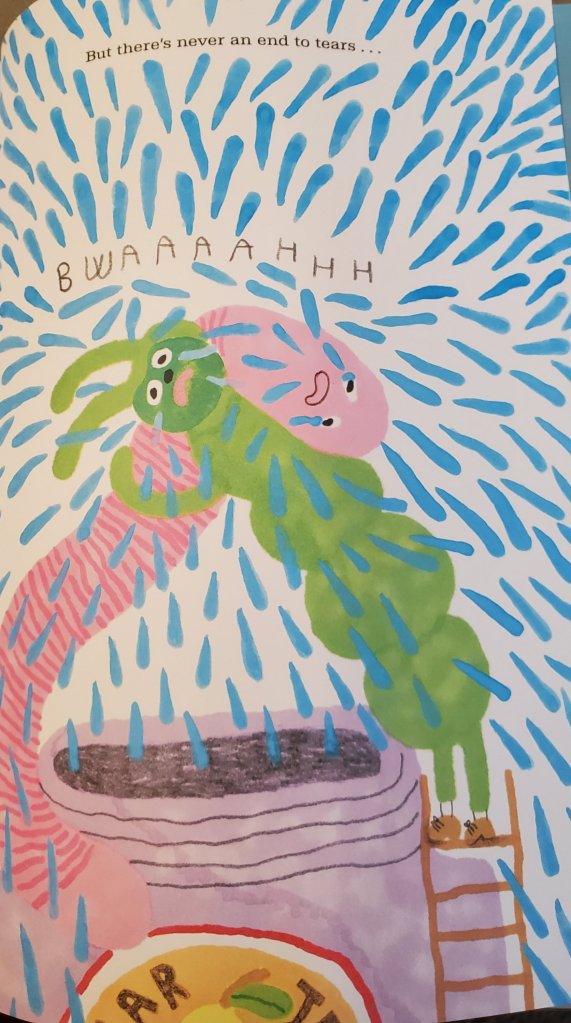
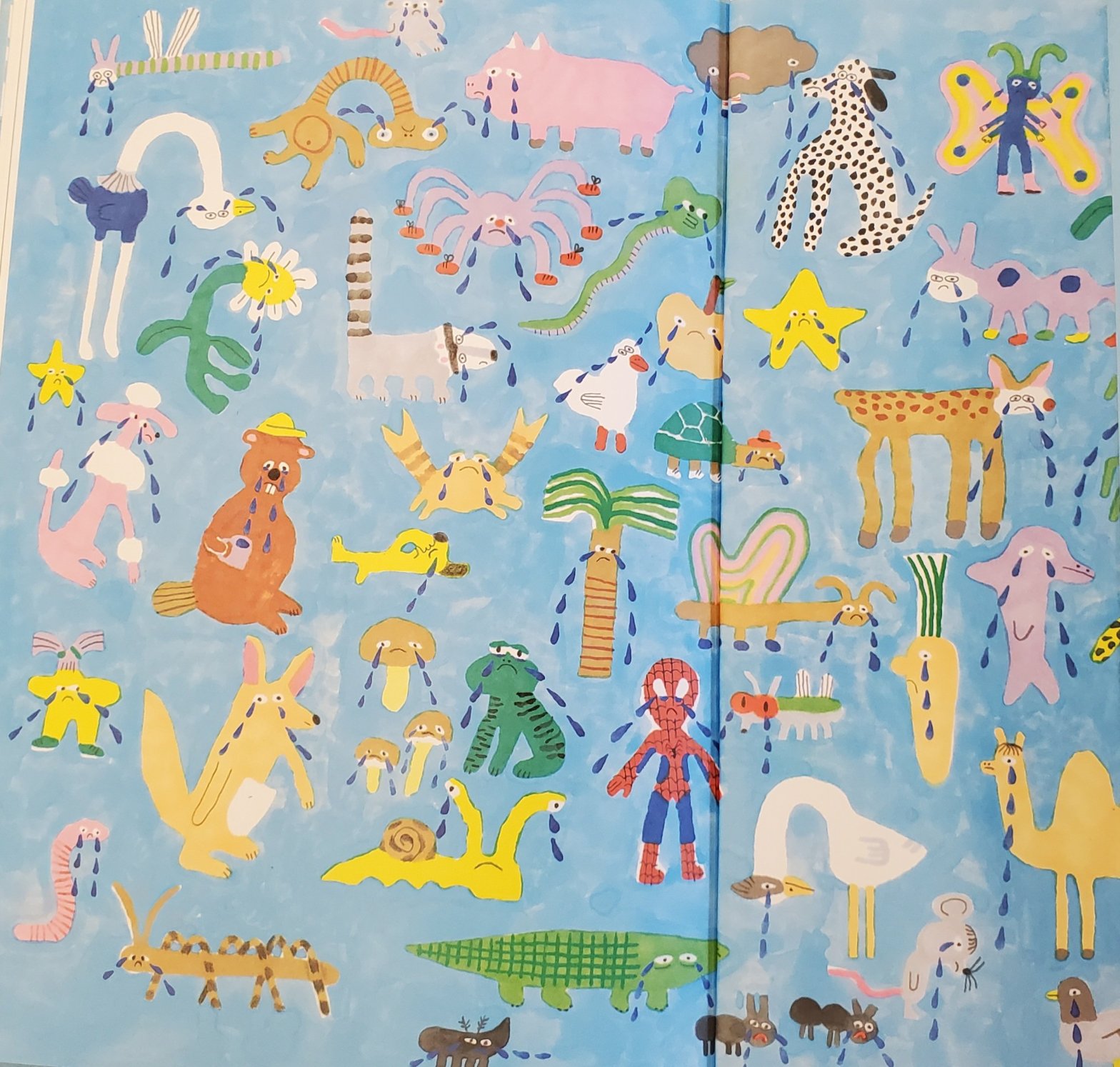
The author goes into explicit detail on how crying is essential, but only if done correctly: “Hey! We can’t start the book like this, with that sad face. You need to smile, at least at the beginning. Otherwise, everyone will think that you’re sad, and they’ll worry.”
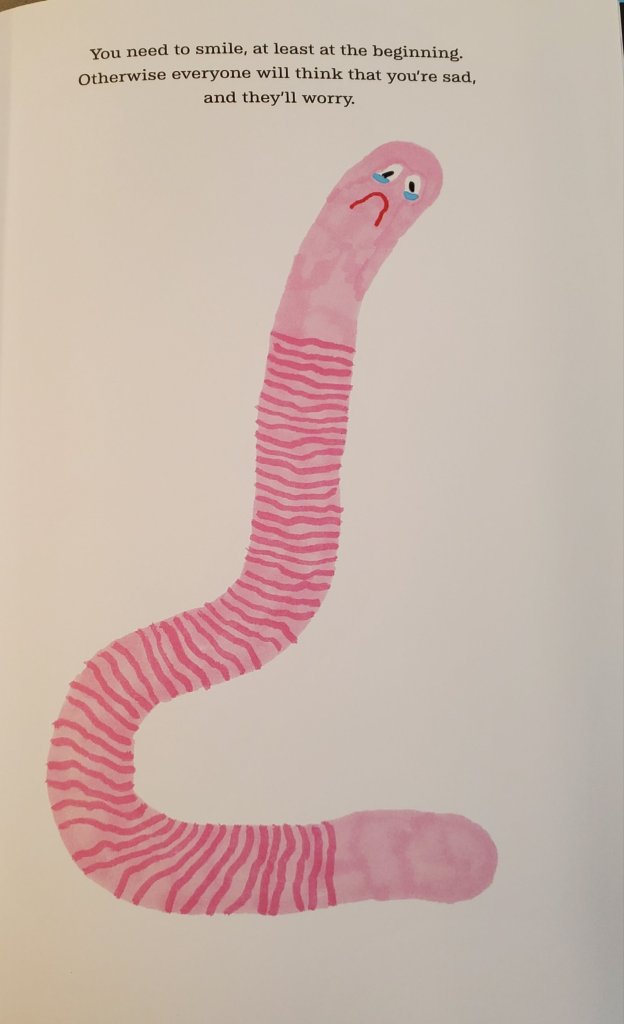
Your emotions make people uncomfortable, so repress them! The worm in the picture proceeds to cry so vehemently that the narrator warns, “If you don’t stop, you’ll drown!”
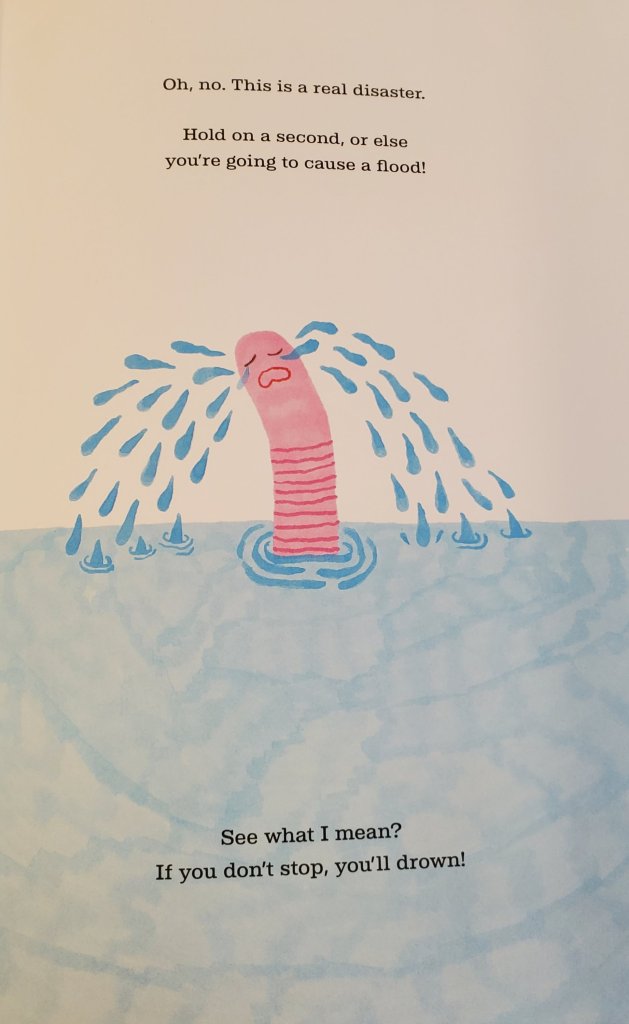
Backtracking, the narrator asserts, “What I meant is that there are so many reasons for crying, but you have to cry better.” The narrator then offers absolutely disgusting platitudes about the usefulness of tears: “If you feel sad around lunchtime, turn on the stove and cry until the pot is filled. When the tears start to boil, stir in the pasta. You won’t even need to add salt!” There’s an unsettling amount of uses that involve ingesting or becoming completely immersed in tears.

There are also nonsequiturs like “Without crying, frogs would explode”, or “Crying helps pears grow.” Unfortunately, those pears, which had been living creatures, have been mashed up and made into jam and are now dead. Hopefully, they’re dead?

The narrator supplies a fact that in this case I am very thankful for: “Books always end, just like everything else.” However, there’s this ellipsed (ellipsisied?) addendum, which I think is meant to be comforting: “But there’s never an end to tears…”
1.) Stone Fox by John Reynolds Gardiner, illustrated by Marcia Sewall.
This is a book I grew up with as a child. The trauma. The trauma. Rereading it as an adult, it’s even worse than I remembered. It concerns little Willy, a ten-year-old boy living on a Wyoming farm with his grandfather and steadfast dog Searchlight in the somewhat-distant-past. All of a sudden, little Willy’s grandfather experiences debilitating depression: “One day Grandfather wouldn’t get out of bed. He just lay there and stared at the ceiling and looked sad. At first little Willy thought he was playing […] Like the time Grandfather dressed up as the scarecrow out in the garden. It took little Willy an hour to catch on. Boy, did they laugh. Grandfather laughed so hard he cried. And when he cried his beard filled up with tears”. (Just…what? Even descriptions of their happy times makes my skin crawl.) The town doctor is useless: “Doc Smith took a deep breath. And then she began, ‘It happens when a person gives up. Gives up on life. For whatever reason. Starts up here in the mind first; then it spreads to the body. It’s a real sickness, all right. And there’s no cure, except in the person’s own mind. I’m sorry, child, but it appears that your grandfather just doesn’t want to live anymore”.
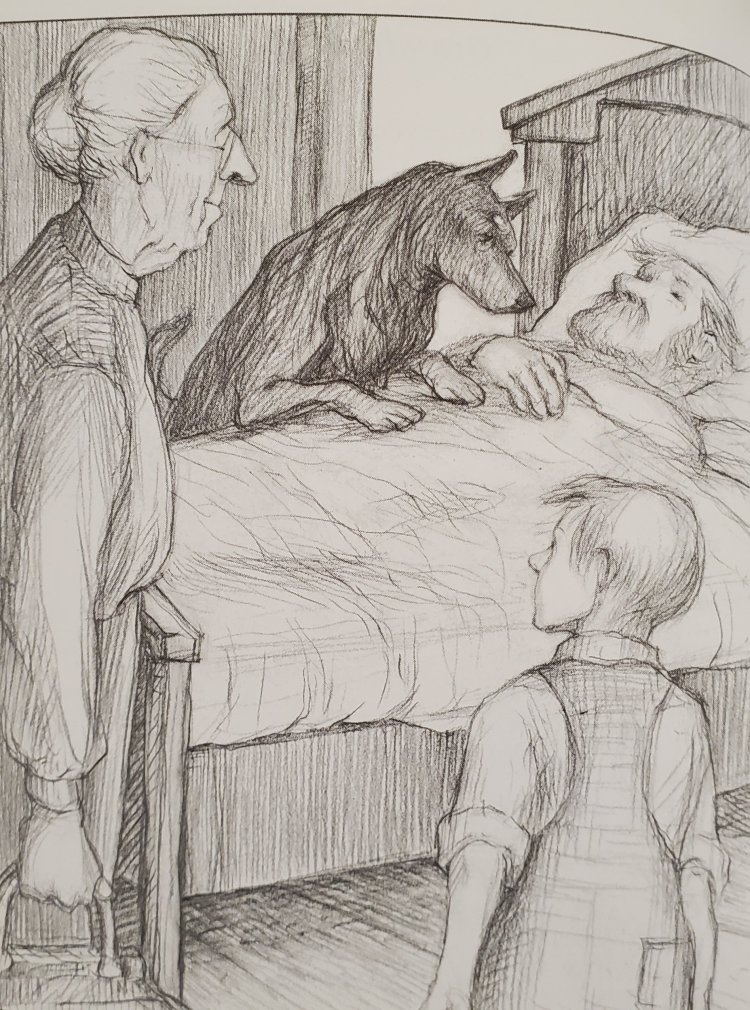
Little Willy, ever optimistic, replies, ” ‘I’ll find out what’s wrong and make it better. You’ll see. I’ll make Grandfather want to live again’ ” (11). According to the narrator, “A ten-year-old boy cannot run a farm. But you can’t tell a ten-year-old boy that” (12). Therefore Willy is forced to run an entire farm with only the help of Searchlight. And since his grandfather is basically in a coma, I guess little Willy is bathing, feeding, and changing him too?
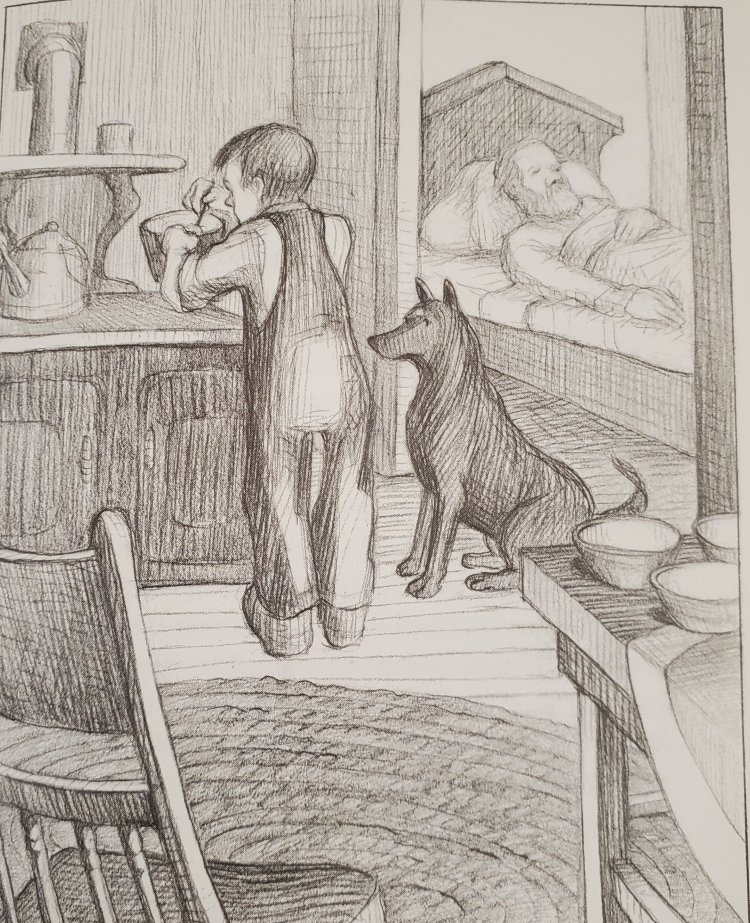
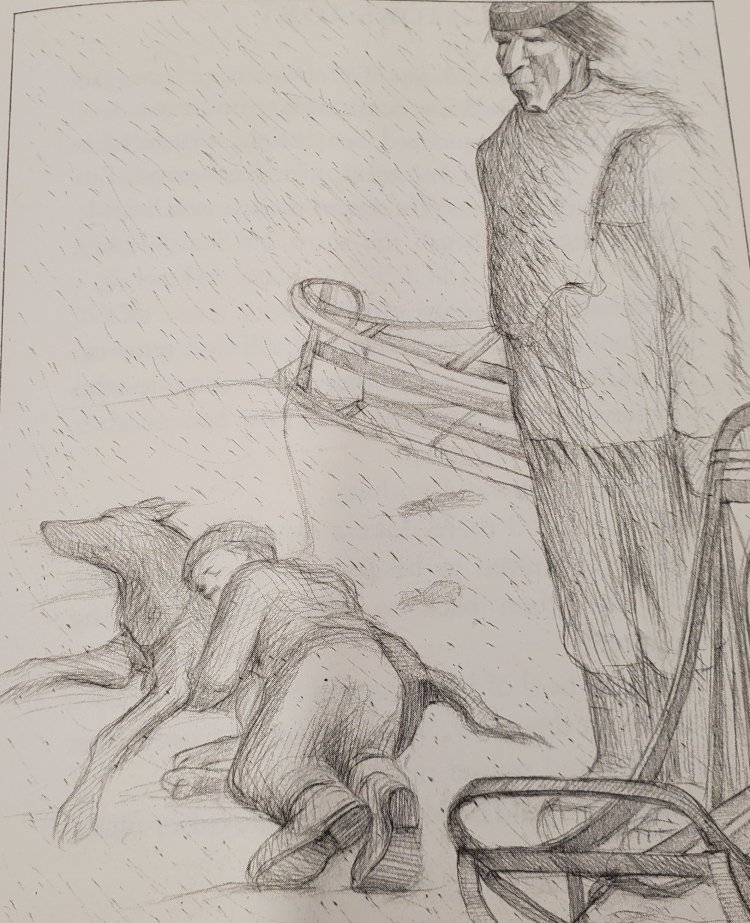
It’s harvest season, and Willy decides that his grandfather is upset that the harvest will fail, so he and Searchlight plow by themselves. “And the harvest was a big one–close to two hundred bushels per acre. And each bushel weighed around sixty pounds”. ” ‘We made it, Grandfather,’ little Willy said, as tears of happiness rolled down his cheeks. ‘See?’ Little Willy held up two handfuls of money. ‘You can stop worrying. You can get better now.’ Grandfather put his hand down on the bed. Palm down meant ‘no’ “. Now it’s winter, and Willy is chopping wood and stocking up on food. He has to ride a sled five miles to school and then run errands. Willy discovers that his grandfather owes a fuckton in back taxes, and realizes that’s what he’s so upset about when a city slicker waving a derringer shows up demanding $500. Apparently Grandfather has just been hucking the threatening letters from the government in a box for a decade. So Willy puts on a suit and goes to the bank to ask for a loan. The loan officer suggests he sell the farm, but instead Willy invests his college money to enter a sled race with the convenient prize of $500. Stone Fox, an indigenous guy who never loses, because he’s racing to raise money to get his relatives off the reservation they were forced onto, hits Willy in the face for trying to pet his dogs, so Willy is now competing one-eyed against Stone Fox and almost a dozen other dudes who are also very competent at racing. By the way, Searchlight is ten years old. And so is little Willy! This kid is fucking ten! So then this happens: “Searchlight gave it everything she had. She was a hundred feet from the finish line when her heart burst. She died instantly. There was no suffering […] The sled and little Willy tumbled over her, slid along the snow for a while, then came to a stop about ten feet from the finish line” (77-78). Stone Fox, bailing on the race after witnessing the first white person who’s having a shittier day than him, threatens to shoot anyone that passes Willy. “Stone Fox nodded to the boy. The town looked on in silence as little Willy, carrying Searchlight, walked the last ten feet and across the finish line” (81). Are you happy now, Grandfather? Are you happy? I hope so, but we don’t know for sure because the book (and this article) abruptly ends with little Willy mourning his dead dog!
Works Cited
Gardiner, John Reynolds. Stone Fox. New York: Harper & Row, 1980.
Kann, Victoria. Pinkalicious and the Cupcake Calamity. New York: HarperCollins, 2013.
Reynolds, Aaron. Creepy Pair of Underwear! New York: Simon and Schuster, 2017.
Shannon, David. Mr. Nogginbody Gets a Hammer. New York: Norton Young Readers, 2019.
Vola, Noemi. If You Cry Like a Fountain. Canada: Tundra Books, 2022.
“The limitations of language have been ruining my life for a long time. Once I told a guy I was a ‘bleeding-heart liberal’ for him. I meant I just couldn’t help loving him, but it came off as a political statement. For a while, I also thought heroine was just a fancier word for hero, so I told another guy he reminded me of a Victorian-era heroine. I guess the real problem is that I need to stop complimenting guys.
No matter how good you are with words, it’s inevitable that meaning is lost between your mind and someone else’s. Trying to communicate is like chucking a cup of water at a thirsty person’s face. It’s better than nothing, sure, and a teaspoon of water might hit their lips, but oh, God, there’s just so much water in the grass.”
Jacqueline Novak, How to Weep in Public: Feeble Offerings on Depression from One Who Knows
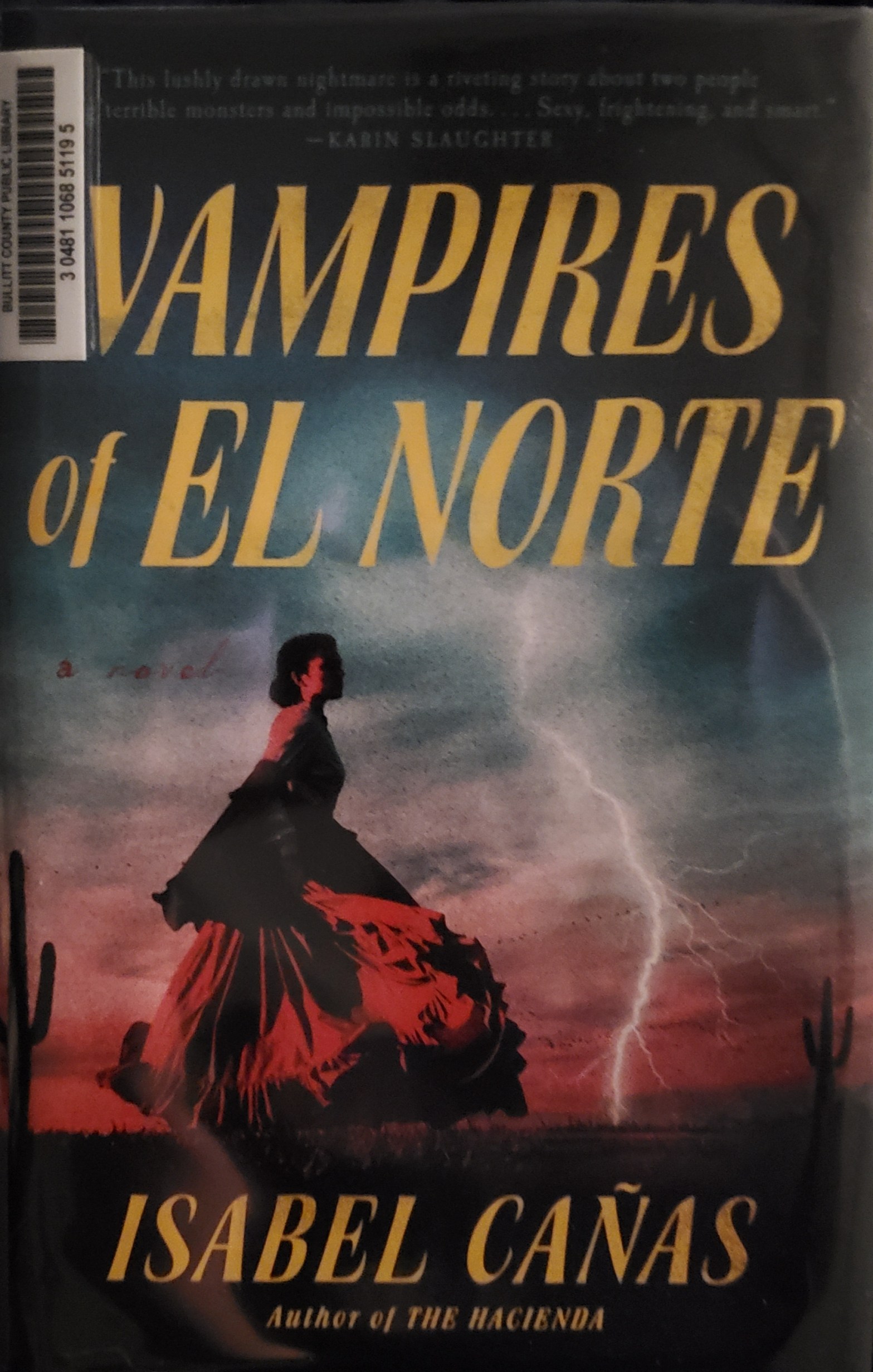
“He had shot the man at point-blank range. Directly in the chest. Right next to the other bullet wound. Right through the heart.
The man did not fall.
His neck went stiff, cocked backward, chin thrust in the air. Then, with a crack of bone that stole a gasp from Nena’s chest, his neck bent further back. His neck split at the throat, sliced open from within by a long, clawed hand.
A monster clawed its way forth from within the man’s body, slick with viscera, wet as a birth, its long teeth bared. The crack of bones and snap of sinew echoed against the walls of the jacal as its head and shoulders emerged from the chest. Soon the monster would claw itself free from the body it had followed them in, shedding its cage with butchery, shattering a protective egg of bone and gore.”
–Isabel Cañas, Vampires of El Norte
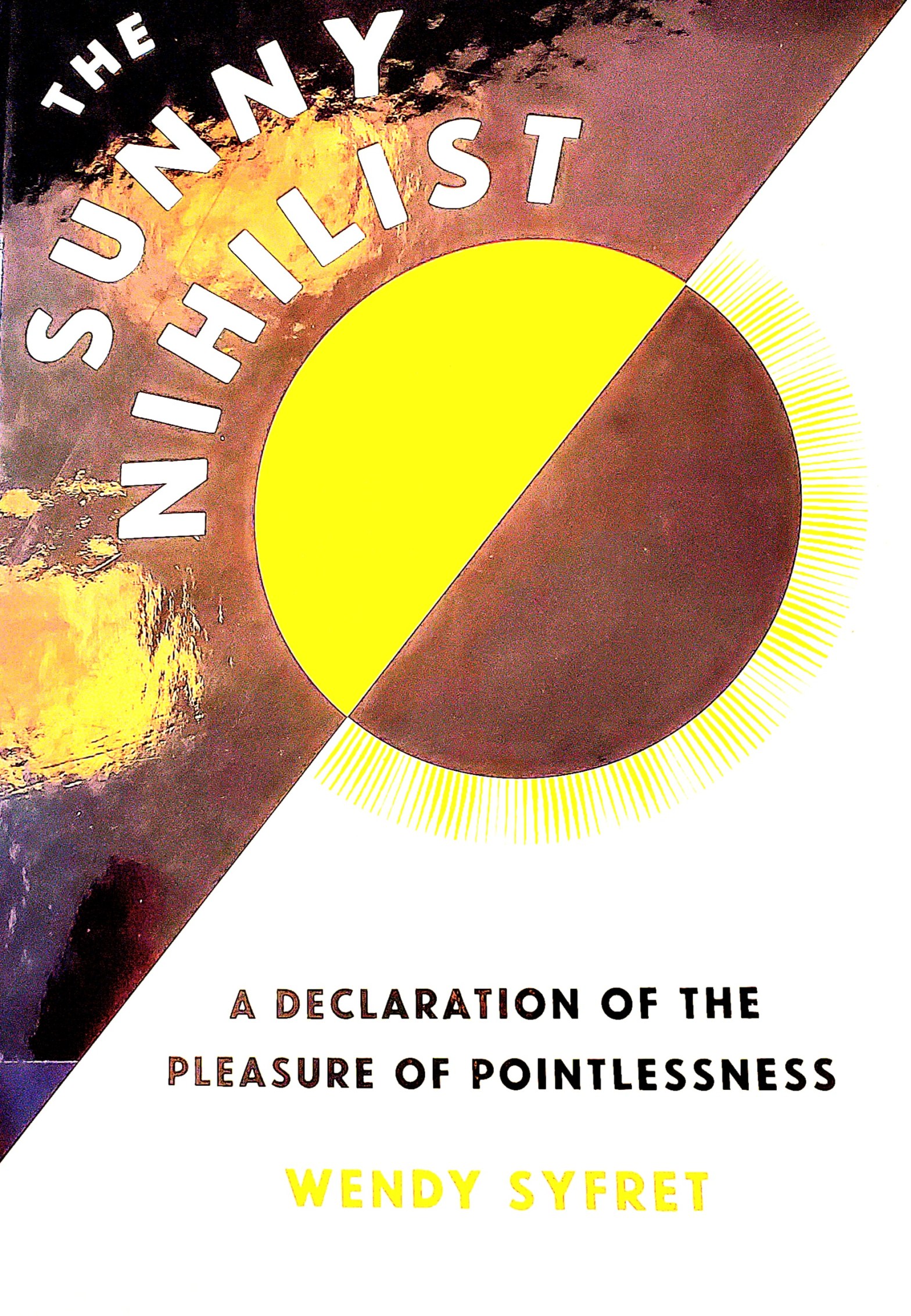
“I’ll be honest with you. Writing this chapter made me feel insane. Sitting at my desk, cataloguing how I became the kind of human that obliterates their body with work, patches it back together with self-care, believes my specialness makes my behavior elevated, and logs all my psychotic acts on an expensive watch that tracks and reports my every move, is beyond dystopian. I get that.”
–Wendy Syfret, The Sunny Nihilist: A Declaration of the Pleasure of Pointlessness
[Alison’s mother appears to be possessed by a demon named Azha] “I tried to croak out, ‘Who’s there?’ but the words dried up in my throat.
Azha, she would hiss.
Azha who? I would ask, reciting a silly knock-knock joke, a riddle.
But what would the punch line be?
Az-ha-ungry and I’m going to open my mouth and swallow you whole.”
–Jennifer McMahon, My Darling Girl
“Ninang June and my mother had been best friends and rivals, and they used to pit me and Bernadette against each other when we were younger. Even after my mother passed away, Bernadette and I had felt the need to compete against each other in everything. It wasn’t until recently we realized how toxic our relationship was and took the first baby steps toward an actual friendship. Amazing the clarity you get from solving murders together.”
–Mia P. Manansala, Murder and Mamon
Ever seen the American Film Institute’s list of movie quotes? Let me sum up: of the hundred, about 25 are Casablanca and Gone with the Wind. Most of the rest are from the other golden oldies that are revered by the writers of film studies textbooks; they may be well-made, but they’re also very much a reminder of how discriminatory Hollywood was in terms of race, gender, and sexual orientation. Though I give big ups for including Jaws, Psycho, and The Sixth Sense, the AFI’s selections just don’t speak to me, and if you’re on this site, perhaps they don’t speak to you, either. Though many of the movies I quote from aren’t horror, they are all delightful (the quotes, not necessarily the movies). After trying and failing to narrow down my own list to a slim ten squared, here is part twenty-one. (And no, I had no idea how many of these I would write when I started in with the Roman numerals–I keep watching movies!) In no particular order:
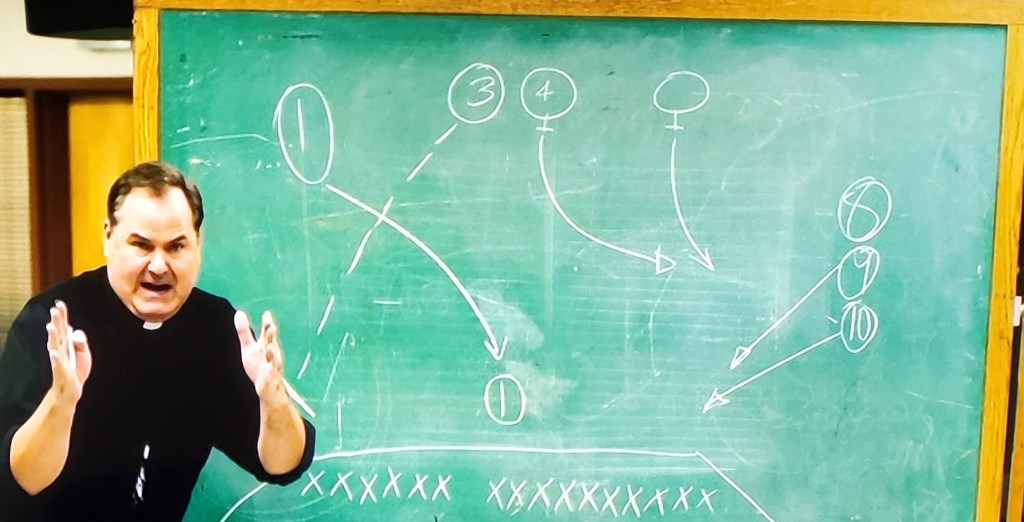
25.) Father Walther (Bob Stephenson), a high school football coach trying to fill in for the drama teacher: “Okay, guys. Now, look. Role one, right? You’re gonna run, kind of, a skinny post right up front. I want you to look straight at the audience, okay. Don’t be looking around and blabbing at anybody if they walk by ya. Eight, nine, ten. You’re coming in hard, right here. Cause these guys are gonna love it. Don’t talk amongst yourselves. Now, coming in slow, we’re singing. This is singing. Wide lines are singing. We’re singing. We’re singing. Danny’s not singing yet. He’s all alone. Singing. Eight, nine, ten–you come in hot! You come in hot!” (Lady Bird, 2017)
24.) Taneesha (Anika Noni Rose): “You killed my son.” Officer Penda (David Warshofsky): “Who the fuck are you?” Taneesha: “DeMarco.” Penda: “What?” Taneesha: “You remember him? Cause he remembers you.” (Body Cam, 2020)
23.) Lily: (Odessa Young), addressing the contradictory ways women and girls are expected to behave in: “From the moment I arrived, all I was ever given was orders. Smile. Open up. Cross your legs. Spread your pussy. Speak softer. Scream louder. Be quiet. Be confident. Be interesting. Don’t be so difficult. Be strong. Don’t fight back. Be an angel. Be a whore. Be a princess.” (Assassination Nation, 2018)
22.) Cash (LaKeith Stanfield): “Baby, what are you asking me to do? Are you asking me to quit the fattest job I’ve ever had?” Detroit (Tessa Thompson): “But Cash, it is not fat. It is morally emaciated. You sell fucking slave labor, Cassius!” Cash: “What the fuck isn’t slave labor?” Detroit: “Oh my God! Sidestepping! You sidestep more than the fucking Temptations!” (Sorry to Bother You, 2018)
21.) [Hutch (Bob Odenkirk) is searching a tattoo parlor for a specific client and isn’t shy about promising a financial reward for information, which gets him mocked by the owner]: “There are three types of people who, as you say, flash cheese: people who don’t know any better, people who are seeking to intimidate, and people like me who wish with every fiber of their being that someone would try and take it from them.” (Nobody, 2021)
20.) Zak (Jack Lowden) [having already asked several questions] “Rock, Rock, Rock!” Dwayne Johnson: “Yes, Zak.” Zak: “What advice would you give us? If…If we wanna…” Saraya (Florence Pugh): “Win over the crowd.” Zak: “Win over the crowd. If we wanna…If we wanna be the next you.” Dwayne Johnson: “What are your names again?” Zak: “My name is–” Dwayne Johnson: “It doesn’t matter what your names are. You walk around here interrupting The Rock. You [to Saraya], like you haven’t seen the sun in 20 years. You [to Zak], like you just stepped out of Oliver Twist. [Fake British accent] Please, sir, may I have some more advice, sir? You want some advice? Here’s The Rock’s advice. Shut your mouth! What you want? What you want? How about what The Rock wants? The Rock wants you to go out there, take no prisoners, have no regrets, have no fear. Lay it all out on the line. Because if you don’t do that, The Rock is gonna find your friend Mary Poppins. He’s gonna take her umbrella. Yeah, he’s gonna shine it up real nice. He’s gonna turn that sumbitch sideways and stick it straight up your candy asses! There’s your advice! Straight out of the Jabroni-beating, pie-eating, trailblazing, eyebrow-raising, entertaining the globe, never hotter, talking to two rejects from Harry Potter! [Cheerfully] So that’s how you win over the crowd.” Zak: “Yeah.” Dwayne Johnson: “Even though this crazy wrestling world is a fictionalized world, the fans know 1,000% if you’re not being real. All right? That guy just now, that was The Rock. The Rock is me, Dwayne Johnson, just with the volume turned way up. The treble adjusted, the bass. Same guy. So don’t worry about being the next me. Be the first you.” (Fighting with my Family, 2019)
19.) [Callie has just found out Will’s (Danielle Macdonald) mother is a former pageant miss and has mentioned coming over to pick her brain] “Well, unfortunately, my mom’s not home all that much. She’s either at pageant meetings or at the nursing home wiping old peoples’ butts. It’s what happens to a lot of ex-beauty queens.” (Dumplin’, 2018)
18.) Max (Meagan Good): “Who’s your best friend?” Amy (Sara Foster): “You are my best friend.” Max: And what did I say to you the very first day at the academy?” Amy: ” ‘That’s my bunk, bitch.’ ” Max: “After that.” (D.E.B.S., 2004)
17.) Tim (Domhnall Gleason): “So, what do you do?” Mary (Rachel McAdams): “I’m a reader, at a publisher.” Tim: “No! You read for a living?” Mary: “Yes, that’s it. I read.” Tim: “Oh, that’s so great. It’s like someone asking, ‘What do you do for a living?’ ‘Well, I breathe. I’m a breather, I get paid for breathing.’ How did you get that job?” Mary: “Okay, smart-ass, what do you do?” Tim: “I am a lawyer. Sort of. Sort of.” Mary: “That’s sexy.” Tim: “Is it?” Mary: “I mean, I think so. In a suit, in a court, saving peoples’ lives. Kinda sexy.” Tim: “I guess it is. Although it’s not as sexy as reading. Sitting there in an office, in a little chair reading.” Mary: “Okay, okay, stop, stop.” Tim: “Ooh!” Mary: “Just wait right there, mister, because a lot of books get submitted to my publisher. So it’s an immense responsibility.” Tim: “I bet it is. But when you do normal reading, is it ruined because it’s your job? You know, like prostitutes? I always worry that when they stop being prostitutes that they can’t enjoy sex anymore.” Mary: “You always worry about that?” Tim: “No, no. I sometimes worry about it.” Mary: “Oh, good. Okay, because someone who always worried about that would be a bit of a worry.” Tim: “When you read a newspaper, do you think, ‘Forget this, it’s work?’ ” Mary: “Have you interviewed a lot of prostitutes?” Tim: “When you read a menu, do you think, ‘No, I’m not reading this unless you pay me hard cash?’ ” Mary: “How many prostitutes will you need to talk to before this issue is resolved?” (About Time, 2013)
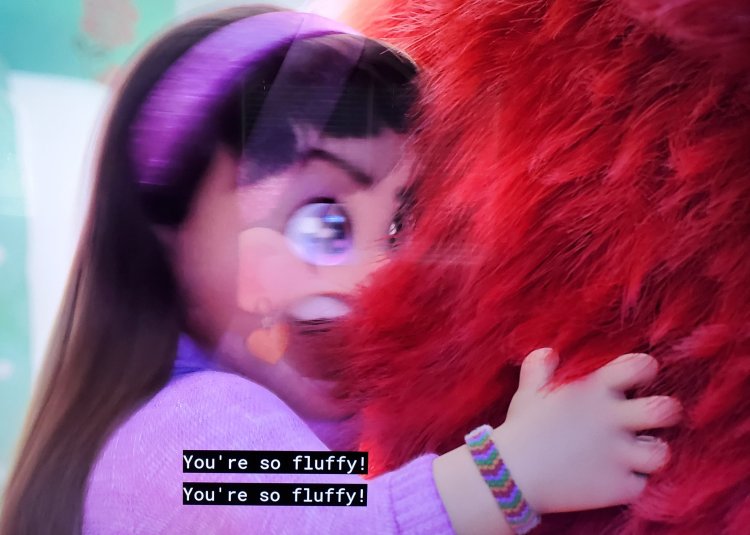
16.) Abby (Hyein Park), losing her mind after finding out her friend can transform into a large red panda: “You’re so fluffy! You’re so fluffy!” (Turning Red, 2022)
15.) Liz (Lily Collins), confronting former boyfriend Ted Bundy (Zac Efron) with a picture of his decapitated murder victim: “It took me over a decade to look at this photo. What happened to her head?” Bundy: “If she was deposited in the woods, then animals could’ve conceivably done something like–” Liz: “Animals don’t do that.” (Extremely Wicked, Shockingly Evil and Vile, 2019)
14.) Eva (Jennifer Beals), to the mad scientist who assembled her from corpses: “You can do what you like! You can take apart the body you put together, you can take away the life you gave me, but you cannot have me. Not ever. Not even if you murder me and raise me up a thousand thousand times, you cannot have me.” (The Bride, 1985)
13.) Rhodora, an art gallery owner (Rene Russo): “We don’t sell durable goods, we peddle perception. Thin as a bubble.” (Velvet Buzzsaw, 2019)
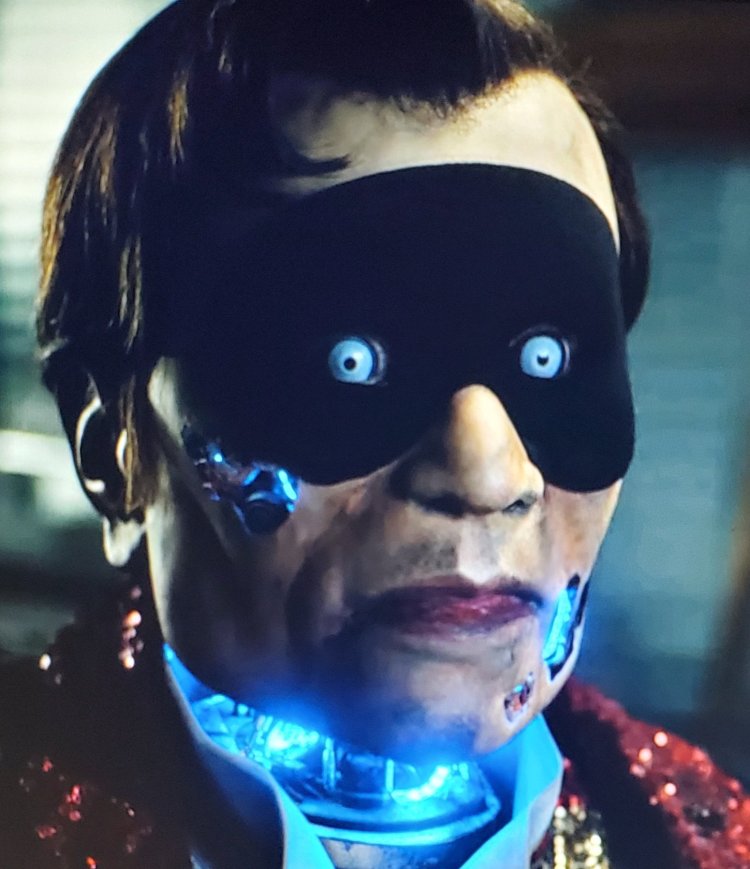
12.) Dougy (Bill Nunn): “Couldn’t we lay the soul to rest if we decomposed the body with holy water, then cut out the heart while it’s still beating and bury it beneath hallowed ground?” K (Kadeem Hardison): “That’s, that’s some freaky shit! We ain’t gotta do all of that, man. Do we have to do all that?” (Def by Temptation, 1990)

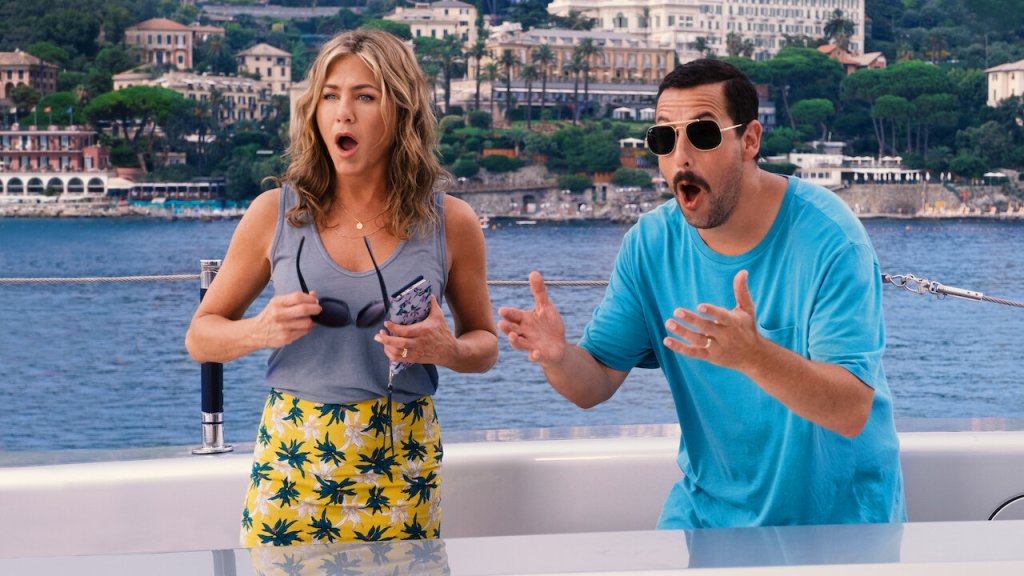
11.) [Being shot at] Audrey (Jennifer Aniston): “Jesus! Oh my God! It’s just like Death at the Library!” Nick (Adam Sandler): “What happens in Death at a Library?” Audrey: “They died. That’s why it’s called Death at the Library.” (Murder Mystery, 2019)
10.) Buster (Tim Blake Nelson), responding to the bartender who tells him that liquor is for outlaws only: “Well, don’t let my white duds and pleasant demeanor fool ya. I too have been known to violate the statutes of man, and not a few of the laws of the Almighty.” (The Ballad of Buster Scruggs, 2018)
9.) Pinocchio (Gregory Mann), singing about how delightful inanimate objects are now that he’s sentient: “What do you call it, call it?” Gepetto (David Bradley): “A chamber pot.” Pinocchio: “What to do with it, with it?” Gepetto: “Well, you put it, um…” Pinocchio: “On my head?” Gepetto: “No, under the bed!” (Guillermo del Toro’s Pinocchio, 2022) *note: the version of this song on Spotify, which is what I quoted, varies from this clip from the movie*
Runner-up quote: Pinocchio: “Look! I’m on fire! Yay!”
8.) Polly (Jill Wagner), to the victim of an agonizing, flesh-mutating virus: “It’s okay. It’s okay. We’re cutting your arm off.” (Splinter, 2008)
7.) Joe (Jamie Foxx), trying to convince 22 (Tina Fey) to find a career to be excited about: “How about a librarian? They’re cool.” 22: “Yes, amazing. Who wouldn’t like working at a thankless job you’re always in danger of losing due to budget cuts? Though I do like the idea of randomly shushing people.” Joe: “Look, obviously this–” 22: “Shh! Oh, yeah, that’s good.” (Soul, 2020)
6.) McKayla (Alexandra Shipp), after a character’s foot gets caught in a chain and she is lowered headfirst into a saw: “That is some serious Final Destination shit.” (Tragedy Girls, 2017)
5.) Wolf (Sam Rockwell): “Seriously, though, you don’t like cake? Name one food better than cake.” Snake (Marc Maron): “Guinea pig.” Wolf: “Oh, again with the guinea pig.” (The Bad Guys, 2022)
4.) Darby (Michael Stuhlbarg), a hermit whom everyone greets with “Thought you was dead”, to a character pulling a scam that involves faking his own death: “Thought you was dead.” (Cut Bank, 2014)
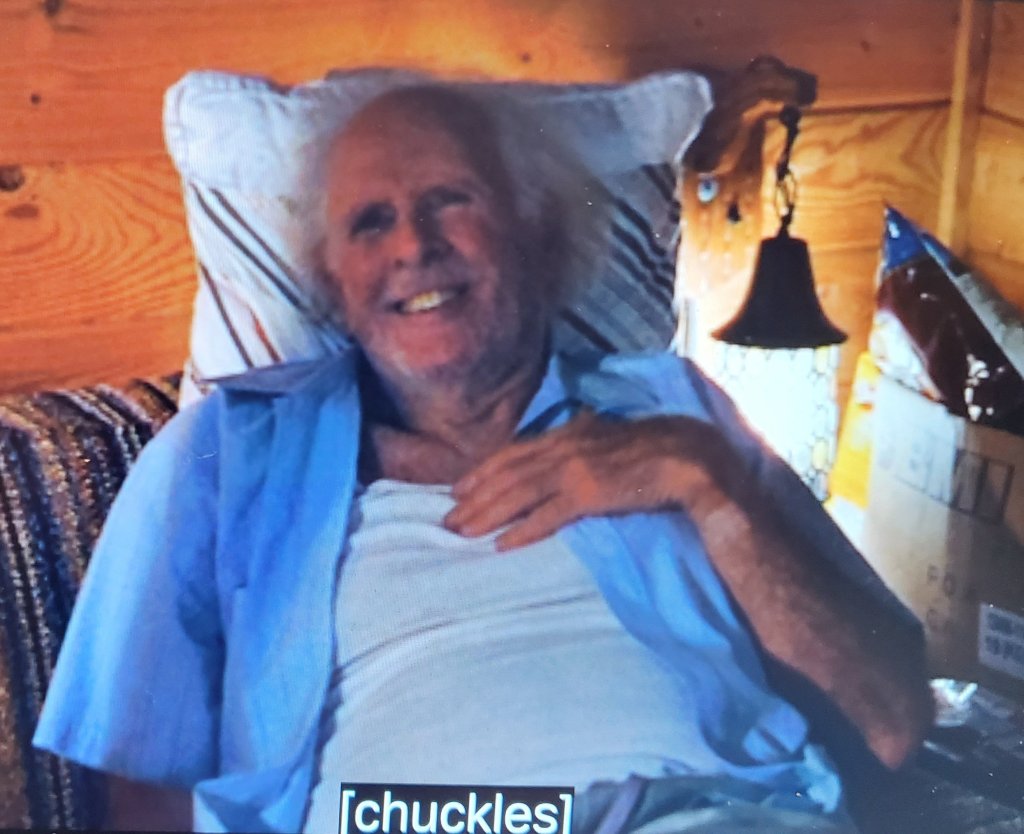
3.) Blanc (Daniel Craig), to Kareem Abdul-Jabbar, Angela Lansbury, Stephen Sondheim, and Natasha Lyonne, whom he’s been playing Among Us with online, in his bathtub: “Look, I appreciate what ya’ll are trying to do for me here.” Abdul-Jabbar: “We’re worried about you, buddy. Lockdown hasn’t been easy for any of us. But Phillip told me you haven’t left the bath for a week.” Blanc: “Oh, that’s hyperbole.” [Knock on front door] Blanc, to his husband: “Get that, would ya?” Phillip (Hugh Grant): “You’re not in the bath again, are you?” Blanc [hesitates] “No!” (Glass Onion, 2022)
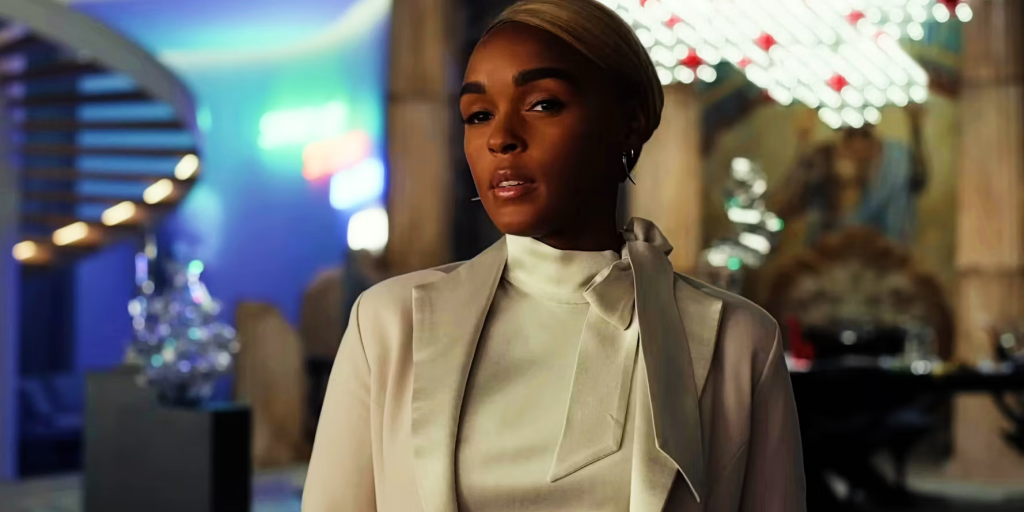
2.) Clare (Ruth Negga): “Oh, I don’t expect you to understand. You’re happy. You have a true, good life, and you’re free. Free and safe. Safe. I don’t even know what that is anymore.” Irene (Tessa Thompson): “I’m beginning to believe that no one is ever completely happy, free, or safe.” (Passing, 2021)
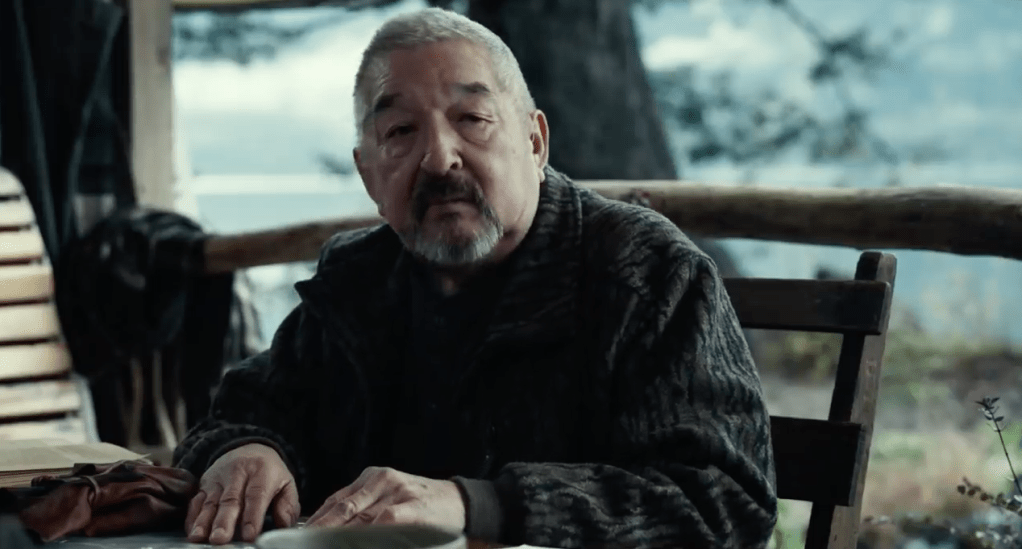
1.) Sheriff Stokes (Graham Greene), discussing a demon on the loose that’s also an allegory for capitalism and destruction of the natural world: “It’s the wendigo. Translates to a diabolical wickedness that devours mankind. According to legend, during a brutally cold winter, a lost hunter’s severe hunger drove him to cannibalism. And after feasting on human flesh he became crazed and transformed into an amorphous spirit that could take many forms, and roamed the forest for fresh victims. His insatiable appetite was never satisfied.” Paul (Jesse Plemons) [chuckling]: “Excuse me. This is a myth you’re talking about.” Stokes: [Scoffs] “For you, yeah.” (Antlers, 2021)
Author’s note: I have extensively relied on IMDb for help, both with dates and with some of the quotes.
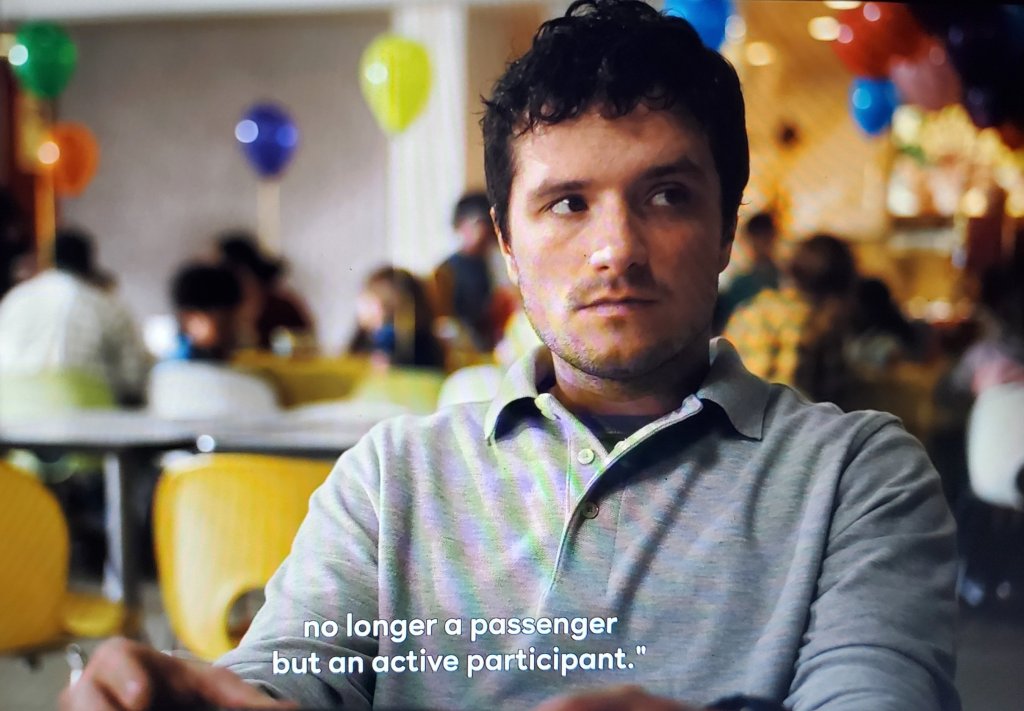
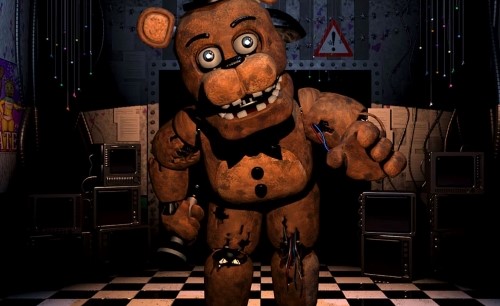
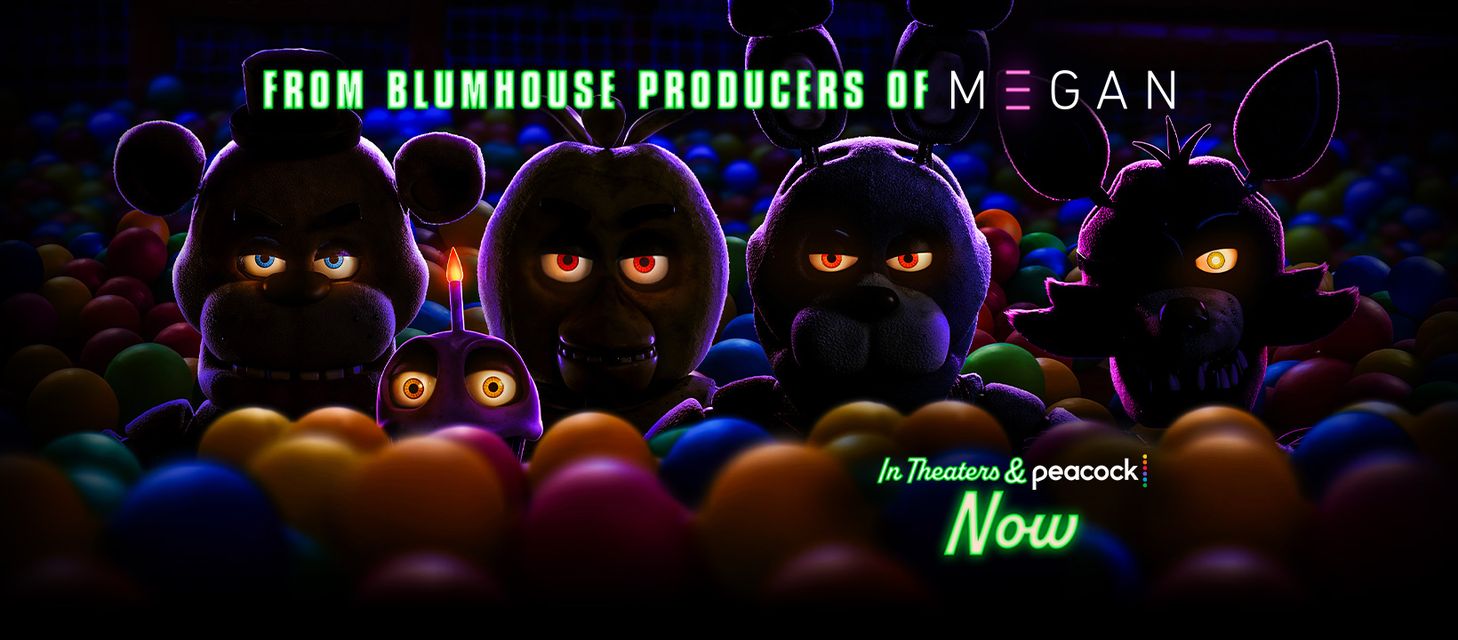
Mike (Josh Hutcherson) is a loner in desperate need of a job, seeing as he got into trouble at his last post for mercilessly pummeling a dude he thought was kidnapping a kid. (He’s obsessed with finding his little brother, who was kidnapped, by lucid dreaming about the incident as often as possible.) His mean aunt Jane (Mary Stuart Masterson) is trying to take custody of his little sister Abby (Piper Rubio). A not-at-all-weird-and-suspicious career counselor (Matthew Lillard) advises him to work at Freddy Fazbear’s Pizza (if you’re unfamiliar with the video games the movie is based on, think Chuck E. Cheese’s) as a night security guard. Little does Mike know that the animatronic animals that used to delight easily entertained children are haunted by kids who were shoved in the suits after being murdered in order to hide them from the police. And never decomposed and stank up the place, I guess. Unfortunately, the kid\ghost\anthropomorphic mammals are lonely and set their sights on Abby. Can Mike and his new pal, not-at-all-creepy-and-suspicious Vanessa (Elizabeth Lail), save her?
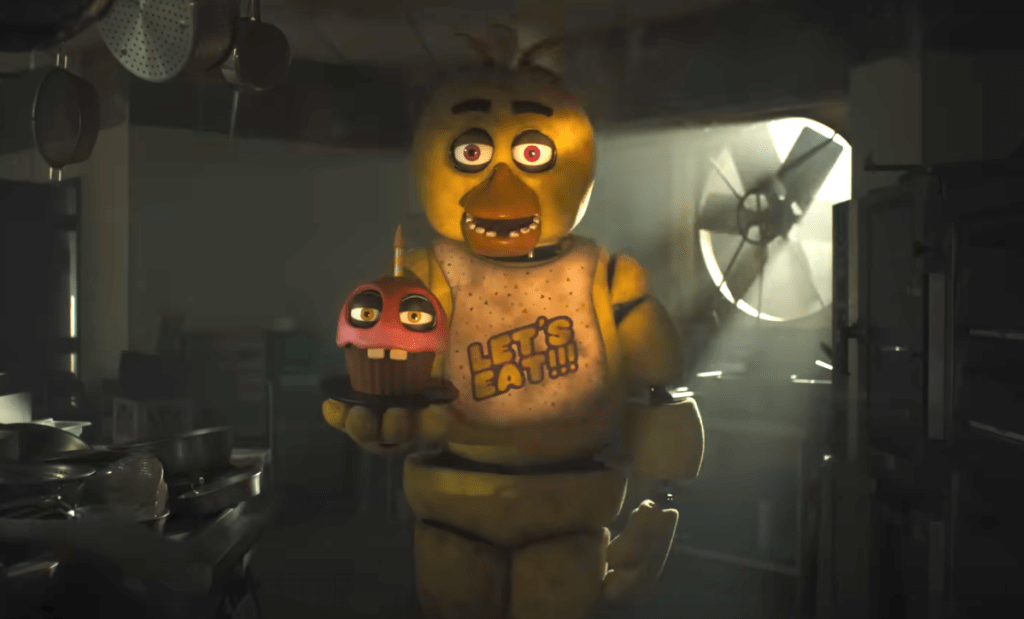
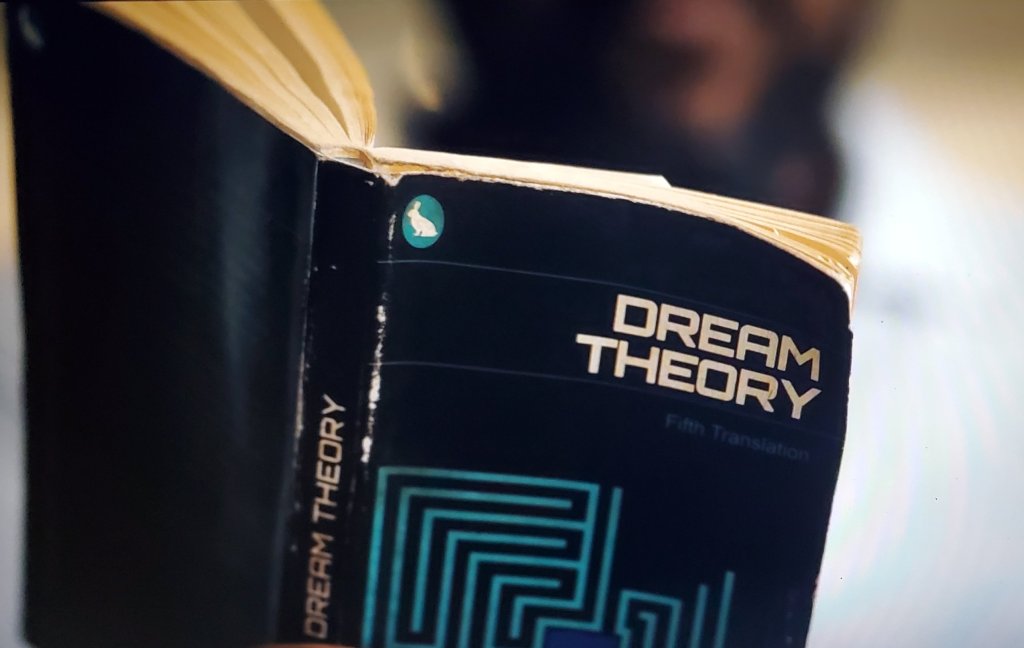
I have fewer compliments than gripes, but I do have to admit there are some neat camera techniques, like a scene when a sentient cupcake launches itself at a victim, which match cuts to a pre-victim hucking a hard object at a glass display case. I admire how the filmmakers went with human-controlled puppets (by Jim Henson’s Creature Shop, no less) rather than CGI. There’s an adorable cameo by Matthew Patrick, spouting his catchphrase. It’s kinda shoehorned in there, but I love me some MatPat. The performances are acceptable for the most part, with particular standouts being Rubio and Grant Feely as the evilest ghost kid. There’s actually a minimum of scenes where the main character wanders slowly in the dark investigating a noise. Not none, but it’s not half the runtime. (Instead we get way too many sequences of Mike begging the ghost kids in dreamland for information about his brother.) You can spot a cute little theme of the importance of being in charge of your life, rather than sleepwalking through and taking anything you’re handed.
It’s just not scary. There was one scene that at first I thought was pretty eerie, but the next day it hit me that it really mirrors a similar scene in Saw. (Speaking of which, the pizzeria is home to a torture chair that victims are strapped into and it buzzes off their faces, which begs the question, what the fuck kind of goodtimery establishment is this? Who ordered the torture chair?) As can be expected for a PG-13 movie, ancillary characters pop up left and right to sacrifice themselves, but much of the violence is implied rather than shown outright. The jump scares are predictable and underwhelming. The scene when Mike, Abby, Vanessa, and the robots build a blanket fort made me nauseated.
My knowledge of Freddy lore is far surpassed by that of my two oldest children, but even I know that much was changed from the game, which will no doubt piss people off. I’m not a hardcore fan, but I remember how upset I was at the 2000 X-Men movie (we waited sooooo long for it, and it was not faithful whatsoever to the comics!!!!!!), so I feel their pain.
It seems very much too long. For a movie aimed directly at young people, there is an unprecedented amount of angst and character development. It’s also not terribly original. Aside from Saw, it especially brings to mind The Ring, with the shadow-eyed kid being friends with the ghosts and forever drawing their likeness, as well as A Nightmare on Elm Street, with Mike getting cut in his dream and waking up with the same injuries in real life. I also have loads of questions: There are no pictures of Abby in the house, only Mike and his missing brother, suggesting that no one in the family ever got over his disappearance, so where did Abby even come from? Why does a character who is looking for her brother start chasing a rando kid? Does the not-at-all-creepy-and-suspicious career counselor spend all of his totally not-creepy-and-suspicious time as a real career counselor?
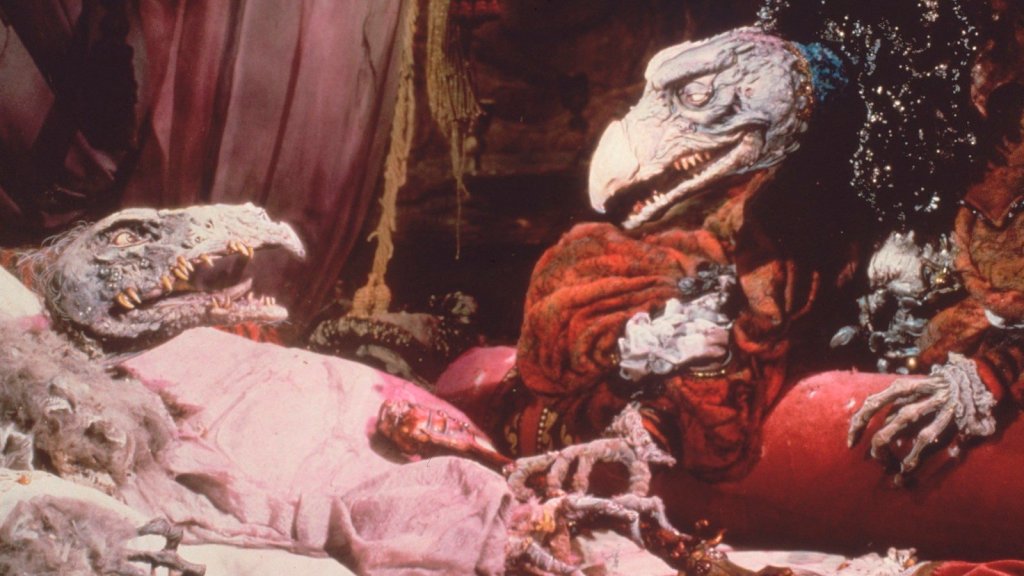
It’s a rare film that I would say just don’t see, and this is not one of those. Buuuut when you’re done: If you want gore, watch Saw, if you want humor, try the vastly superior Willy’s Wonderland, and if you want terrifying puppets that do more than act slightly menacing (oh noes, they’re narrowing their eyes again!), how about The Dark Crystal?
 GhoulieJoe